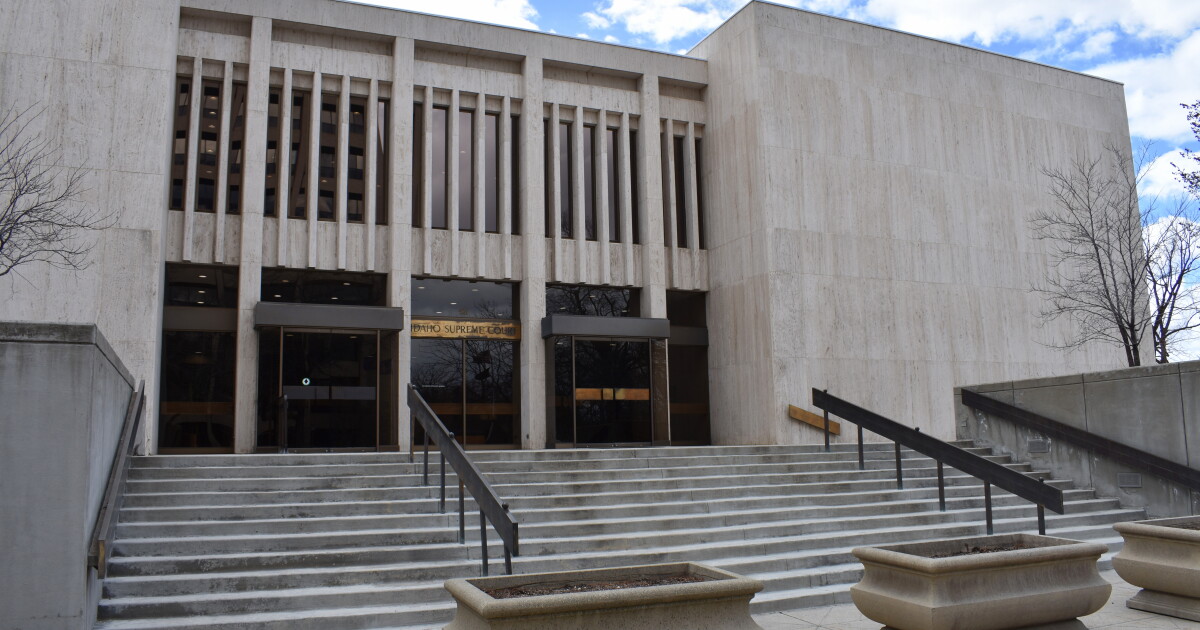
In a 3-2 split decision, the Idaho Supreme Court has upheld the dismissal of a longstanding legal battle over whether the state’s public defense system violates the U.S. Constitution. The ruling effectively ends the current iteration of Tucker v. Idaho, a lawsuit that has challenged the state’s handling of indigent defense since 2015, Boise State Public Radio reported.
The decision hinges on a technical legal pivot: the court ruled that because Idaho has recently transitioned to a centralized state-based public defense system, the original lawsuit is now moot. Essentially, the court decided that the state’s legislative overhaul of the system replaced the flawed structure the ACLU of Idaho originally sued to fix, leaving the judiciary to wait and see if the new system actually works.
A decade of fragmented defense
For years, Idaho operated under a decentralized model that left the quality of legal representation to the whims of geography. Each of the state’s 44 counties managed its own public defense. Some counties maintained their own offices; others simply contracted private attorneys to handle cases for clients who couldn’t afford a lawyer.
The ACLU of Idaho argued this patchwork approach created a constitutional crisis. They contended that public defenders were managing too many cases, making it impossible to provide the representation required by the Sixth Amendment.
The legal trajectory shifted in February 2024, when an Ada County judge dismissed the case. The judge’s reasoning was straightforward: the state legislature had already passed the State Public Defender Act, creating a unified state-based system set to launch in October 2024. The lower court decided that since the old system was being dismantled, the lawsuit no longer had a target.
The divide over mootness
The Idaho Supreme Court’s majority agreed that the legislature’s actions were too comprehensive to ignore. Chief Justice Robyn Brody emphasized that this wasn’t a case of a government official simply promising to do a better job, but rather a total restructuring of a public institution by elected representatives.
“This is not a case in which a private actor—or even a government actor exercising discretionary authority—simply promises to do better,” wrote Chief Justice Robyn Brody. “It is one in which the people’s elected representatives have comprehensively restructured a public institution after years of deliberation and have imposed clear statutory mandates to ensure the State Public Defender Act’s implementation.”
However, the court admitted it cannot predict the future. Brody noted that it is not for the court to decide today whether the new legislation will ultimately succeed in fixing the systemic issues.
Not everyone on the bench was convinced. Justice Cynthia Meyer issued a sharp dissent, arguing that the majority used a legal framework to determine “mootness” that isn’t actually recognized in Idaho statute or case law. Meyer pointed out that the 9th Circuit, which oversees Idaho, does not use the framework the majority relied upon. To Meyer, the state’s efforts were “laudable,” but they hadn’t actually proven that the deficiencies were gone.
The reality of the October rollout
While the court focused on the legality of the intent to fix the system, the actual execution of the State Public Defender’s Office in October 2024 was fraught with difficulty. The transition was not seamless.
According to the ACLU, the office struggled significantly at its inception. The group claims that hundreds, or perhaps thousands, of defendants were left without any legal representation during the first few months of operation because the state could not hire attorneys fast enough to meet the demand.
Paul Carlos Southwick, Legal Director for the ACLU of Idaho, highlighted the ongoing urgency of the situation.

“Every single day, Idahoans are denied their constitutional right to legal representation because of the state’s persistent failure to fix chronic and widespread public defense issues,” Southwick said in a statement.
What happens to the defendants now
The original dismissal noted that if the new state-based office also fails to meet its constitutional obligations, new lawsuits can be filed.
The burden now shifts to the administration of the State Public Defender’s Office.
A spokesperson for Attorney General Raúl Labrador did not immediately return requests for comment following the decision. The ACLU of Idaho is currently considering its options for moving forward.



