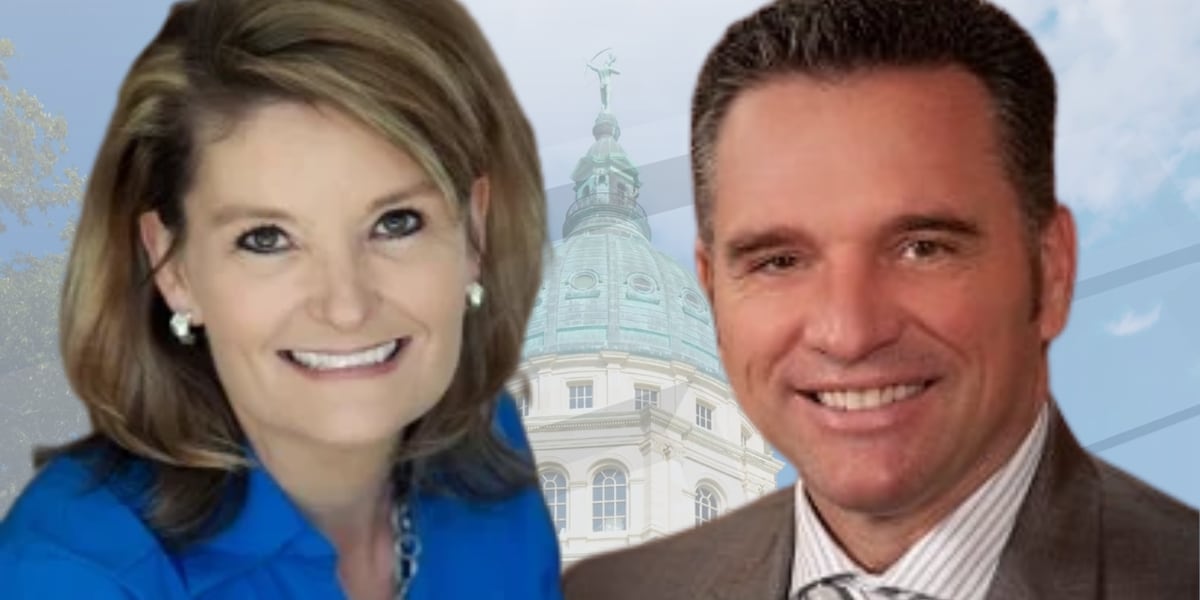
The Kansas Political Map Shifts as Statewide Races Remain in Limbo
As the sun rises over Kansas this Wednesday, November 5, 2026, the state finds itself in an unfamiliar position of political transition. While the dust is beginning to settle on several high-profile contests, the governor’s mansion remains the subject of intense uncertainty. According to reporting from KWCH, the race between Democrat Cindy Holscher and Republican Ty Masterson is separated by a razor-thin margin of approximately 5,500 votes out of more than 1 million cast.
This half-percent gap suggests that the final outcome will likely trigger a formal review. Masterson signaled as much late Tuesday, noting that legal intervention may be necessary to ensure the integrity of the final tally. The window for resolution is dictated by state law, which allows for mail-in ballots to be counted as long as they are postmarked by 7 p.m. on Election Day and arrive at county offices by 5 p.m. this Friday. Sedgwick County Election Commissioner Laura Rainwater confirmed that these late-arriving, legally cast ballots remain a critical variable in determining who will be sworn in this January.
A Historic Shift in the U.S. Senate
Beyond the governor’s race, federal politics in Kansas underwent a seismic change. In a result that reverberates far beyond state lines, Democrat Adam Hamilton has defeated incumbent Republican Sen. Roger Marshall. For the first time in 94 years, Kansas voters have chosen a Democrat for the U.S. Senate, terminating a Republican dominance that had persisted since 1932. The scale of this upset, captured in final unofficial returns, suggests a significant realignment in how Kansas voters are approaching national politics.
Stability and Change in the U.S. House
While the Senate race saw a historic departure from the status quo, the state’s representation in the U.S. House of Representatives largely maintained its established character, with notable exceptions. In the 4th Congressional District, Republican Ron Estes successfully fended off challenges from Democrat Katy Tyndell and Libertarian Drew Cranmer. Estes, who has led the Congressional district that includes Wichita since 2017, campaigned on his record of conservative fiscal policy, specifically advocating for making the Tax Cuts and Jobs Act permanent. Similarly, in the 1st Congressional District, Republican Rep. Tracey Mann secured another term, defeating challengers Laura Reinhold and Steven Jacob. Mann’s tenure, which began in 2021 following his time as lieutenant governor under Jeff Colyer, remains a cornerstone of the GOP’s hold on western and central Kansas. Conversely, Democrat Sharice Davids has won a new term in the 3rd Congressional District, securing victory with more than 60% of the vote. Having initially won her seat in 2018 as one of the first Native American women and the first openly LGBTQ+ person to represent Kansas in Congress, Davids claimed her win on Tuesday evening once 82% of the ballots had been processed.
The End of a Legislative Supermajority
Perhaps the most structural change to Kansas governance occurred within the state legislature. For 16 years, the Republican party has maintained a firm supermajority in the House of Representatives. That era has effectively come to a close. Results from the Kansas Secretary of State’s Office indicate that Democrats gained 20 seats, shifting the balance from 88-37 to 68-57. This shift is mathematically significant; it breaks the two-thirds majority required for the GOP to override gubernatorial vetoes unilaterally, fundamentally changing the power dynamics for the upcoming session.

Chris Mann Leads Kris Kobach as Votes Continue Counting
Specific ballot measures and races will impact local administration. In the race for Attorney General, Democrat Chris Mann holds a lead of approximately 11,300 votes over Republican incumbent Kris Kobach. While the race has not been officially called, Mann delivered a victory speech Tuesday night. Meanwhile, Republican Pat Proctor maintains a narrow lead in the race for Secretary of State.
Voters also weighed in on significant infrastructure and policy questions:
- Wichita Public Schools: A $615 million, two-part bond measure was approved, signaling a major reinvestment in the district’s infrastructure and campus facilities.
- Valley Center Public Safety: A proposed 1 percent sales tax intended to fund a full-time fire department was rejected by voters. As a result, the city will join Sedgwick County Fire District One.
- Constitutional Amendment: Voters approved an amendment regarding election integrity, which mandates that the state constitution explicitly state that only U.S. citizens are eligible to vote.
As the state moves toward the final certification of these results, the focus remains on the outstanding ballots in the gubernatorial race. For now, Kansas is in a period of transition, waiting to see how the final counts will shape the policy agenda for the next two years.


