Rare 1935 Fieldwork Rediscovered in Indiana Archive
“These were trusted spaces for the participants during the era of Jim Crow segregation, and, crucially, were wired for electricity,” said Oliver Mayeux, a linguist at the University of Cambridge. Researchers confirmed the discovery of the oldest known audio recordings of authentic Louisiana Creole, captured more than 90 years ago by Lorenzo Dow Turner.
Etched originally onto heavy aluminum discs, the audio clips resurfaced inside Indiana University’s Archives of Traditional Music. The material features interviews conducted during Turner’s 1935 trip to Louisiana, a project that never secured proper funding at the time and was left largely unpublished. Turner worked alongside a network of Black doctors and academics, conducting interviews within their private offices to ensure safe, powered environments under the constraints of Jim Crow laws.
The Mechanics and Rigors of Early Fieldwork
Recording audio in the mid-1930s required substantial logistical effort. Turner’s equipment included a heavy microphone paired with two cabinet-like boxes that collectively exceeded 100 pounds. “For these interviewees, the alien nature of the equipment alone would have made it a truly weird experience for them,” Mayeux noted.

Despite the bulky hardware, preservationists digitized the aluminum discs into clear audio files. The recordings feature native speakers discussing their daily lives, personal histories, and local memories. Among the subjects is Odelia Edmond, who recounted a childhood memory of swindling 30 cents from Zozo Labrique, a New Orleans folk figure known for selling red brick dust used in protective Voodou rituals. Another subject, George Doyle, worked as a cop until New Orleans segregated its police department near the turn of the 20th century. Doyle recalled an instance of being assaulted by a white gang he described as a “band of rats,” a detail corroborated by an archival newspaper article from 1893.
Origins and Linguistic Evolution of Louisiana Creole
As a distinct hybrid language, Louisiana Creole formed during the 18th-century international slave trade, blending French spoken by colonists and slavers with various West African dialects, particularly from the Senegambian region. The language evolved across generations among both enslaved and free communities who combined French vocabulary with unique grammar, sentence structures, and regional phrases.
“Africans with little common language were forced onto plantations where French was the language of administration. Everybody is learning approximations of French and then approximations of approximations,” Mayeux explained. “Quite quickly, a new language is born.”
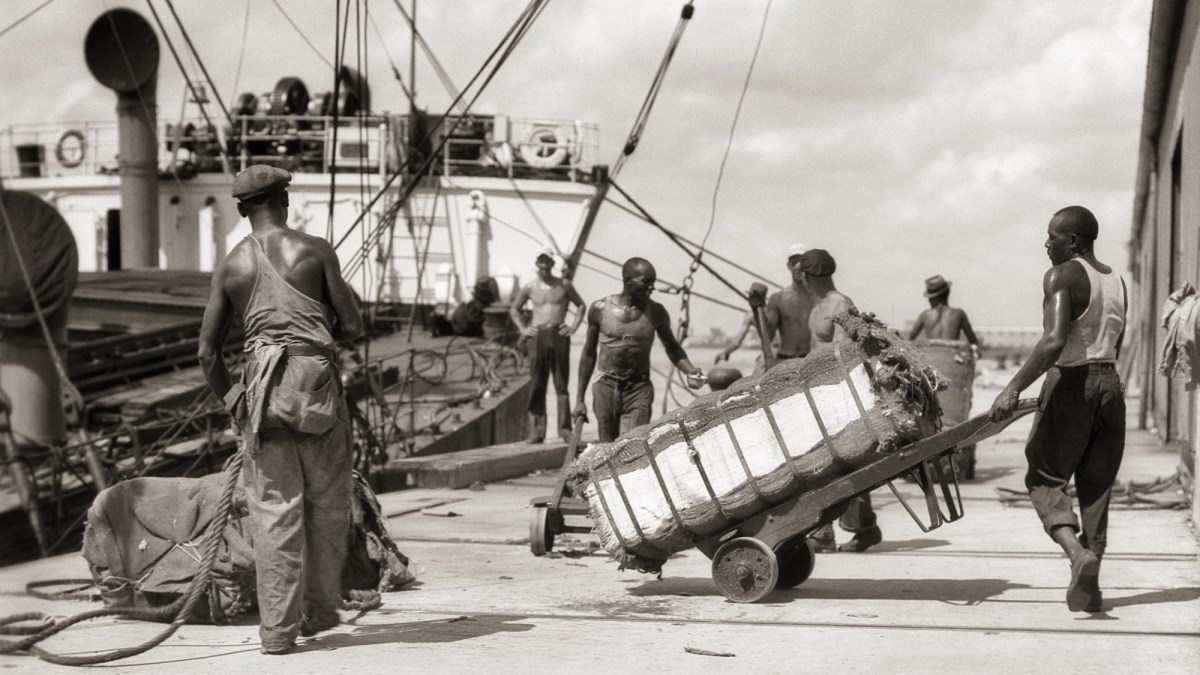
By the 19th century, the dialect served as the common tongue for enslaved plantation workers, overseers, Haitian refugees, Caribbean immigrants, and recently arrived Acadians from Canada, alongside dock workers in New Orleans. Today, only a few thousand native Creole speakers remain, almost all elderly and residing in rural areas of Louisiana.

Online Recordings Help Young People Revive the Endangered Language
Turner’s rediscovered recordings are now available online, offering a vital resource for contemporary researchers and younger participants in the Kouri-vini movement, who are working to revive the language in the 21st century.
“Young people are learning Creole to connect with the richness of their heritage, helping them discover a distinct identity in an increasingly homogenized world,” Mayeux said. Researchers caution, however, that modern French speakers will not find the dialect mutually intelligible, as contemporary French speakers would simply not be able to comprehend the language.