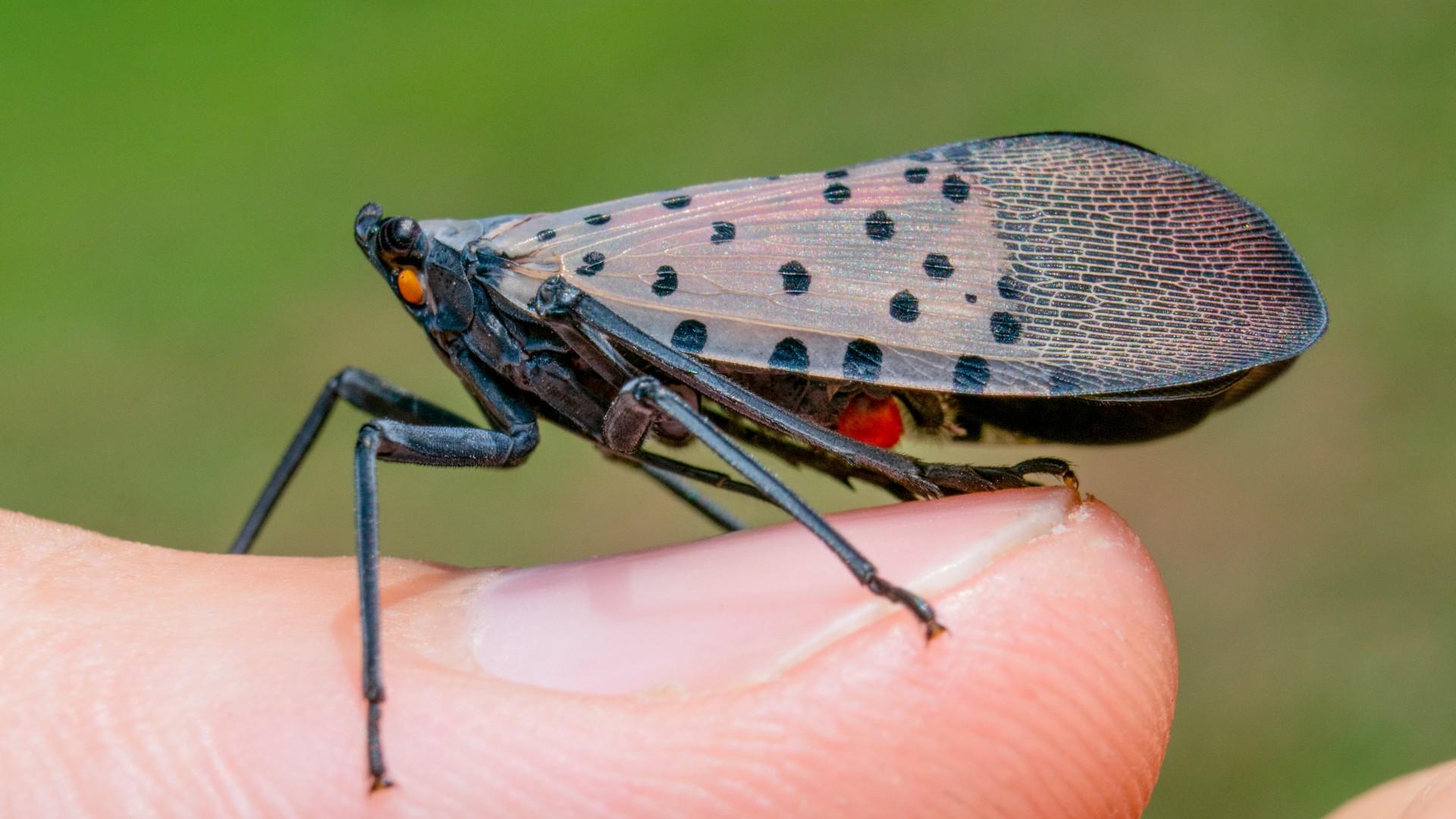
Maryland Counties Face Heavy Infestations as Spotted Lanternfly Spreads
The spotted lanternfly has firmly established its presence across Maryland, with recent distribution data showing infestations spreading into 20 of the state’s 23 counties and Baltimore City. Originally arriving in the United States a little over a decade ago via a 2014 stone shipment to Berks County, Pennsylvania, the invasive planthopper made its first documented appearance in Maryland in 2018 in Cecil County, according to data from the Maryland Department of Agriculture.
By March 2026, population abundance estimates compiled by the Maryland Department of Agriculture ranked central jurisdictions—including Baltimore City, Baltimore County, Howard County, Prince George’s County, Montgomery County, Carroll County, Frederick County, and Washington County—as the most heavily infested areas, mapped with dark red shading by the state’s Plant Protection and Weed Management section. Meanwhile, western and lower shore regions register lighter or currently undetected populations, though state agricultural officials emphasize that reports remain necessary across every jurisdiction regardless of regional density estimates.
Agricultural Strains and Ecological Pressures
While the planthopper poses no physical danger to humans or pets—it does not bite, sting, or carry toxicity if ingested by domestic animals—its impact on local agriculture and property is direct. Both adult insects and their earlier developmental stages feed by inserting a specialized proboscis into the phloem of host plants to suck sap and photosynthate. This feeding stresses local vineyards, fruit orchards, and hardwood trees, occasionally causing stunted growth, reduced crop yields, and diminished winter hardiness, though state officials note that direct plant death from the insect alone has not been documented in Maryland.
As the insects feed, they excrete a sugary waste substance called honeydew. This fluid accumulates on understory plants and outdoor surfaces, fueling the growth of black sooty mold that blocks sunlight from reaching leaves and reduces photosynthesis. The sticky residue also coats outdoor furniture, decks, and vehicles, while attracting secondary nuisance pests such as ants, bees, and wasps.
Vineyards face a unique vulnerability to these feeding pressures.
Property Owners Rely on Mechanical Tactics
Because the Maryland Department of Agriculture does not have the resources to conduct residential chemical treatments or remove wild host trees, property owners rely on mechanical tactics to reduce localized populations. Flyswatters, nets, and household vacuums offer immediate removal options for insects clustered on vegetation or building exteriors.
Additionally, homeowners can target the tree-of-heaven (Ailanthus altissima), a primary non-native host plant that frequently acts as a favored gathering site for the pests. Completely eradicating tree-of-heaven requires destroying the entire root system; simply cutting down the trunk triggers a defensive response that produces new shoots around the base.
Anyone encountering a suspected spotted lanternfly outside of established quarantine zones is asked by the state to capture a photograph, destroy the insect, and submit a report directly to agricultural regulators.



