The Boise Church Suicide That Revived America’s Coldest Poisoning Mystery
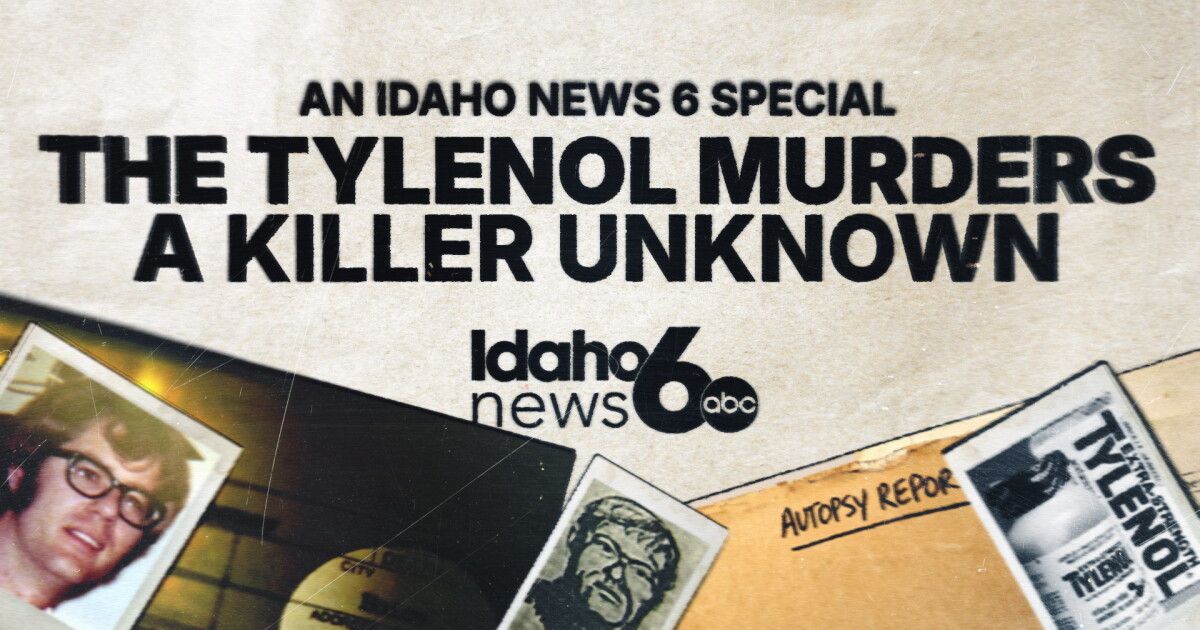
More than four decades after tainted medicine killed seven people around Chicago, an investigator’s look into an Idaho cold case has brought a brilliant organic chemist back into focus as a possible suspect. Mathew Betkouski, a scientist who died by suicide inside a Boise church in December 1982, is now at the center of a fierce debate among investigators trying to finally solve the Tylenol murders.
The poisonings began on September 29, 1982, when 12-year-old Mary Kellerman died after taking Extra Strength Tylenol in the Chicago area. Within three days, six more victims lost their lives after consuming capsules laced with deadly potassium cyanide. The panic triggered a nationwide recall of 31 million bottles by Johnson & Johnson and permanently transformed over-the-counter medicine packaging with tamper-resistant seals, shrink wrap, and other safety measures.
Yet, the person who placed those lethal bottles back onto grocery and pharmacy shelves has never faced justice. While James Lewis served 12 years in prison for sending an extortion letter demanding $1 million from the pharmaceutical giant—maintaining his innocence in the murders until his death in 2023—law enforcement never laid homicide charges against him.
How an Unknown Wanderer Kept a Secret
While the nationwide manhunt stalled, a parallel mystery unfolded nearly 1,700 miles away in Idaho. On December 4, 1982, a man walked into Sacred Heart Catholic Church in Boise, ingested cyanide, and died without any identification in his pockets. For decades, local authorities knew him only as the “Unknown Wanderer.”
The case shifted in 2019 when Ada County Cold Case Detective Tim Cooper reexamined the decades-old evidence. Among the personal items recovered from the church was a collection of roughly 30 keys. One key eventually led Cooper to a property in Jacksonville, Florida, pointing toward a resident who had vanished in 1982: Mathew Betkouski. DNA testing confirmed the match, finally giving the Unknown Wanderer a real name.
Identifying Betkouski unlocked a disturbing professional background. He held a Ph.D. in organic chemistry and had worked for Lockheed Martin on a NASA-related project at White Sands, New Mexico. Digging deeper, investigators uncovered statements from former colleagues who remembered chilling conversations before the Tylenol murders. One coworker recalled Betkouski discussing how an individual could remove medication containers from store shelves, introduce poison, and return them undetected, specifically mentioning potassium cyanide and a common remedy resembling Tylenol.
Experts Clash over Suspect Profile and Idaho Connection
Those circumstantial clues convinced Dr. Park Dietz, a forensic psychiatrist who consulted on the original Tylenol task force, that Betkouski fits the profile of the perpetrator. “I believe that the Unknown Wanderer is exactly the kind of person who would have committed the Tylenol murders,” Dietz told Idaho News 6, acknowledging that the case still remains circumstantial.

Other veteran investigators reject the theory entirely. Jeremy Margolis, a former federal prosecutor assigned to the original Tylenol task force, dismissed the Idaho connection during an interview with the station, calling the hypothesis “utter nonsense” and arguing that criminal profiles do not constitute concrete evidence.
The central hurdle for the Boise theory remains an unproven timeline. While detectives know Betkouski was alive and traveling in 1982, they have yet to place him in the Chicago area during the final week of September when the capsules were tampered with. When asked about the strongest argument against his own theory, Detective Cooper pointed directly to that missing link: “Can you put him there the final week of September 1982?”
Investigators are looking at a possible connection between Dr. Mathew Betkouski and the 1982 Tylenol murders. Forensic psychiatrist Dr. Park Dietz explains why he considers Betkouski a viable suspect. pic.twitter.com/XiL9S4r5PB
That missing window has fueled fresh demands for government transparency. Idaho News 6 requested historical case files and investigative presentations from law enforcement, but most requests were denied under exemptions tied to an active FBI investigation. Both proponents of the Betkouski theory and skeptical former prosecutors agree on at least one front: more records should be released to the public.
Identifying Mathew Betkouski solved the mystery of who died inside a Boise church in 1982. Whether his troubled final months hold the answer to America’s most infamous product-tampering murders remains unknown.
More on Unknown Wanderer
Dr. Matthew Francis Betkouski, who fatally poisoned himself, is a possible suspect in the cyanide-laced Tylenol killings in Chicago in 1982. https://t.co/khI7xDkzXD