NCDOT Shifts Gears on Cape Fear Memorial Bridge Design
Following a wave of community pushback that saw over 1,800 public comments filed last month, the North Carolina Department of Transportation (NCDOT) has officially modified its original 135-foot fixed-span bridge design. Division 3 Engineer Trevor Caroll announced the pivot Wednesday, revealing a modified plan that aims to soften the project’s footprint on downtown Wilmington. The agency is now opening a fresh public comment period.
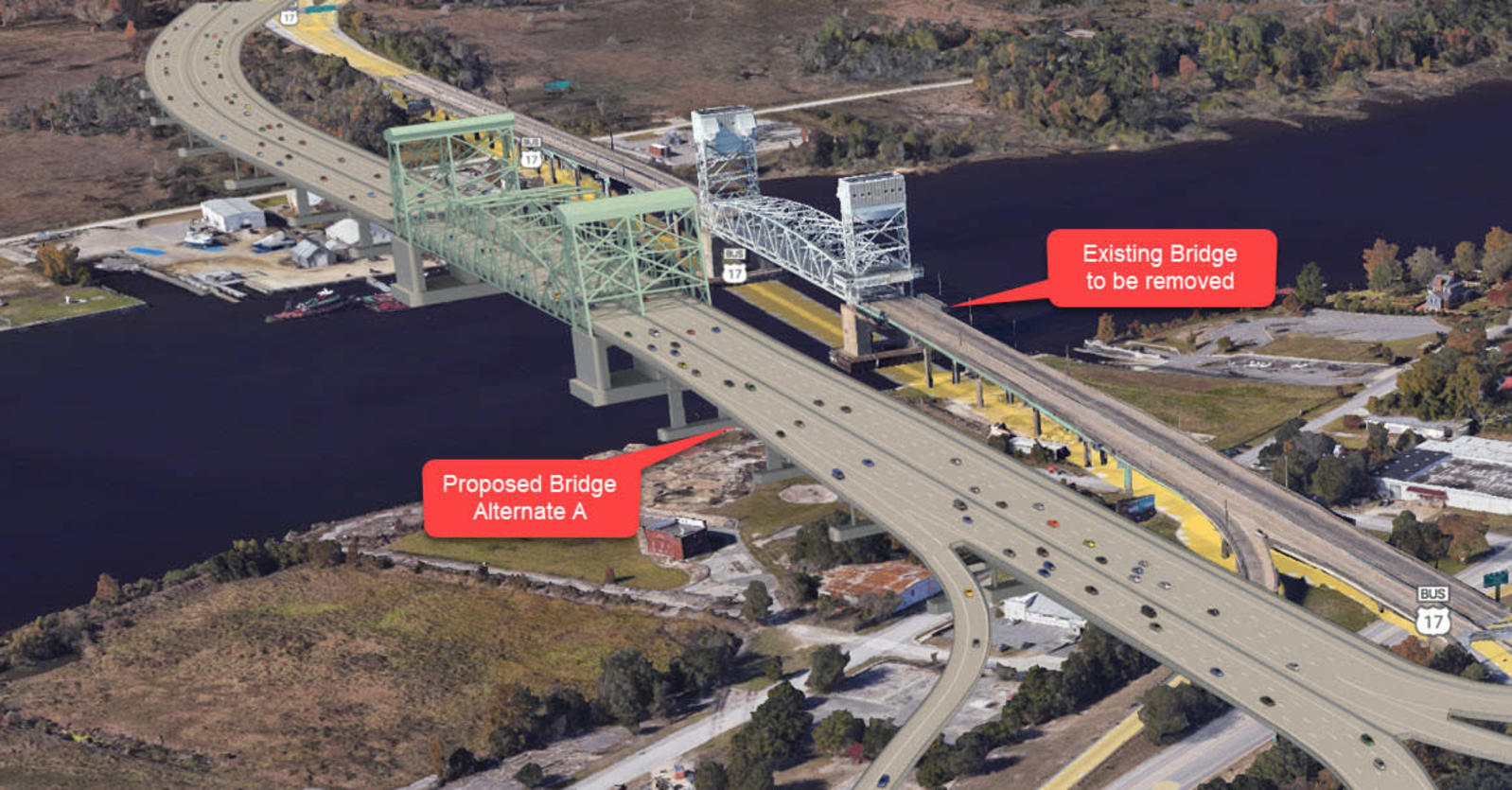
The core of the revision is a tactical shift in how traffic will flow off the span. The new design replaces the previous connection to Fifth Avenue with a corkscrew ramp that deposits vehicles onto Third Street. For local stakeholders—including the Wilmington City Council and the Historic Wilmington Foundation—this development is notable. The original plan risked disrupting a section of the city where municipal and public utility investments already exceed $15.75 million. By rerouting the traffic, NCDOT reports that the number of impacted property parcels has plummeted from 63 to 17.
NCDOT’s estimates indicate the new design will cost $1.02 billion, less than both the original 135-foot design at $1.03 billion and the 65-foot fixed bridge with a movable span reaching 135 feet at $1.11 billion. Despite the design overhaul, NCDOT maintains that the replacement timeline remains intact. The agency is aiming to finalize its choice of alternative by early 2027, a deadline dictated by a ticking clock on federal funding.
Local Officials Lobby for Grant Extension to Avoid Tolls
While the design modification addresses local aesthetic and logistical concerns, the financial architecture of the bridge remains under pressure. The project relies on a $242 million grant from the U.S. Department of Transportation, which carries a strict obligation deadline of September 2027. Local officials in New Hanover County and Wilmington have lobbied for either an extension of this window or additional funding to mitigate the reliance on tolls, a feature that the Wilmington Urban Area Metropolitan Planning Organization (WMPO) voted to include back in January 2024.
The path to tolling is far from guaranteed. Current state law allows NCDOT to toll new roadways, but the agency faces a hurdle in justifying the Cape Fear Memorial Bridge as a “new” facility. If the North Carolina General Assembly refuses to authorize the tolling of an existing route, the project’s primary funding mechanism could evaporate. Without the revenue generated by tolls, the bridge fails to score high enough to qualify for the state’s $85 million contribution under the State Transportation Improvement Program.
NCDOT Division 3 presented a revised alternative for the Cape Fear Memorial Bridge replacement project to minimize impacts to downtown Wilmington based on public feedback. Learn more on the project webpage: https://t.co/Hr4yM4uKXJ pic.twitter.com/V9wqyF7c5U
When asked about the potential for an un-tolled bridge, Caroll acknowledged that the department would need to re-evaluate its next steps, noting that the agency’s current delivery path is strictly limited to the two design alternatives currently under consideration. He confirmed that the North Carolina General Assembly will need to pass an authorization in February to keep the project on track to meet the federal grant’s deadline.
Why Other Options Remain Off the Table
The city’s own consultants had previously put forward three alternative visions, including a pair of side-by-side lift bridges and a “southern bridge” concept. However, NCDOT has signaled that these alternatives are not currently part of their planning scope. The agency cites the rigid federal grant timeline as the primary constraint preventing a deeper exploration of those designs, many of which would require extensive negotiations with the U.S. Army Corps of Engineers and the U.S. Coast Guard regarding channel widths.
The current federal mandate requires a 400-foot channel width at the bridge site. While NCDOT is in ongoing talks with the Corps of Engineers about potentially narrowing that channel to make other bridge types more cost-effective, those details remain unresolved. For now, the department is focused on the two paths forward: the newly modified 135-foot fixed span and the 65-foot fixed bridge with a movable component.
As the project enters its next phase, the public is once again invited to weigh in. Residents can submit their feedback online or via mail until Dec. 4. NCDOT has confirmed there will be no in-person public comment sessions for this specific design iteration.
The outcome of this comment period, coupled with the legislative session in February, will determine whether the Cape Fear Memorial Bridge replacement moves forward as planned or faces a structural delay that could jeopardize its federal grant eligibility. For now, the city waits to see if the corkscrew ramp is enough to bridge the gap between state-level engineering requirements and local community expectations.