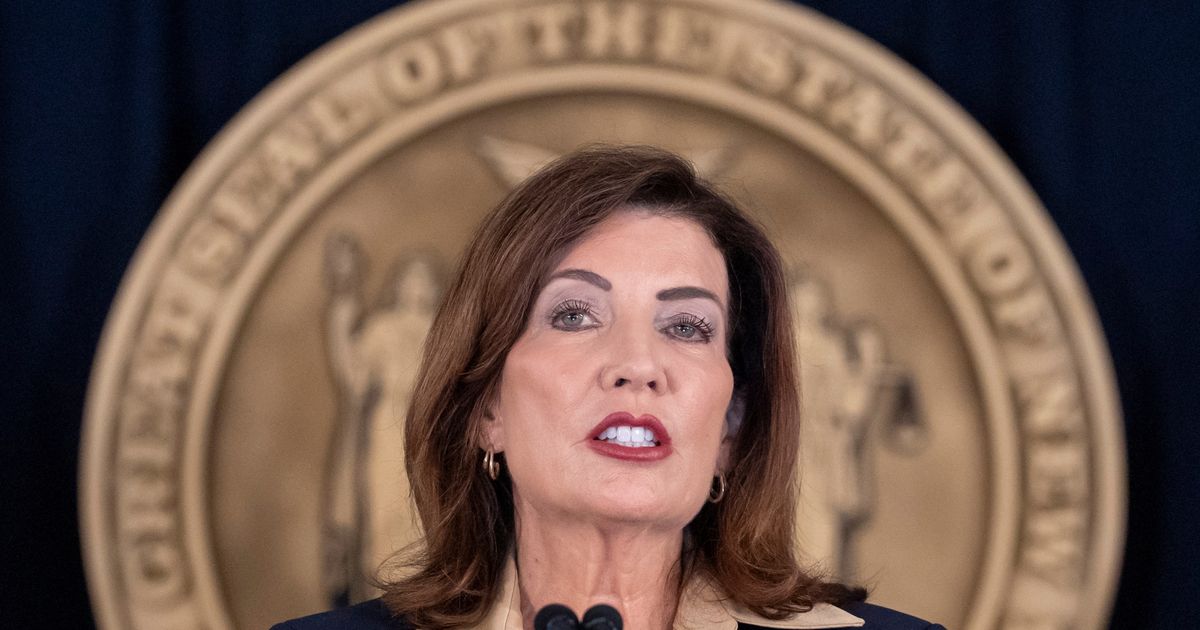
Kathy Hochul signed legislation on Wednesday that prohibits “unsafe AI companion features” when chatbots interact with children under 18. The New York law, which takes effect Jan. 1, targets specific chatbot behaviors to protect minors as state legislatures increasingly move to regulate artificial intelligence amid a lack of action from Congress. Hochul signed the bill while in her reelection campaign, following warnings of existential risks from rapid AI development and calls for Washington to take bold action.
Under the new law, chatbot developers are prohibited from creating interactions with minors that use flattery, involve sexually explicit material, or encourage unhealthy behavior and secrecy. The legislation also outlaws messages suggesting that a chatbot is a real person with opinions, emotions, or an actual relationship with the child. The law provides a dozen definitions of what constitutes “unsafe AI companion features.” Violators may face lawsuits from the state attorney general’s office, with potential penalties including the destruction of data, the shutting down of the chatbot, and monetary damages.
California and New York Lead State AI Restrictions
New York and California are leading a trend of state-level AI restrictions. In September, California Gov. Gavin Newsom signed laws prohibiting addictive features for users under 16 on social media and requiring chatbot developers to submit to independent audits and demonstrate how they eliminate risks to children. Newsom’s legislation also requires developers to assess the risk a model poses to children. Eight states recently sued OpenAI, alleging the company deceived adults and hurt children in violation of state consumer protection laws. One activist called the lawsuit “the most significant coordinated state action ever taken against an artificial intelligence company.”
Despite these efforts, governors have acknowledged that the federal government possesses more extensive abilities to address AI threats. This tension is highlighted by President Donald Trump, who has warned states against regulating AI and brushed off related concerns. State legislatures are increasingly using consumer protection laws to rein in rogue AI frontier models and make the use of AI more transparent.
Analysts View California Law as a National Model
Jim Steyer, CEO and founder of the watchdog group Common Sense Media, described the legislation as the strongest kids’ AI safety bill in the country.
Other analysts suggest the law moves toward regulating chatbot operation and design rather than just crisis protocols. Justine Gluck, a policy analyst at the Future of Privacy Forum, noted that the differing strategies in New York and California could serve as models for other states. Gluck, whose nonprofit focuses on AI governance and data protection, said other states might adopt these models after legislatures reconvene next year. However, Gluck cautioned that some categories in the New York law are undefined or broadly worded, which could complicate enforcement and raise questions about where ordinary conversational responsiveness ends and prohibited behavior begins.



