Quick Answer: Software as a Service (SaaS) is generally not taxable in North Dakota, as the state treats remote-access software as a nontaxable service rather than a tangible sale, provided no physical or downloadable copy is transferred to the user.
For software companies selling into the upper Midwest, calculating state sales tax often involves sorting through a shifting maze of local ordinances and complex state definitions. North Dakota keeps its approach to cloud-based software refreshingly distinct, drawing a hard line between data that stays in the cloud and software that lands on a local hard drive.
According to compliance guidelines outlined by the North Dakota Office of State Tax Commissioner, remote-access subscriptions operate free of state sales tax. Yet, the moment a client application, desktop agent, or offline tool downloads to a user’s machine, the tax treatment changes instantly.
Is SaaS taxable in North Dakota?
North Dakota treats SaaS as a nontaxable service rather than a sale of software, as long as nothing is physically or electronically transferred to the buyer’s local hardware. As noted in guidance detailed by Galvix, hosted access to a platform requires no sales tax collection on the subscription itself.
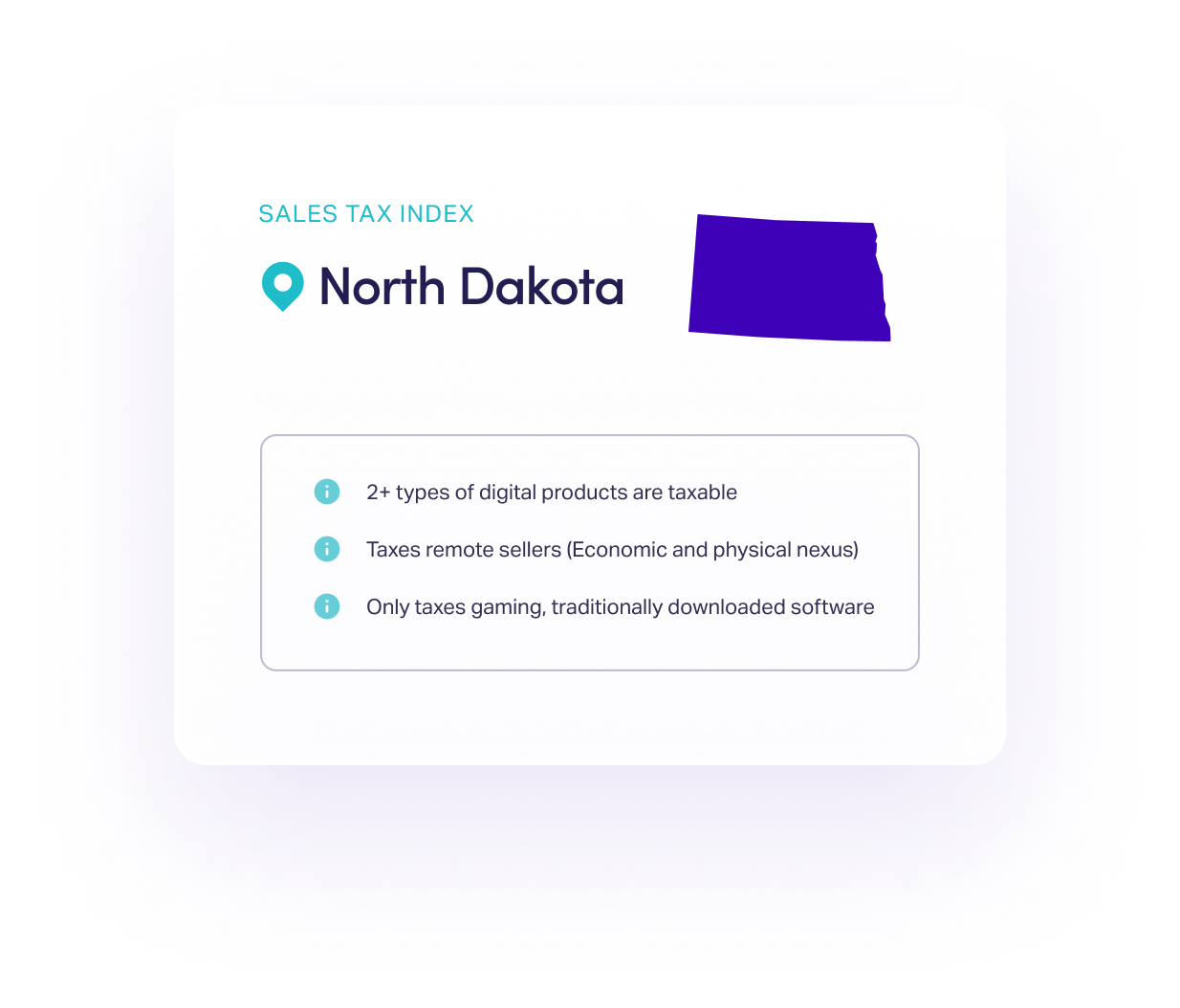
However, off-the-shelf software is taxable when it is downloaded or loaded directly onto a buyer’s computer. To keep accounting clean, businesses must bill hosted access and any downloadable client or installed agent on separate invoice lines. This separation ensures only the downloaded software faces the state’s 5% baseline sales tax.
What are the economic nexus thresholds for remote sellers?
Registration follows nexus. Once a remote seller or marketplace facilitator establishes a physical presence—such as an office, local staff, or inventory—or passes the state’s economic threshold, registration with the North Dakota Taxpayer Access Point (ND TAP) becomes mandatory.
In North Dakota, the economic nexus threshold sits at more than $100,000 in taxable sales over the current or previous calendar year. North Dakota's rules differ from states that enforce a dual transaction-count rule, meaning the 200-transaction threshold does not apply here. Only actual taxable sales count toward reaching that $100,000 mark.
How do local tax rates and invoices apply?
Cities and counties in North Dakota follow the state’s overarching rules for SaaS, meaning the tax status of a cloud subscription does not change from one municipal address to another. While local jurisdictions can add up to 3% to the 5% base state sales tax rate—pushing combined rates typically between 5% and 8.5% according to regional breakdowns—those local additions only apply to items already deemed taxable by the state.
Listing them on dedicated invoice lines protects them from being swept into a bundled software price that might otherwise complicate an audit.
What products are exempt versus taxable?
SaaS rarely exists in a vacuum. Understanding how adjacent products stack up on an invoice helps companies avoid under-collecting or over-remitting.
- Downloaded software: Taxable.
- Custom software: Not taxable when designed or substantially modified for one client.
- Cloud infrastructure and platforms (IaaS, PaaS): Not taxable.
- AI tools and API access: Not taxable.
- Digital goods (e-books, music, video): Not taxable if delivered electronically and not bundled with tangible property.
- Maintenance and support: Taxable when mandatory or when covering downloaded software updates.
For remote sellers, the applicable tax rate is based entirely on where the customer is located rather than where the business servers reside. Buyers utilizing products across multiple states can issue a multiple points of use certificate, paying North Dakota tax solely on the share consumed within state lines.