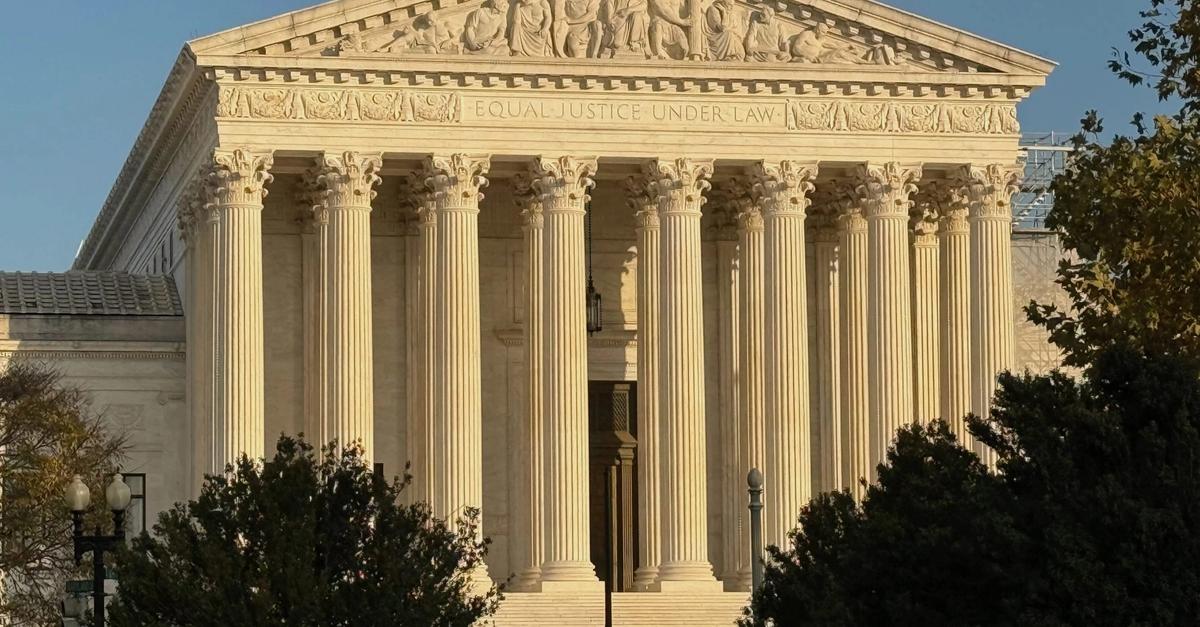
On Oct. 19, the Supreme Court granted cert in a case called Association for Education Fairness v. Montgomery County Board of Education, a case that could be the final nail in affirmative action’s coffin by testing the constitutionality of race-neutral proxies in public school admissions.
The Montgomery County Magnet School Dispute
The core of the legal battle centers on admissions policies for magnet middle schools in Montgomery County. Before the Supreme Court issued its ruling in Students for Fair Admissions, Inc. v. President & Fellows of Harvard College, which found racial preferences at Harvard and the University of North Carolina to be illegal, school districts had already faced judicial limits on using race in student assignments.
In Montgomery County, Asian children make up only 15% of the school system’s population but were taking up half the spots in the magnet middle schools. Hoping to achieve better balance, the education board tested different strategies before settling on a random selection process among candidates who performed above the 85th percentile on standard tests within their local area. Since the selection pool relied strictly on how students performed against peers in the same neighborhood, the framework distributed magnet openings throughout the county – and, because numerous communities lacked racial diversity, it divided these openings across different racial groups as well. The number of black and Latino students went up and the number of Asian students went down.
Challenging Racial Proxies Under the Fourteenth Amendment
Opponents of the policy argue that utilizing geographic filters and standardized benchmarks as proxies for race violates established equal protection principles. Under established legal standards, individuals are considered to be engaging in racial discrimination if their objective is racially discriminatory and their outcome is racially discriminatory — even in the absence of explicit racial categorizations.
This principle echoes past legal battles over voting restrictions, such as literacy tests and grandfather clauses, as well as historical attempts to segregate schools by drawing attendance boundaries around mostly black neighborhoods and mostly white neighborhoods. The central question before the justices is whether selecting applicants through neighborhood-based criteria to achieve a specific racial balance amounts to an unconstitutional workaround of the restrictions established in the Harvard and UNC decisions.
Defenders of the Montgomery County policy, along with supporting academic briefs, often rely on the distinction between “benign” and “invidious” discrimination: the purpose to help is different than the purpose to hurt. Nevertheless, the Supreme Court dismissed that separation within its Students for Fair Admissions decision, pointing out that outcomes frequently operate on a zero-sum basis: providing additional positions to benefit a specific demographic inevitably results in fewer positions and disadvantages for others.
Supreme Court: Association for Educational Fairness v. Montgomery County Board of Ed. "Whether a plaintiff challenging facially neutral admissions policy as racially discriminatory must establish that" the racial group targeted suffers aggregate disparate impact to bring a claim pic.twitter.com/4Wx0AhCoKO
The Legal Question of Disparate Impact
Ruling on the matter, the U.S. Court of Appeals for the 4th Circuit determined that the Asian students were required to demonstrate a “disparate impact” — a concept imported from Title VII jurisprudence indicating that a contested rule affects one demographic more severely than another — which they failed to accomplish because, post-redistricting, they still occupied a larger share of magnet openings than their representation within the applicant pool.
Whether the Supreme Court chooses to address the broader purpose-and-effect doctrine or focuses narrowly on how lower courts define discriminatory impact is still undetermined. As the litigation advances, the outcome will likely determine whether school districts nationwide can use geographic and socioeconomic proxies to influence the racial composition of selective academic programs.