Supreme Court Weighs Colorado Pre-K Rules Against Religious Freedom Claims
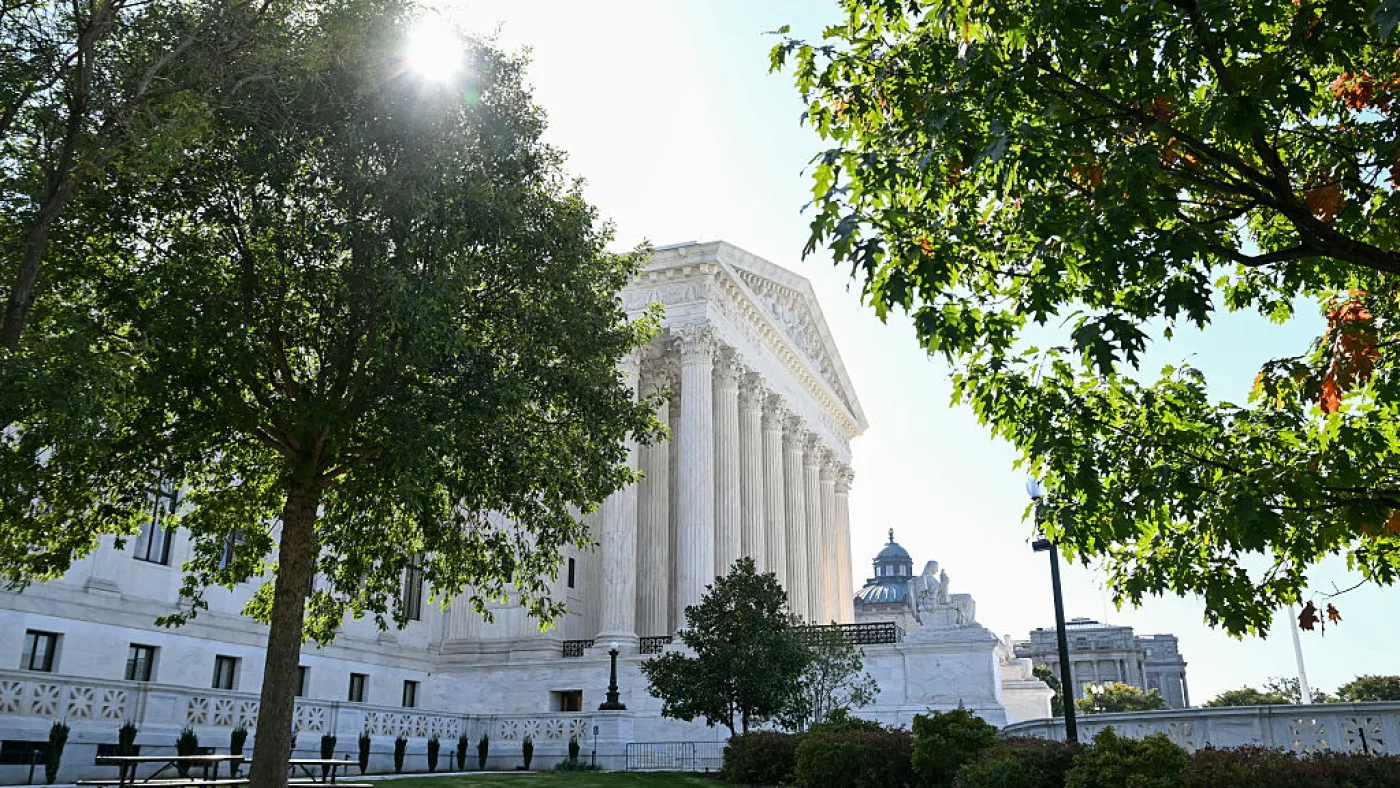
On Tuesday, the Supreme Court hears arguments in a case that places the Catholic Church in direct opposition to taxpayer-funded preschool programs for all 4-year-olds in Colorado, as NPR reported. At the center of the legal battle is whether religious schools can refuse to admit the children of gay and transgender parents while still participating in a state program funded by a tobacco tax that offers a $6,300 annual benefit per child.
The first line of the Bill of Rights establishes that Congress shall make no law respecting an establishment of religion or prohibiting its free exercise. Thomas Jefferson famously described this clause as creating a wall of separation between church and state, a doctrine formally embraced by the Supreme Court in the 1940s. That legal framework held firm until roughly a decade ago, when a new conservative majority on the high court shifted focus from the separation principle toward protecting the free exercise of religion.
“It’s literally the opposite of what the law was not that long ago. It is just a complete shift,” Michigan State University law professor Frank Ravitch told NPR, noting his extensive writing on the Constitution’s religion clauses.
To illustrate the prior legal standard, the Supreme Court ruled 8-to-1 in 1983 that Bob Jones University should lose its tax-exempt status because it banned interracial dating and marriage on religious grounds, establishing that government money could not support racial discrimination. Whether the court will reach a similar conclusion in the Colorado dispute remains uncertain.

Douglas Laycock, professor emeritus of law at the University of Texas at Austin and the University of Virginia, points out that race holds a unique place in American history. “There’s nothing like 250 years of slavery, civil war, 750,000 dead, three constitutional amendments. Nothing like that for any other group,” Laycock explained to NPR. Regarding the Denver archdiocese, Laycock acknowledged that discrimination is occurring, adding, “The question is whether that discrimination is a protected exercise of religion.”
The Clash Over Universal Access and Anti-Discrimination Mandates
According to Steve Fenberg, who held the position of Colorado state Senate president during the development of the pre-K initiative, the state established this expansive program to guarantee that almost every 4-year-old in Colorado could participate in universal preschool. To achieve this broad reach, the state created a plan that included religious schools, provided they complied with state laws barring discrimination based on race, religion, sexual orientation, or gender identity.
State Rep. Emily Sirota, a prime sponsor of the universal pre-K bill, noted that lawmakers wanted parents to have varied choices for their children. The Catholic Church initially endorsed the legislation, and Catholic Charities continues to participate alongside other religious groups, including at least 35 Christian schools, one Muslim school, and three Jewish schools. However, the requirement that participating schools avoid discrimination and admit all students became a point of contention.
The Denver Archdiocese and two local parishes challenged the state law, represented by the Becket Fund for Religious Liberty and its CEO, Mark Rienzi.
Not all Catholic educational leaders share that perspective. Tim Uhl, who currently serves as the interim director of mission and ministry at Notre Dame High School in San Jose, Calif., has led Catholic school systems in seven states and is among a group of Catholic school directors who has filed a brief siding with Colorado.
Supreme Court Ruling Determines Future of Religious Charter Schools
The case arrives before the Supreme Court. Whether government funding for religious charter schools continues and expands depends, of course, on the Supreme Court’s decision in the Colorado case.
Just weeks prior to the arguments, a federal district judge in Oklahoma permitted a taxpayer-funded Jewish charter school to open using state funds, leaving the future expansion of religious charter schools dependent on how the high court resolves the Colorado dispute.