Young Adults Are Returning to the Pew
For decades, the trajectory of American religious life seemed set in stone: a slow, steady decline in attendance and affiliation. But as of 2026, that trend has not only flattened—in some corners, it is beginning to reverse. According to survey data, the nation’s youngest adults report attending religious services more than almost any other age group studied, a trend that religious leaders across Utah say they are witnessing on the ground.
The numbers, as reported by The Salt Lake Tribune, show that 41% of this youngest cohort report attending religious services at least monthly. That figure sits just behind the 43% reported by those born before 1950, and well above the 33% average for U.S. adults overall. While researchers caution that this specific age group can be notoriously difficult to track, leading to wider margins of error, the shift is stark enough to be felt on the ground by faith leaders who have spent years anticipating a continued exodus.
The Search for Stability in an Uncertain Era
For many young adults, the return to religious spaces is not necessarily a return to the rigid dogmas of their childhoods. Instead, people seem to be searching for community and structure during a period of profound societal, environmental, and technological upheaval. Sam Vick, a 19-year-old student at Southern Utah University, describes his own journey as emblematic of this shift. After growing up in a devout Latter-day Saint family in Orem, Vick found himself questioning his faith as a teenager. Yet, rather than embracing a complete secular departure, a moment of reflection inside Notre Dame Cathedral during a family trip to France sparked a change in perspective.
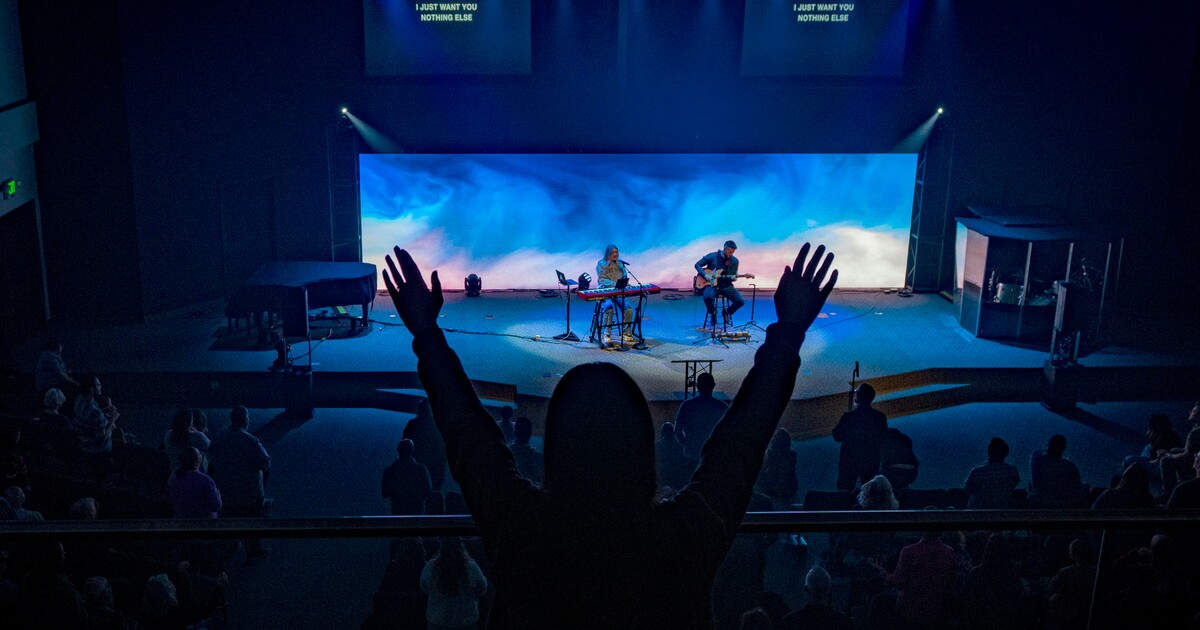
For my generation, what it comes down to is our lives are filled so much with uncertainty and technology that gives so many different conflicting answers, and there’s so much negativity being flooded into our lives, that I think there’s a natural draw toward not only the structure of church, but the peace that comes from a relationship with Christ.
Whether it is a desire for social justice, environmental advocacy, or simply a space where they do not have to defend their identities, young people are gravitating toward institutions that offer a sense of belonging. In the Presbyterian community in Cedar City, for instance, the number of young adult ministries has grown from zero to four in just the last two years.
Varied Drivers of Reengagement
The reasons for this uptick are as diverse as the congregations themselves. At Congregation Kol Ami in Salt Lake City, Rabbi Sam Spector notes that the growth is being driven by young adults who are actively seeking a community of common interests. For many Jewish young adults, this push is also a response to the rising tide of antisemitism observed since the October 7, 2023, Hamas attacks on Israel. Spector explains that for those feeling isolated on college campuses or in other social spaces, the synagogue offers a sanctuary where they do not have to explain or defend their existence.
Imam Shuaib Din of the Utah Islamic Center in West Jordan sees a different, global momentum at play. He suggests that the increase in younger congregants is part of a broader movement of Muslim youth who are intentionally reconnecting with their ancestral roots after moving away from the influence of colonial-era structures. Meanwhile, leaders in the Community of Christ emphasize that their focus on environmental stewardship and social justice is resonating with a generation deeply concerned about the future of the planet.
The Changing Landscape for Latter-day Saints
While the broader data suggests a national flattening of religious decline, the situation for The Church of Jesus Christ of Latter-day Saints remains complex. Research from Pew and Brigham Young University indicates that the faith continues to face challenges in retaining its youngest members, particularly women. In 2024, retention rates for those aged 18 to 24 were recorded at just over 50% for men and slightly above 40% for women—the lowest of any group studied.
However, the church is not standing still. It has reported record numbers of full-time missionaries and an increase in enrollment across its university and institute programs. Yet, as noted by Mormon News in its summary of the trend, many young adults who leave the Latter-day Saint faith are not necessarily abandoning religion altogether. Instead, they are often “shopping around” for denominations that align more closely with their current values. For many, the result is a hybrid identity—a spiritual life that maintains the structure of faith while often moving outside the traditional boundaries of their upbringing.
Ultimately, the surge in attendance among those aged 18 to 22 suggests that the “death of religion” narrative may have been premature. In a world defined by digital noise and rapid change, the physical, local, and communal nature of religious life is finding a new, if unexpected, audience.