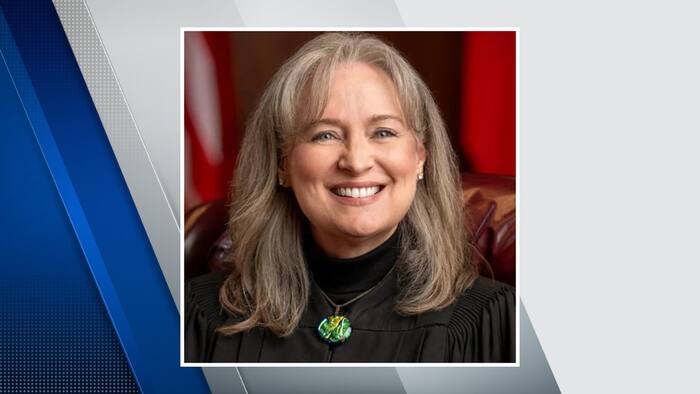
Texas Chief Justice-Elect Maggie Ellis Targets Judge Religious Exemptions for Weddings
Incoming Texas Supreme Court Chief Justice Maggie Ellis has signaled her intention to eliminate a judicial policy that protects judges who decline to officiate same-sex marriages based on religious beliefs. As click2houston.com reported, the disagreement over religious freedom and same-sex marriage is already emerging as an early flashpoint for the state’s highest civil court following Tuesday’s election.
The policy at the center of the debate was adopted by the Texas Supreme Court in October 2025. The measure introduced a clarifying remark to Canon 4 of the Texas Code of Judicial Conduct, establishing that judges do not commit a violation by publicly declining to conduct a wedding ceremony on the grounds of a deeply held religious faith. Ellis, a Democrat elected on Tuesday, wants to revisit those protections. She told the Dallas Morning News that her goal is to require judges to perform all marriages or none at all.
In a 2025 candidate questionnaire submitted to Stonewall Democrats of Austin, she identified the court’s order as the primary motivating factor in her campaign. She previously served on Texas’ Third Court of Appeals starting in January 2025 and campaigned on expanding access to justice and removing politics from the bench.
Judge Fights Public Warning over Same-Sex Weddings
The underlying dispute traces back to a yearslong legal battle involving McLennan County Justice of the Peace Dianne Hensley. Hensley stopped performing weddings for same-sex couples due to her Christian beliefs while continuing to officiate opposite-sex weddings, utilizing a referral system for same-sex couples.
In 2019, the State Commission on Judicial Conduct issued Hensley a public warning for raising concerns about judicial impartiality. Hensley challenged that disciplinary action, leading to a 2024 Texas Supreme Court ruling that she could pursue certain legal claims against the commission. Jack County Judge Brian Umphress also challenged the commission’s application of the canon in federal court.
Following the October 2025 rule clarification, the commission attempted to interpret its meaning, prompting the Texas Supreme Court to issue another decision on January 9, 2026. The court affirmed that jurists could turn down same-sex marriage ceremonies openly for moral or religious reasons while still handling opposite-sex unions.
First Liberty Institute Vows Defense of Existing Protections
Religious liberty groups have responded sharply to Ellis’s stated intentions. The Plano-based First Liberty Institute criticized her position on Friday, arguing that it undermines foundational American rights.
“It’s sad that an incoming Justice’s first public statement is one against religious freedom,” said Kelly Shackelford, president, CEO and chief counsel for First Liberty Institute, as reported by texasscorecard.com. “We’ve won in litigation on this very issue. Religious freedom and accommodation are fundamental rights rooted in the history and tradition of America. The new Chief Justice is off to a regrettable start.”
Shackelford stated that First Liberty stands ready to defend any judges affected by potential changes to the policy. The organization argues that public officials should not be forced to choose between performing marriages and adhering to their religious convictions.
Upcoming Political Shifts on the Court
Despite Ellis’s victory, the existing judicial policy remains firmly in place. Changing the Texas Code of Judicial Conduct requires formal action by the Supreme Court, meaning Ellis cannot unilaterally eliminate the accommodation when she takes office in January. The political balance of the court is shifting. Following Tuesday's election results, the court moves from a 9-0 Republican majority to a 5-4 Republican majority, with Justice Debra Lehrmann expected to be the decisive swing vote.
The dispute does not alter the legality of same-sex marriage in Texas, which has remained constitutionally protected nationwide since the U.S. Supreme Court’s 2015 ruling in Obergefell v. Hodges. Instead, the upcoming clash centers entirely on the administrative duties of judges who choose to perform marriage ceremonies as an authorized public service.