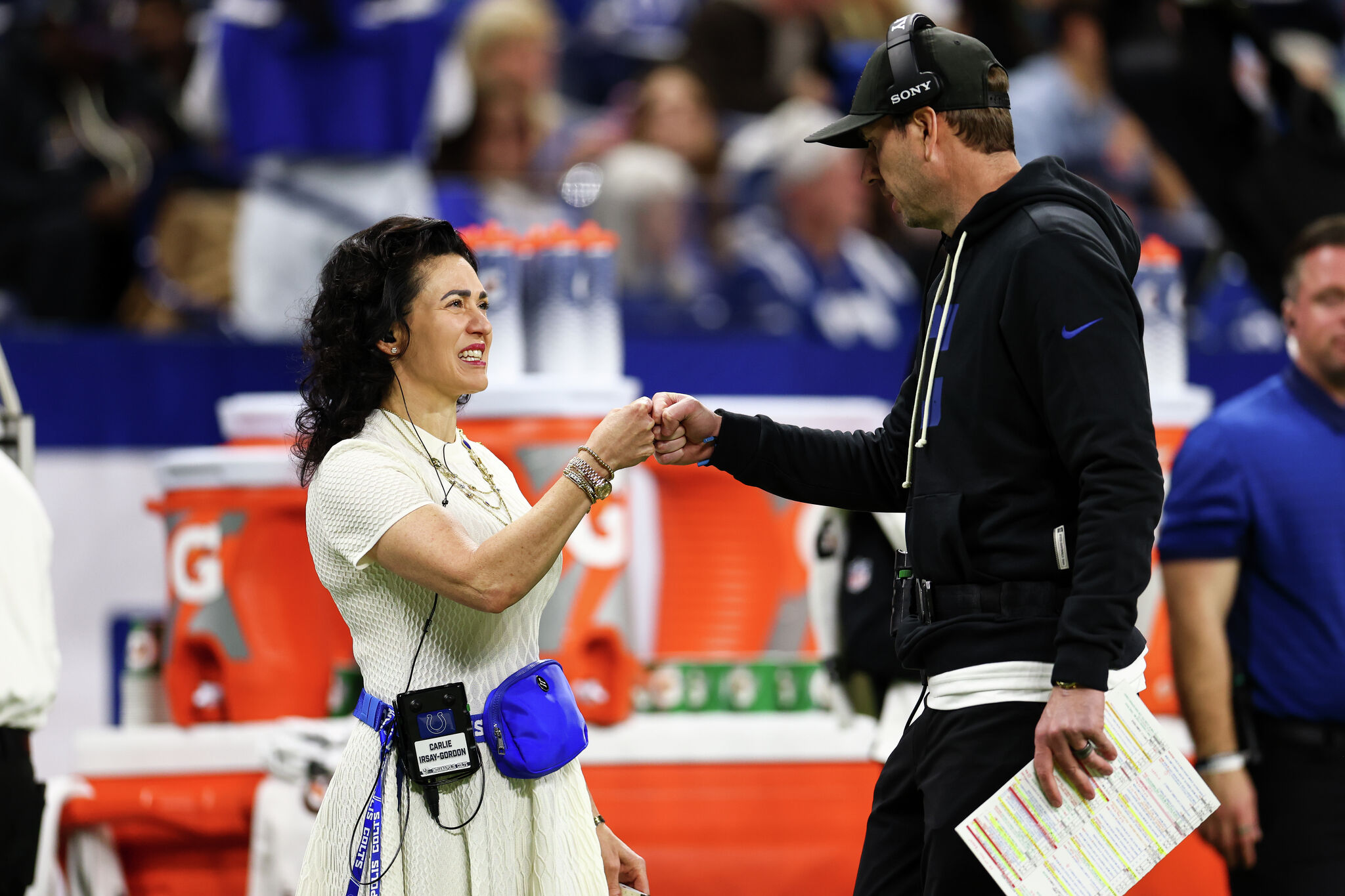
When the Dallas Cowboys face the Indianapolis Colts, the television broadcast will inevitably cut away to draw parallels between Jerry Jones taking over a struggling franchise in 1989 and second-year Colts owner Carlie Irsay-Gordon managing a difficult rebuild on the sideline today. But as Charlotte Jones observes, those surface-level comparisons miss a much deeper, generational transformation unfolding across the National Football League.
FRISCO — Thirty-seven years separate the two moments, yet the framework looks nearly identical. A storied franchise hits a rough patch. An intensely engaged owner stands visibly present on the sideline, absorbing the public uproar and media microscope that follows. For the Dallas Cowboys, that was Jerry Jones in 1989. Today, it describes Carlie Irsay-Gordon, the second-year Indianapolis Colts owner.
That shared backdrop makes the meeting between the Cowboys and the Colts a fascinating study in contrast. While television cameras will hunt for easy narratives about demanding owners, a more profound evolution is taking place inside the league’s executive ranks. Charlotte Jones, the Cowboys’ chief branding officer and co-owner, sits with a unique vantage point built over 37 years in what she simply calls “the room.”
Inside the Evolution of the NFL Ownership Room
“That room has dramatically changed in terms of its makeup,” Charlotte said, reflecting on decades of league meetings. “It’s always felt very familial, so it’s not been surprising as the next generation has stepped into it. To watch that dynamic shift has been so interesting. It has opened opportunity for a next generation that looks a little different than the first: a kind of gender diversity in the room that wasn’t there.”
Out of the league’s 32 franchises, 29 remain primarily family-owned. At least 13 of those organizations feature principal or significantly active women owners. That group includes the controlling owners of the Colts, Lions, Saints, Seahawks, and Titans. Tennessee controlling owner Amy Adams Strunk visits AT&T Stadium, and Dallas later travels to Seattle to face a franchise led by Indian American businesswoman Neeru Khosla.

None of those leaders, however, attract the specific brand of scrutiny directed at Irsay-Gordon. While other owners manage from suites or boardrooms, Irsay-Gordon has been spotted wearing an active-listening coach’s headset, carrying a laminated play-call sheet, and taking handwritten notes on the sideline.
Cowboys coach Brian Schottenheimer said Friday during his weekly appearance on 105.3 The Fan that he thinks the situation is definitely unique, but that to him, everything runs through ownership. Schottenheimer added that if they want to listen to the calls or wear a headset, he does not have a problem with it.
Irsay-Gordon, alongside her younger sisters Casey Foyt and Kalen Jackson, spent 14 years working in executive positions under their father, Jim Irsay, before his passing in May 2025 at age 65.
The Family Business and the Cost of Experience
When the Colts started last season with a 7-1 record, nobody questioned Irsay-Gordon’s hands-on immersion in the offensive and defensive playbooks. As she pointed out last October regarding her deep dive into team operations: “I would suggest it for anyone else that has to pay coaches and GMs millions and millions of dollars. It helps you make a less expensive mistake, potentially.”

An injury to quarterback Daniel Jones triggered a slide that ended last season, and the Colts carry a four-game losing skid into Sunday, bringing back memories of Jones’ 1-15 debut season in Dallas. Charlotte knows that pressure intimately. When her father bought the Cowboys on February 25, 1989, she joined her mother Gene and brothers Stephen and Jerry Jr. in realizing their family dynamic had fundamentally shifted.
“The greatest thing is that it was a new family business,” Charlotte recalled from her office at The Star. “It wasn’t like joining my father in the oil and gas business, which he’d been doing for decades. You came in and it was like a fire everywhere. ‘Everyone just grab a hose and figure it out,’ that’s kind of what it was. And that was the beauty of it.”
When she told her father she knew nothing about running a professional football franchise, Jerry replied with characteristic bluntness: “That’s OK, I don’t, either.” That willingness to learn everything down to the equipment level mirrors the path Irsay-Gordon is carving out in Indianapolis.

Expanding Demographics in Stadiums and Boardrooms
The changing face of ownership mirrors a broader shift in who consumes the game. Internal metrics culled by the Cowboys show that 49.8% of the franchise’s fan base is now female, climbing steadily from the high 30s when metric tracking began about a decade ago.
“To watch that multiplier of growth, it’s really significant to us,” Charlotte said. “Being able to see that through a lens in everything you do, from how you engage, to the social conversation, to offerings at the concession stand. Absolutely everything is impacted.”
That perspective influences decisions from stadium design to grassroots participation. Charlotte serves as chairman of the NFL Foundation, overseeing youth football health, safety, and community outreach. That work increasingly incorporates the growth of girls flag football, which boasts roughly 200,000 players nationwide, is slated for its Olympic debut in Los Angeles, and continues expanding scholarship opportunities at the collegiate level.
When fans tune in on Sunday to watch the Cowboys and Colts, the television broadcast will lean heavily on the familiar theatrics of owner cutaways and sideline pacing. But beneath the familiar broadcast tropes lies a permanent structural shift—one where diversity of voice in the executive suite is no longer the exception, but the new standard.