
The Court formally entered a final consent decree on May 26, 2026, putting a legal cap on a water dispute between Texas, New Mexico, and Colorado over the Rio Grande. The ruling resolves litigation under Case No. 141, Original, titled Texas v. New Mexico et al.
Resolving the Rio Grande Compact Dispute
The newly entered decree adopts the Fourth Interim Report of the Special Master, written by the Honorable D. Brooks Smith of Duncansville, Pennsylvania. With the final decree entered, the court discharged Special Master Smith with its thanks.
The underlying framework governing the river is the Rio Grande Compact, which Congress approved on May 31, 1939. Under the Compact and a 1948 resolution of the Rio Grande Compact Commission, New Mexico must deliver water as measured at Elephant Butte Reservoir, based on upstream flows recorded at the Otowi Bridge near San Ildefonso.
Below Elephant Butte, the water division splits according to authorized irrigable acreage percentages established at the time of the Compact: approximately 57 percent in New Mexico and 43 percent in Texas. The new decree sets up the Effective El Paso Index (EEPI) to govern compliance for deliveries below the reservoir.
How the Effective El Paso Index Works
Under the decree terms, New Mexico must manage water to satisfy the Effective El Paso Index requirements. The index calculates the water Texas is entitled to receive, relying on regression analysis of historical Caballo Releases and flows reaching the El Paso Gage during the D2 Period from January 1, 1951, through December 31, 1978.
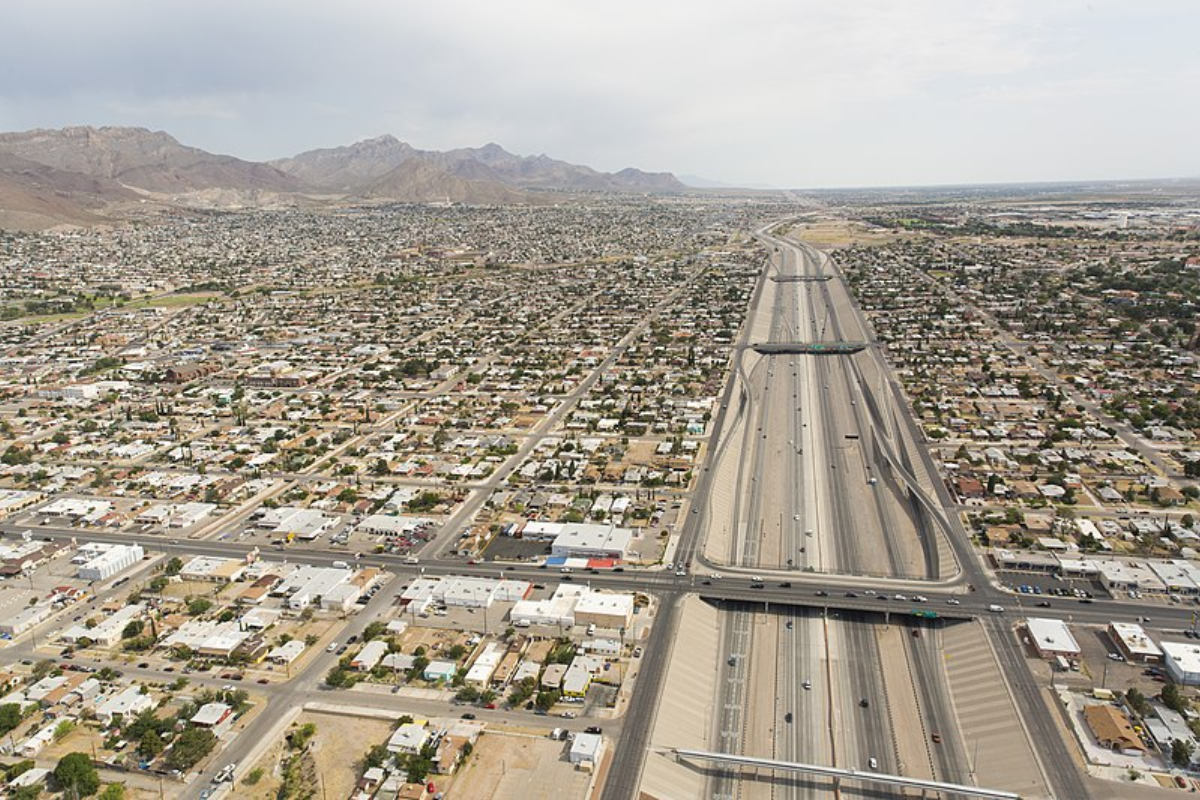
The calculation accounts for historical agricultural and domestic, commercial, municipal, and industrial depletions caused by surface and groundwater use in the Texas Mesilla upstream of the El Paso Gage, while subtracting out deliveries to Mexico under the Convention of 1906. River operations, groundwater pumping, and variable hydrologic conditions can cause departures from the strict index obligation.
To handle those fluctuations, the decree establishes specific departure limits and caps:
- Maximum Annual Positive Departure: Capped at 67,500 acre-feet. Any excess is treated as 67,500 acre-feet for accounting purposes.
- Annual Negative Departure Caps (First 5 Years): Annual negative under-deliveries exceeding 112,500 acre-feet are treated as 112,500 acre-feet. Total accrued negative departures cannot exceed 150,000 acre-feet.
- Annual Negative Departure Caps (Year 6 Onward): Annual negative under-deliveries exceeding 90,000 acre-feet are treated as 90,000 acre-feet. Total accrued negative departures cannot exceed 120,000 acre-feet.
New Mexico Water Transfers Reduce Negative Departure Limits
The decree allows for water allocation transfers between the Rio Grande Project irrigation districts in New Mexico and Texas. When a transfer occurs from New Mexico’s current-year allocation to Texas’s allocation, New Mexico’s accrued negative departures drop by an equal amount.
Exceeding the accrued negative departure limits places New Mexico in direct violation of the decree.



