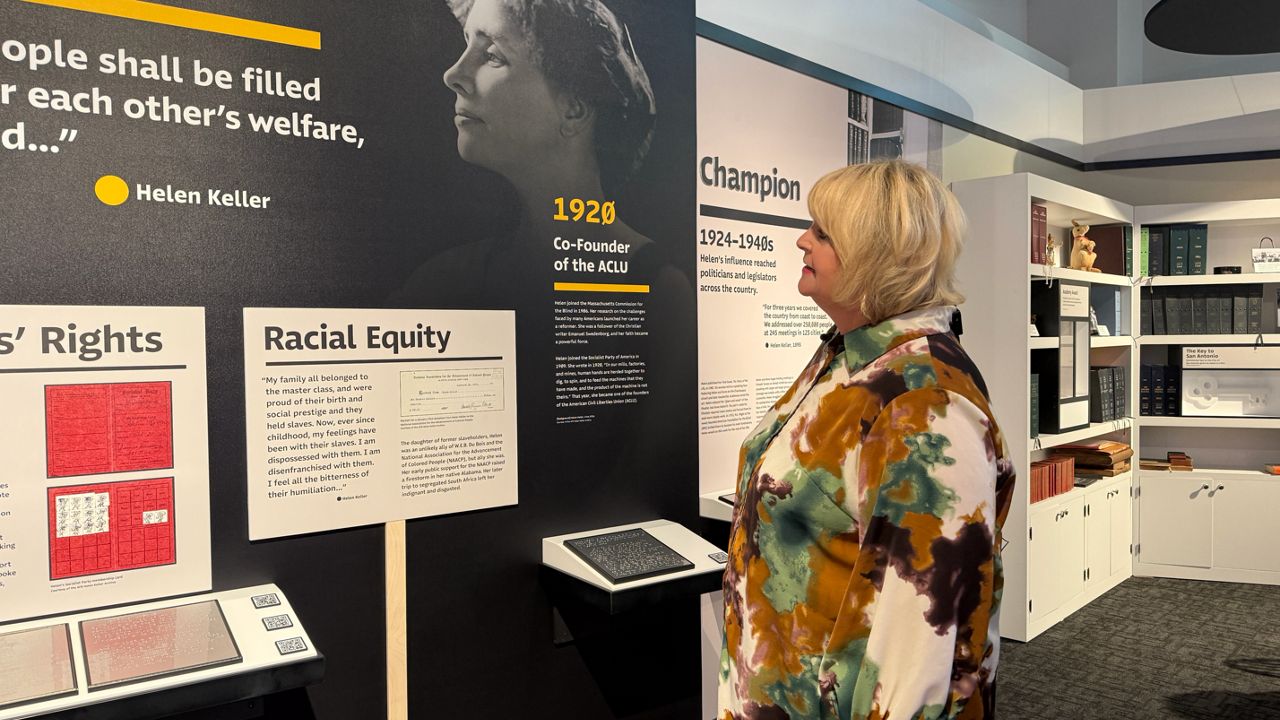
Opening on Friday, The Dot Experience in Louisville, Kentucky, shifts the traditional museum model by placing accessibility at the core of its design, utilising touch, sound, and narrative to present history through non-visual mediums.
Inside the Exhibits at The Dot Experience
The newly established museum features interactive installations that trace both historical milestones and future advancements in accessible technology. A central exhibit examines the life and legacy of Helen Keller. Keller Johnson-Thompson, executive vice president of the Helen Keller Foundation for Research and Education and Keller’s great-grandniece, toured the space ahead of its public opening.
“I’m just in awe,” Johnson-Thompson said. “I have always wanted for everyone to be included in the Helen Keller experience because that’s what she fought for her entire life.”
Johnson-Thompson described her great-aunt as a warrior and a fighter, emphasising that the exhibit mirrors Keller’s lifelong advocacy for global inclusion. Beyond the Keller gallery, the museum explores nearly 170 years of accomplishments by the American Printing House for the Blind, alongside current innovations and upcoming projects in the field.
Dot Experience Connects Visitors with Accessible Design Evolution
Darrick Wood, director of the Dot Experience, outlined the institution’s mission to connect visitors with the evolution of accessible design. He noted that the museum aims to demonstrate what is happening now and what comes next in the sector.

“How do you learn from the exhibits, learn from the people that you talk to, learn from the experiences here, and then go out and make the world a better place?” Wood said.
Wood expressed a dual objective for the museum’s audience: offering a welcoming environment for individuals who have historically felt uncomfortable in traditional museum settings, while encouraging visitors accustomed to standard museum layouts to consider alternative modes of engagement.
Museum Opens with Tours of Printing Factory
In addition to the indoor galleries, visitors can tour the American Printing House for the Blind factory to observe the production process for accessible products firsthand. The museum opens to the public on Friday, establishing a Louisville venue dedicated to inclusive education and technological history.
This is a real tax-funded exhibit in Louisville that helps black people "experience being enslaved" It begins with a "we was kings" speech pic.twitter.com/LK3pGGzIfk



