History in West Virginia rarely arrives all at once. Instead, it accumulates through generations of boundary-makers, industrial tragedies, and moments of quiet endurance. Looking back across the calendar week of November 1 to 7, the Mountain State’s past unfolds not just as a sequence of dates, but as a ledger of human cost, civic milestones, and extraordinary acts of survival recorded by e-WV: The West Virginia Encyclopedia and detailed in historical retrospectives.
Early Settlers and the Shaping of the Land
Long before official borders were drawn, the region’s geography dictated its human story. On November 1, 1688, Morgan Morgan was born in Wales. While traditional accounts long cast him as the first White settler of West Virginia, others were likely here first. In 1731, Morgan put down roots in Berkeley County’s Bunker Hill district, where he constructed a still-surviving log dwelling.
Decades later, the state’s subterranean wealth found its foremost scientific champion in Israel Charles White, born in Monongalia County on November 1, 1848. Appointed as West Virginia’s first state geologist in 1897, White served until his death in 1927. Remarkably, he worked without pay for all but two of those years.
As transportation networks expanded to match industrial growth, the state’s infrastructure reached new heights. The Wheeling-Ohio County Airport officially opened on November 1, 1946, followed on November 2, 1952, by the dedication of Tri-State Airport in Wayne County, where Piedmont Airlines completed the first official landing at 11 a.m. On November 3, 1947, Kanawha Airport—now known as Yeager International Airport—was dedicated with World War I ace Capt. Eddie Rickenbacker among the dignitaries in attendance. Meanwhile, the state’s cultural voice found an electronic medium on November 1, 1961, when WMUL-FM at Marshall University began broadcasting as West Virginia’s first non-commercial radio station.
The Crucible of Civil War and National Division
The fault lines of the American experiment tore directly through the Mountain State’s ridges, culminating in high-stakes military and legal confrontations. On November 2, 1859, a Charles Town courtroom inside the Jefferson County Courthouse was the site where John Brown received his death sentence for treason, murder, and insurrection. The nation was profoundly shaken by Brown’s raid on Harpers Ferry and the subsequent legal proceedings; this intensified the divide between the North and South and severely narrowed any remaining middle ground for a peaceful compromise to prevent the Civil War.
Four years later, military control of the newly formed state faced a definitive test. On November 6, 1863, Confederate troops led by Brig. Gen. John Echols were defeated at Droop Mountain by a larger federal force led by Brig. Gen. William W. Averell. This was one of the most important Civil War battles fought on West Virginia soil.
Citizens Earn Medals for Battlefield Courage
The state’s legacy is equally defined by the extraordinary courage of its citizens on distant battlefields and the quiet resilience of its working-class communities. Actions beginning on November 1, 1968, near the Cambodian border during the Vietnam War led to Fayette County native Charles Rogers receiving the Medal of Honor. Decades earlier, on November 2, 1944, B-17 navigator and Huntington native Robert Femoyer, despite being mortally wounded during a bombing mission over Germany during World War II, refused medical aid and guided his damaged plane safely back to England. Tragically, thirty minutes following his successful touchdown, he succumbed to his injuries, having secured the Medal of Honor through the incredible valor and proficiency that preserved his entire crew. Herbert J. Thomas Jr., who grew up in South Charleston, was killed in the South Pacific on November 7, 1943, by throwing himself on a grenade, saving his fellow squad members. WVU Medicine’s Thomas Memorial Hospital in South Charleston is named in his honor.
Civilian life carried its own profound burdens and cultural triumphs. Wyoming County’s Glen Rogers coal mine was the site of a November 6, 1923 methane gas explosion that claimed the lives of 27 miners. The mine, which opened in 1921, became one of the state’s largest. Over its 31-year operational lifespan prior to closure, the facility recorded a cumulative 160 deaths. Out of the harsh realities of the coalfields also emerged fierce cultural preservation. Nimrod Workman, born in Oppy, Kentucky, on November 5, 1895, lived most of his life in Mingo County working as a coal miner, folk singer, and labor activist. In 1986, he became the first West Virginian to be named a National Heritage Fellow.
Creative and athletic milestones punctuated the era as well. On November 3, 1943, Governor Matthew Neely named James Lowell McPherson state poet laureate. At age 22, McPherson was the youngest person ever to serve in that role. On November 5, 1891, Alfred Earle “Greasy” Neale was born in Parkersburg. He was one of West Virginia’s greatest all-around athletes. On November 6, 1878, Cornelius Lonzo Burdette was born in Sandstone, Summers County. Participating as part of the rifle team at the 1912 Summer Olympics in Sweden, he secured a medal equivalent to gold. He was the first West Virginian to win Olympic gold.
International artistic threads also found a permanent home in West Virginia. Musician “Ellie” Mannette, born in Trinidad on November 5, 1927, helped popularize steel drum music worldwide. In 1992, he became an artist-in-residence at WVU, coordinating the school’s steel drum program. In 1999, he was named a National Heritage Fellow. In sports integration, Bluefield-born Toni Stone joined the Negro American League in 1953, becoming the first woman to play pro baseball in a previously all-male major league, prior to her passing on November 2, 1996.
Devastation and Endurance
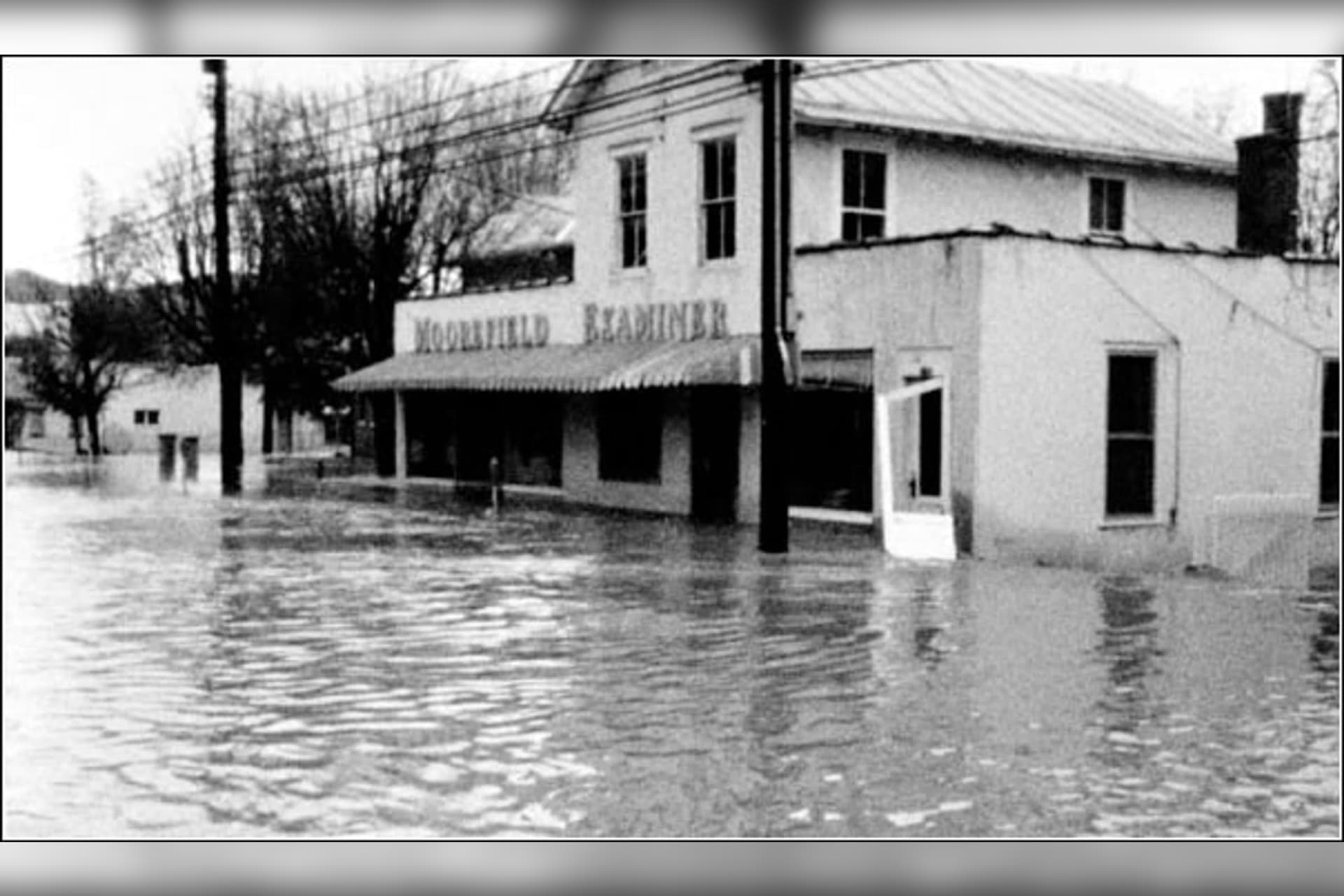
Nature’s destructive force visited the state most catastrophically during the early days of November 1985. On November 4–5, 1985, heavy rains led to devastating floods in parts of West Virginia. Forty-seven people were killed, and several towns were severely damaged.
Through every trial, civic and spiritual institutions provided enduring anchors. Organized on November 7, 1775, the historic Forks-of-Cheat Baptist Church was organized about six miles north of Morgantown. It is the oldest church with continuous records west of the Alleghenies in West Virginia.