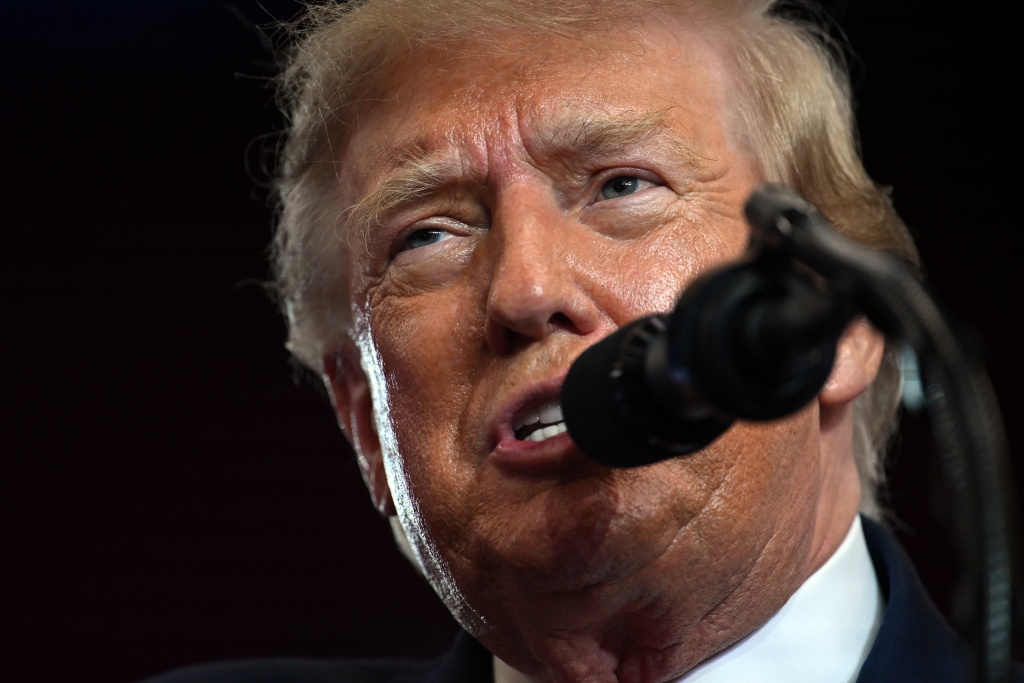
“To me, that’s voter fraud at the highest level,” President Donald Trump told reporters on Wednesday. The President is now demanding that Democratic Senate candidate Mary Peltola and a separate candidate who shares a name with Alaska’s Republican incumbent be stripped from next week’s election ballot. Trump is accusing Democrats of orchestrating an illegal scheme to confuse voters through the recruitment of “spoiler” candidates.
The firestorm follows a New York Times investigation which revealed that Democratic operatives secretly sought out individuals to run as “spoilers”—specifically targeting people with names similar to Republican opponents to siphon off votes. In this case, the target was Republican Senator Dan Sullivan. The Democrats allegedly recruited another man named Dan Sullivan, a retired teacher from a remote Alaskan fishing community, to enter the race. This practice, known as ballot stacking, is generally legal and has been used by both parties in Alaska.
The Strategy of the Second Sullivan
The New York Times report details a coordinated effort involving senior aides and lawyers for Mary Peltola, as well as officials from the Democratic Senatorial Campaign Committee (DSCC). Central to the operation was a Democratic operative named Jerid Kurtz, who the Times reports traveled throughout Alaska under an assumed name to recruit candidates. Kurtz reportedly urged one Democrat to exit the race after the August primary to make room for Gerald Heikes, another recruit who ran as a Republican.
The human element of this strategy is stark. Daniel J. Sullivan, the retired teacher, maintains he entered the race of his own volition. However, the internal mechanics described by the Times suggest a calculated approach. Elisa Rios, Peltola’s former campaign manager who was fired in August, told the newspaper that the candidate was “definitely aware” of the project, though she claimed Peltola herself was not directly involved. While Rios later tried to retract these statements amid a planned wrongful termination lawsuit, the Times noted her accounts aligned with other evidence, including dozens of text messages and internal documents.
For the average voter in a remote Alaskan precinct, the impact of this story is immediate: confusion. When a voter sees two names that are identical on a ballot, the risk of a “spoiled” or incorrect vote increases. In a tight race, a few hundred votes cast for the “wrong” Dan Sullivan could theoretically flip a seat in the U.S. Senate, altering the balance of power in Washington.
Legal Battles and the Definition of Fraud
President Trump has taken this beyond rhetoric, ordering the Justice Department to sue the state of Alaska. The lawsuit seeks to delay the certification of the election results if Peltola wins by a narrow margin and it appears the namesake Sullivan’s presence influenced the outcome. Trump has further alleged that Democrats committed perjury by making false statements under oath in federal court regarding these tactics.
But here is where the legal reality clashes with the political narrative. The New York Times investigation noted that ballot stacking is generally legal and has been utilized by both major parties. To provide a recent parallel, the Times pointed to a 2024 primary in New York where a former Republican, Anthony Frascone, beat Democrat Mondaire Jones in a Working Families Party primary. Despite accusations that Frascone was a Republican spoiler, a Westchester judge kept him on the ballot.
The state has asked a federal judge to dismiss the Justice Department’s lawsuit, arguing it has no legal basis.
Alaska’s own judiciary has already weighed in. In June, the Alaska Supreme Court upheld the retired teacher’s right to run, rejecting earlier Republican attempts to remove him. The court's decision highlights a fundamental tension in American elections: the line between "aggressive campaigning" and "voter fraud."
The Stakes for the Ballot Box
The DSCC and Peltola’s campaign have flatly denied recruiting any candidates. Yet, the presence of a second Sullivan on the ballot remains a volatile variable. If the Justice Department’s lawsuit gains traction, it could set a precedent for how “spoiler” candidates are handled in ranked-choice voting systems, which Alaska employs. This system is designed to mitigate the spoiler effect by allowing voters to rank candidates by preference, but the psychological impact of identical names remains a loophole.
The fallout of this dispute extends beyond Alaska. It highlights a growing trend of “lawfare,” where the courtroom becomes a primary theater of the campaign. Whether this is viewed as a necessary check on deceptive tactics or an attempt to interfere with a certified ballot depends entirely on which side of the aisle you sit on.
As the election looms next week, Alaska voters face a ballot that has become a centerpiece of a national legal war. The question is no longer just about who should represent the state in the Senate, but whether the names on the paper are there by choice or by design.



