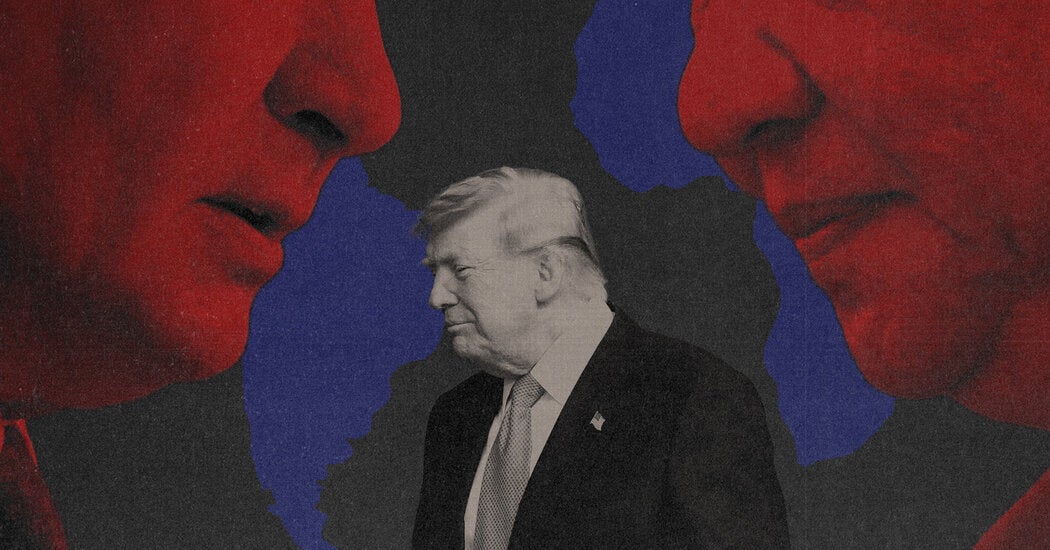
On Monday, President Donald Trump set off for Asia to hold talks with local leaders, with scheduled conversations regarding nuclear arms alongside Russian President Vladimir Putin and Chinese President Xi Jinping.
Before heading to a summit in China—where disagreements over advanced technology and trade issues persist—Trump’s trip starts with a stop in the Philippines.
The White House has announced a three-way meeting involving Trump, Xi and Putin, with nuclear weapons expected to be the main subject on the agenda. The leaders are scheduled to meet Thursday on the sidelines of the Asia-Pacific Economic Cooperation gathering, according to a briefing by White House spokeswoman Olivia Wales. The Kremlin has also confirmed the planned meeting.
The talks mark the first meeting involving the three leaders together. Although no new arms control framework has been unveiled by their administrations, Trump has pushed for a pact that covers the atomic stockpiles of Russia, China and the United States.
Because its stockpile is much smaller, China has traditionally declined to participate in nuclear disarmament talks under the same conditions as Russia and the United States. During discussions regarding the summit, Center for Strategic and International Studies senior adviser and former ambassador to Malaysia Edgard Kagan pointed out Beijing’s hesitation.
The Chinese strongly disagree with the idea that they should be involved in any kind of trilateral discussions with the United States and Russia on nuclear weapons.
Edgard Kagan, senior adviser at the Center for Strategic and International Studies
Kagan added that China wants to avoid this because they don’t want to be locked into a subservient position.
In China, Trump will hold bilateral discussions as Washington and Beijing navigate their ongoing trade relations. Disagreements remain over tariffs, market access and restrictions on advanced technology, and U.S. officials have urged China to fulfill commitments made under earlier agreements.

On his way to Asia, Air Force One diverted its Alaska refueling stop from Anchorage to Fairbanks due to extreme weather. As the president headed out, he mentioned that he may also meet with North Korean leader Kim Jong Un during the trip.
“There's friction in this truce. It's not smooth, but it's basically functional,” Kurt Tong, Managing Partner at The Asia Group, said. At the same time, analysts and observers have pointed out complexities in how the administration approaches major-power relations, particularly regarding the partnership between Russia and China.
The Kremlin rejected comparisons between the upcoming trilateral meeting and the 1945 Yalta Conference, stating that the leaders do not intend to decide other nations’ futures, while Ukraine warned that the talks could encourage a new division of influence.
“Anything I can do to end the war, whether somebody's there or not,” Trump said.