Students Run Oregon Gubernatorial Debate on UO Campus
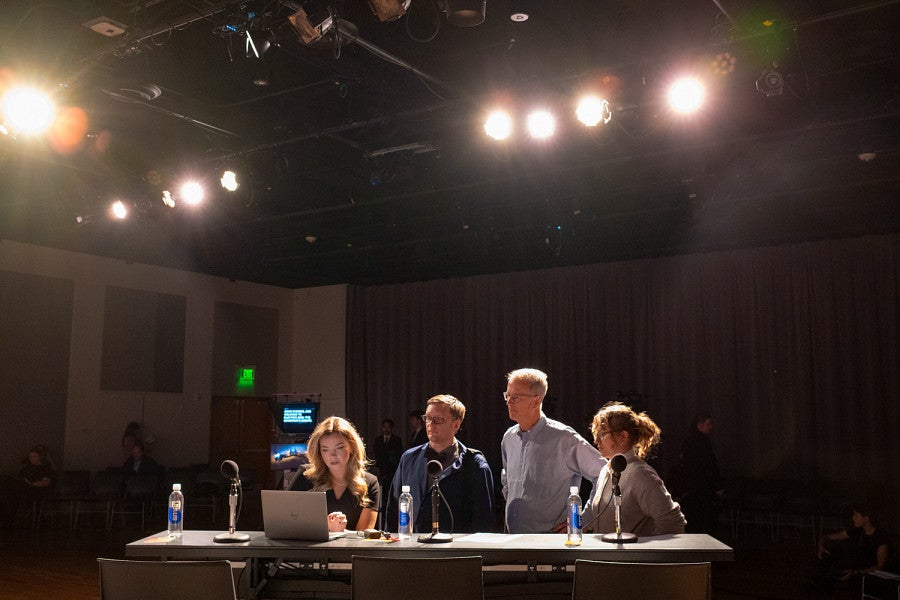
When Tina Kotek and State Sen. Christine Drazan stepped onto a university stage for Oregon’s first gubernatorial debate on October 1, the broadcast and questioning relied heavily on a team of college students. The University of Oregon School of Journalism and Communication (SOJC) co-hosted the event on the UO campus alongside the Oregon Journalism Project, Lookout Eugene-Springfield, and KVAL, placing undergraduates directly into operational roles for a statewide political broadcast.
The collaboration brought students into nearly every facet of live television production and political journalism. According to the SOJC reporting by Lily Reese, student journalists sat on the questioning panel, interviewed the governor, managed the teleprompter, and kept the live broadcast precisely on schedule.
Student Journalist Joins Professional Panel
Fourth-year journalism student Bayla Orton served as a student panelist alongside professional journalists Nigel Jaquiss of the Oregon Journalism Project and Ben Botkin of Lookout Eugene-Springfield.
Being on the panel representing the SOJC felt really, really cool. It was just something I never expected I would end up doing here at all, like being on live TV talking to politicians, so it was just a really awesome experience. — Bayla Orton, SOJC Student Panelist
Orton asked the candidates a total of five questions during the debate. Meanwhile, third-year journalism and political science major Billie Corsetti, co-associate news editor of The Daily Emerald, interviewed Tina Kotek before the debate.
The debate addressed several pressing statewide issues, including affordability, mental health services, and mail-in voting procedures. During the opening exchanges, Drazan targeted state affordability and proposed repealing the Climate Protection Program, while Kotek pointed to recent increases in housing starts and legislative efforts to curb high energy costs for residents.
Students Manage Live Stream Technical Execution
While the questioning played out on stage, other students managed the technical execution of the live stream. Gretchen Wackler, a fourth-year journalism major, served as the visual timekeeper, holding yellow and red cards to signal remaining speaking time to the candidates. MCayden Marlar, a third-year journalism and political science major, was the official timekeeper who operated the remote control to reset the clock after each response and 30-second rebuttal. Justin Santos, a third-year broadcast journalism major, ran the teleprompter for KVAL moderator Kendall Bartley.
Reflecting on the pace of the production, Marlar emphasized the unique nature of the assignment. “Being this close to ‘democracy at work,’ as our dean put it, is exciting, and it opens up so many opportunities for where journalism can take me and what I can truly achieve with journalism in the long run,” Marlar said, according to the SOJC report.
SOJC Dean Regina Lawrence opened the evening by telling the audience that student involvement offered an invaluable, hands-on counterpart to classroom instruction. With the debate broadcast live on KVAL and streamed on YouTube alongside an on-campus watch party, the event showed how academic partnerships can bridge the gap between emerging journalists and active civic engagement.