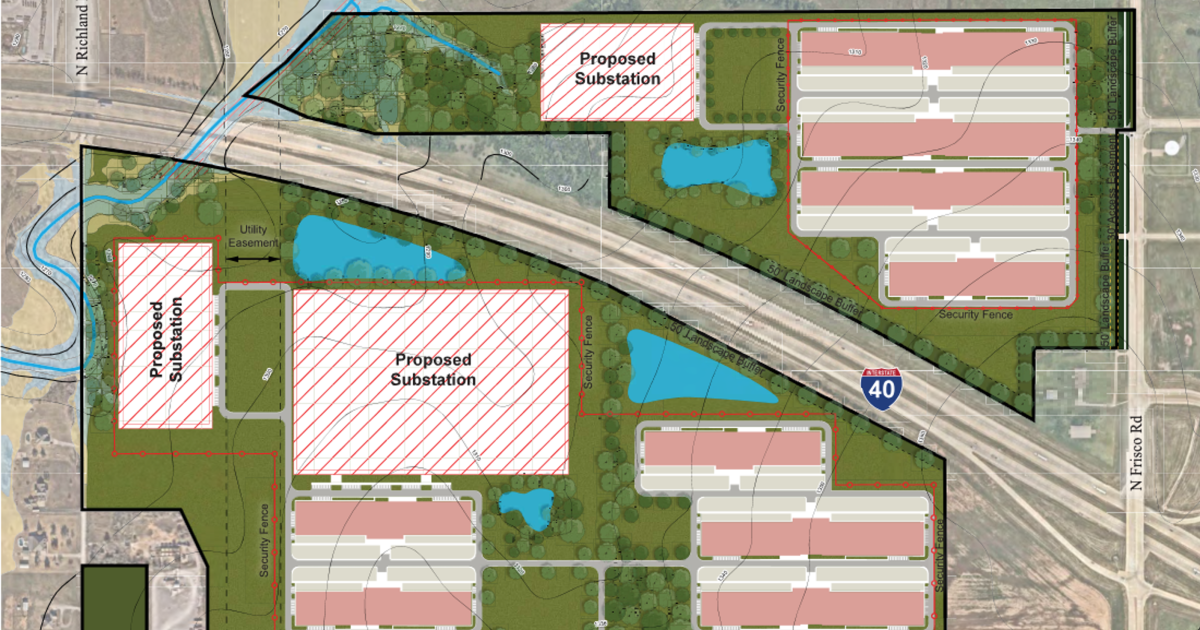
Oklahoma City has officially signed off on a hyperscale data center, but municipal leaders are warning residents not to expect a flood of similar massive computing hubs to follow. Following months of tense negotiations and a dozen deferrals, the city council voted to approve developer Beltline Energy’s planned 284-acre facility in Canadian County, as reported by KOSU.
The decision marks a test for how municipalities handle the power and water demands of data centers. Yet, the path to approval was unique and arduous, leaving both city officials and local residents acutely aware of the strain these industrial giants place on suburban borders.
A Unique Compromise on the Yukon Border
The approved facility is slated for a 284-acre site in Canadian County, at the border between southwest Oklahoma City and Yukon. Because Beltline Energy filed its zoning plan back in August 2025, the project managed to bypass the city’s broader temporary moratorium on large data center zoning decisions, which is set to expire at the end of the year, KOSU reported.
Ward 3 Councilwoman Katrina Avers spearheaded the city’s discussions with Beltline, working alongside the developer to institute strict operational limitations. Under the approved planned unit development (PUD) agreement, the facility faces sound caps lower than those for many facilities nationwide. Hyperscale centers typically rely on massive gas-powered generators that require frequent, loud testing. To protect nearby residents, Beltline’s generators can only be tested on weekdays between 10 a.m. and 4 p.m.
“We need infrastructure investment. We need public safety investment. We need a well-rounded approach to economic development that involves a comprehensive plan that doesn’t just say agriculture until the next planned unit development comes along,” Avers said, according to KOSU.
Beyond noise mitigation, the PUD mandates visual green buffers, recessed building facades to avoid bleak industrial aesthetics, and strict utility caps. The agreement limits potable water use to 75,000 gallons per day strictly for domestic and fire suppression needs, while the developer has ceded their right to apply for industrial groundwater permits from the state.
Why City Leaders Say This Won’t Set a Precedent
Despite securing the green light after what attorney David Box noted as more deferrals than any zoning case in the history of Oklahoma City, municipal leaders emphasize that the approval does not mean Oklahoma City is open for business for data centers.
“I’m skeptical that that is replicable across the city moving forward. So I think it is important for people to understand: If this is approved today, I do not think that means that Oklahoma City is open for business for data centers,” Mayor David Holt told KOSU.
Mayor Holt indicated plans to introduce a measure extending the city’s hyperscale data center moratorium for another six months. He cautioned that future applications will face intense, case-by-case scrutiny, with a distinct possibility that the council may soon say, “We can’t have any more.”

Not all local residents are convinced the compromises go far enough. During public comments covered by KOSU, Yukon realtor Stephanie Burdine argued that lower decibel limits will still produce an annoying, constant hum. Meanwhile, area resident David Blankenship raised concerns over the cumulative industrial footprint, pointing out that multiple massive developments are being considered in close proximity without a clear evaluation of their combined regional impact.
Before construction can begin, the PUD requires the developer to enter a legally binding community benefits agreement with the city, leaving an open channel to address lingering neighborhood grievances as the project inches closer to reality.