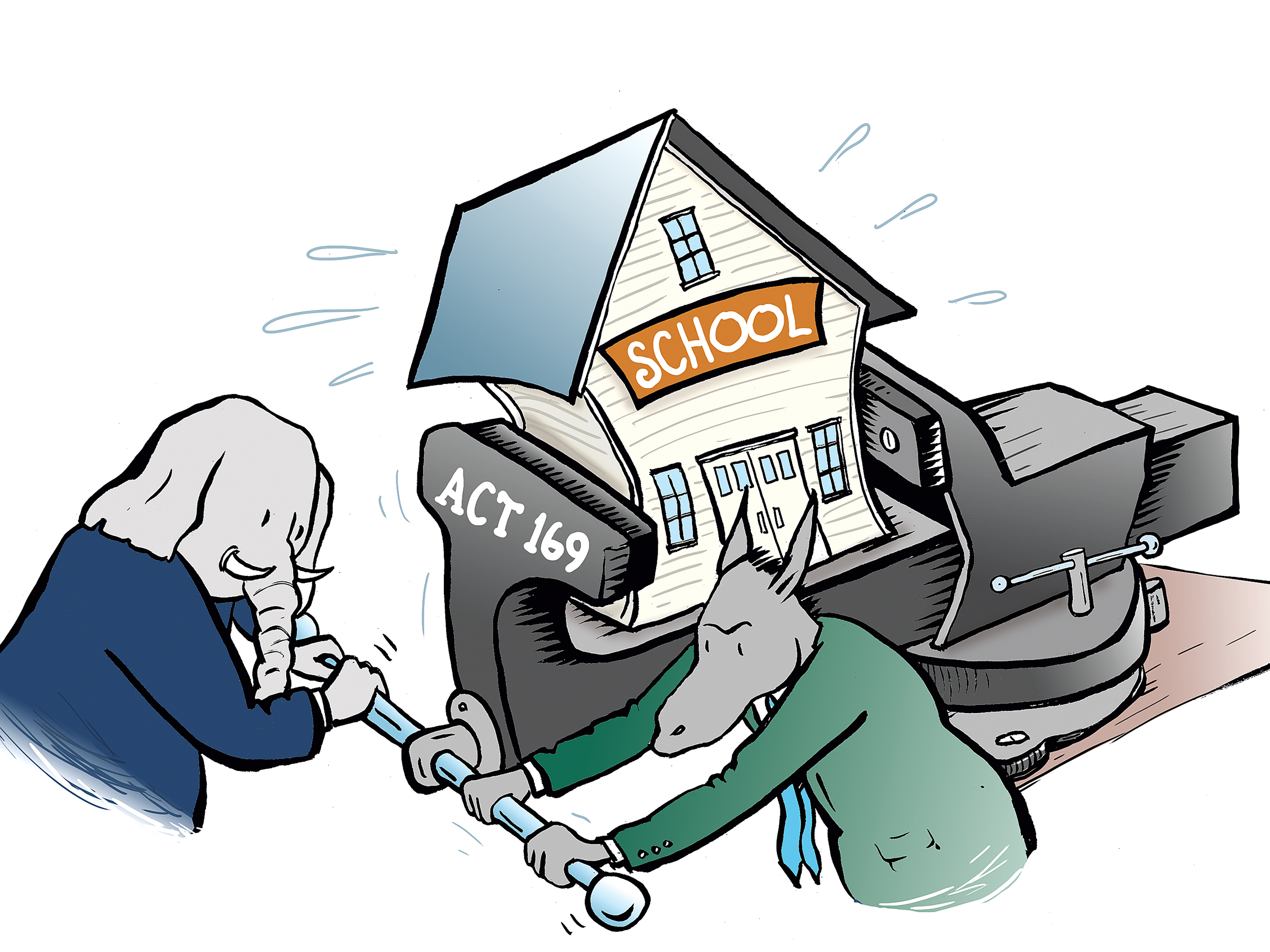
Vermont’s School Budgets Face a Sharp Fiscal Pivot
Just two months into the academic year, Vermont school districts are already bracing for a budgetary winter. A legislative shift in how the state manages education spending has transformed routine financial planning into a high-stakes exercise in survival. As reported by Seven Days, new state mandates are forcing local school boards to weigh the unthinkable: shuttering neighborhood elementary schools, consolidating middle school programs, and cutting significant portions of their teaching staff.
The catalyst for this turmoil is Act 169, a law that tightens the “excess spending threshold.” By lowering the amount a district can spend per student—relative to the statewide average—without triggering a stiff tax penalty, the state has effectively put a ceiling on local educational investment. For districts that have historically relied on local funding to maintain specific programs, the math no longer adds up.
The Pressure on Local Districts
The financial squeeze is hitting districts with varying degrees of intensity, but the underlying anxiety remains consistent. In the Hartford School District, Superintendent Caty Sutton estimates a potential $5 million deficit, a shortfall so severe it could necessitate cutting one-quarter of the district’s entire workforce. “For all of us in the public school system, we just want to know, Are our kids going to be OK?” Sutton said. “That seems to be the thing we have less and less control over, and that is frightening.”
The Harwood Unified Union School District, which serves a cluster of six communities, is facing a similar wall. Despite having reduced spending by over $7 million and shedding the equivalent of 53 full-time positions over the last three years, the district remains in the crosshairs. Officials presented data on October 14 indicating that even a “level-services” budget—one that simply maintains current offerings—would trigger a property tax penalty of up to $2.7 million. To avoid that outcome, the board is now actively considering closing two elementary schools and consolidating its middle school footprint.
A Flipped Process for Reform
While the goal of the legislature is to transition the state toward a new foundation formula by July 2029—shifting power from local taxpayers to the state—administrators argue that the current implementation is disjointed. Act 170, which promotes voluntary mergers and regional partnerships, is designed to reshape the state’s educational map. However, many superintendents feel that the funding penalties are being applied before the structural redesign is ready to support them.
“It seems like it’s a flipped process,” said Harwood superintendent Mike Leichliter. “The redesign should have been in place before the funding mechanisms were tightened.”
Leichliter and other district leaders note that the state’s focus on lowering spending thresholds ignores costs that districts cannot control, such as rising health insurance premiums and the general impact of inflation. For parents, the pace of these changes is particularly jarring. In Moretown, families are organizing to protect their local school, arguing that such consequential decisions are being driven by a rush to meet budget deadlines rather than a long-term vision for student outcomes.
The Human Cost of the Fiscal Cliff
The Champlain Valley School District, the largest in the state, provides a window into the scale of the challenge. Having already cut $9 million and 82 full-time positions over the past three years, the district is still finding it difficult to stay above the 115.5 percent spending threshold. Board chair Meghan Metzler noted that while they are avoiding school closures for now, the path forward requires further staff reductions that will inevitably ripple through the classroom.
The lack of a coherent, state-level vision is what resonates most deeply with administrators. As they scramble to present budgets for Town Meeting Day, they are doing so under the weight of a system that feels increasingly rudderless. The question for many is not just how to balance the books, but what kind of public education system will remain once the current cycle of cuts is complete.



