Wichita School Bond: Breaking Down the Real Cost to District Homeowners
Wichita Public School leaders have campaigned on a simple promise: a massive $615 million bond issue heading to the ballot on November 3, 2026, will cost the average homeowner just about $4 a month. But a deeper look at the numbers shows a much heavier financial lift for local taxpayers over the next two decades.
An analysis by The Wichita Eagle reveals that a homeowner with a property appraised at $200,000 would actually pay between $3,532.80 and $5,185.58 in property taxes over the span of 20 years if both questions on the ballot pass. Rather than a flat $4.16 monthly impact, the actual cost would shift depending on property value trajectories. If home values remain completely flat, the package costs $176.64 a year, or $14.72 monthly. Should local property values continue tracking historical growth trends, that annual bill starts at $176.64 and eventually climbs to $353.28, or $29.44 a month.
Two Questions, Different Tax Realities
The upcoming November 3 election divides the district’s borrowing request into two distinct parts. Proposition 1 asks voters to approve $407.1 million for building and infrastructure updates, carrying a 5.5-mill tax rate. Proposition 2 adds $207.9 million in projects alongside an additional 2.18-mill tax levy. Under the school board’s resolution, the second question cannot take effect unless the first question passes.
Proponents point out that Proposition 1 would keep the current tax rate steady by picking up right as the district’s existing 2008 bond tax levy expires. Without a new bond on the books, property taxes for district residents were set to decrease beginning with the 2028 tax bill—roughly saving a $200,000 homeowner about $125 annually.
If only Proposition 1 passes alone, the average homeowner would still pay an extra $2,530 to $3,713.64 over 20 years. That translates to $126.50 a year—or $10.54 a month—if property values stay flat, and up to $253 annually ($21.08 a month) under historical growth rates.
| Bond Proposal Scope | Total Cost | Monthly Cost ($200k Home) | 20-Year Tax Impact |
|---|---|---|---|
| Proposition 1 Only ($407.1M) | $407.1 Million | $10.54 to $21.08 | $2,530 to $3,713.64 |
| Both Propositions (Full $615M) | $615 Million | $14.72 to $29.44 | $3,532.80 to $5,185.58 |
What the Funding Buys and the Stakes for USD 259
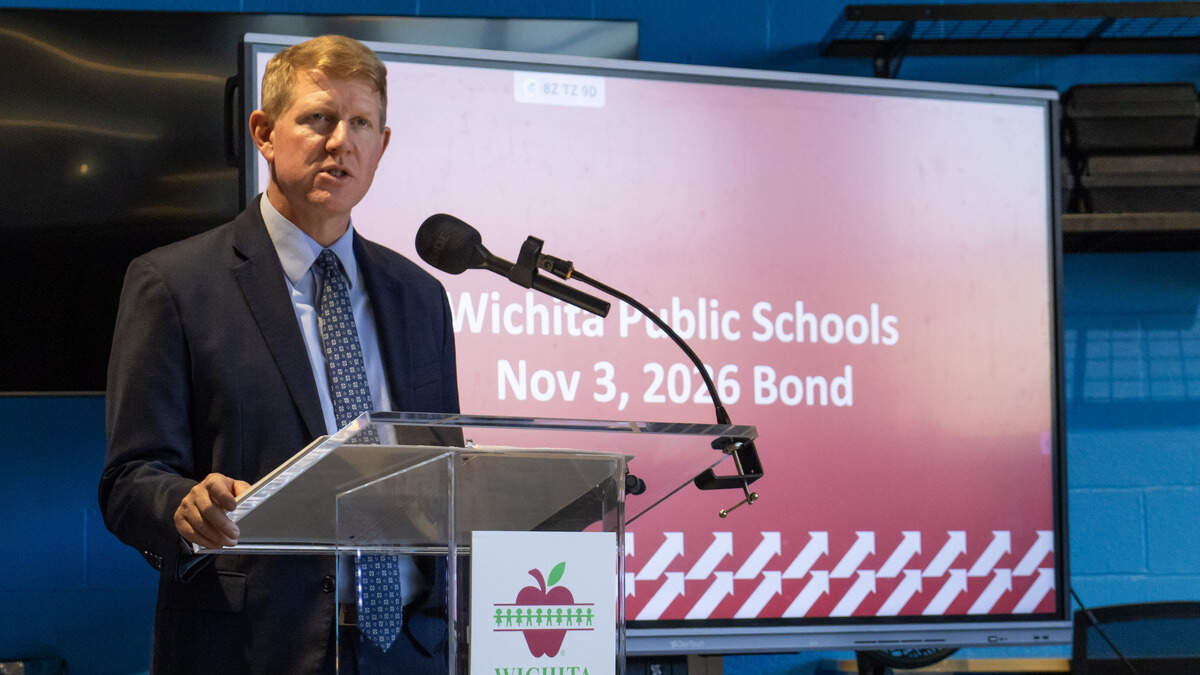
The current package arrives after voters narrowly rejected a $450 million proposal by just 319 votes in February 2025. That earlier defeat forced district leadership to retool their approach. Kelly Bielefeld, superintendent for Wichita Public Schools, emphasized the urgency during a recent news conference.
If this gets voted down November 3rd, we’ll still come back for another bond issue,
Bielefeld said. We have to have a bond issue to survive as a school district. There’s just no other way around it.
Proposition 1 targets major replacements, including a nearly $104 million Truesdell Middle School, alongside rebuilt facilities for Black, McLean, and Chisholm Trail elementary schools, plus a new FutureReady Center for Trades at East High. Proposition 2 funds a $106 million replacement for Coleman Middle School, Adams Elementary, and specialized career and technical education spaces across multiple high schools.
Unlike past bond issues from 2000 and 2008—which received a combined $370 million in subsidies from state and federal programs like the expired federal Build America Bonds—local taxpayers are expected to cover the full repayment cost of the 2026 debt. The Kansas Legislature has since eliminated state aid funding for future bond issues at Wichita Public Schools.
As voters head to the polls on November 3, the decision rests on whether the proposed $615 million bond issue—including property tax costs over 20 years for homeowners—matches the long-term needs of Kansas’s largest school district.