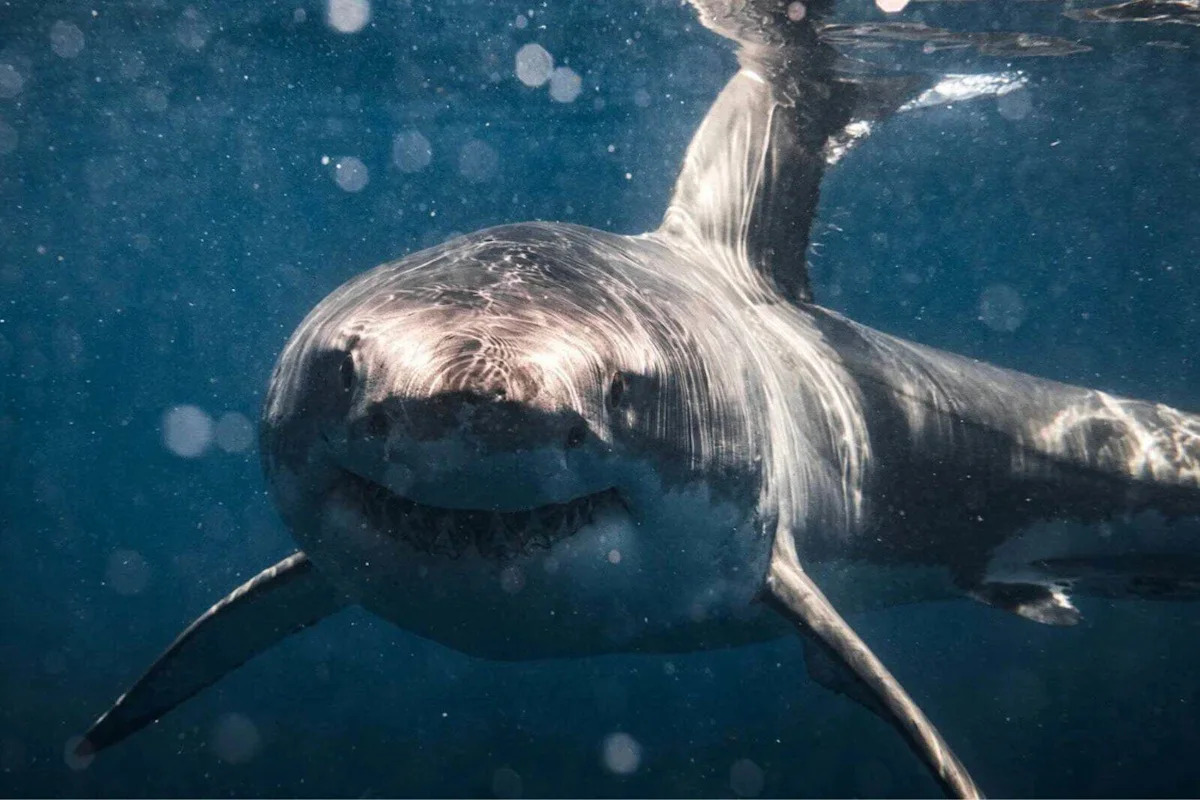
A 12-foot shark trapped in a narrow Busan canal for weeks has drawn hundreds of thousands of visitors, sparked local economic gains, and ignited intense debate over South Korea’s rapidly warming coastal waters.
What began as an unusual wildlife encounter in a bustling South Korean port city has transformed into a national spectacle. On September 18, a large predator swam into an artificial waterway at North Port in Busan and failed to find its way back out. Three weeks later, the animal remains trapped, turning a concrete shipping channel into an unlikely tourist destination.
Bukangi Draws Crowds and Economic Boost at North Port
Residents and online admirers quickly bestowed a friendly moniker on the stranded visitor. Named after the port where she is confined, Bukangi has attracted roughly 1.4 million spectators to the North Port Waterfront Park, according to local authorities cited by Mongabay.
The influx of sightseers has provided an unexpected lift to nearby businesses. Convenience stores reported that sales of shark-shaped ice cream bars jumped nearly 30 percent. Meanwhile, shares in The Pinkfong Company—the studio behind the viral children’s song “Baby Shark”—briefly surged more than 7 percent following the creature’s rise to fame.
Busan Mayor Chun Jae-soo publicly thanked the shark for generating publicity that would otherwise have cost trillions
. In recognition of its unexpected promotional value, the city elected Bukangi as an honorary public relations ambassador with 91 percent of the vote.
Failed Rescue Efforts Leave the Shark Trapped
Freeing the animal has proved far more complicated than naming it. Authorities first deployed rescue vessels equipped with water jets to spray streams behind the shark, hoping to propel it toward open water. The animal simply swam away from the jets and stayed put.
BUSAN’S SHARK DRAWS CROWDSA three-meter female dusky shark has become an unlikely attraction in Busan, South Korea, after drawing more than 1.3 million visits since appearing in a waterfront canal in September.Nicknamed “Bukangi,” the shark has attracted crowds who gather to… pic.twitter.com/hKfB2e3wwM
On October 2, rescue teams attempted a more ambitious operation using a 50-meter-long, 6.8-meter-high net. A vessel towed the center toward the sea to guide Bukangi out, but the net snagged on the channel floor and officials suspended the effort. The shark circled the barrier for a day, crossed over it, and returned directly to its preferred stretch of water between the park’s fourth and fifth pedestrian bridges.
Experts point to urban disruption as the primary barrier to escape. Kim Hyun-woo, a senior researcher at the National Institute of Fisheries Science (NIFS) leading the operation, explained the difficulty.

There are too many external physical stimuli coming from different directions.
Kim Hyun-woo, senior researcher at the National Institute of Fisheries Science
Scientific Debate Links the Sighting to Warming Waters
While the public treats Bukangi as a celebrity, environmental groups and researchers view the event as an ominous sign. Officials initially differed on the exact species—with some identifying it as a bull shark or bronze whaler—while other reports identified the animal as a dusky shark.
South Korea’s Green Party criticized the levity surrounding the animal’s captivity. The shark did not come here to entertain us,
the party stated. Its appearance is a warning to all of us.
An editorial in the Hankyoreh newspaper similarly described the incident as an example of environmental degradation.
Scientists note that large sharks are appearing in eastern waters. Government meteorological data shows that sea surface temperatures around the Korean Peninsula have risen 0.7°C (33.2°F) over the past decade, a rate more than twice the global average.
The NIFS recorded 46 sightings of large sharks along the east coast in the first half of 2026, compared to just 12 during the same period in 2025. Shark bycatch cases also surged, with at least 73 instances reported between January and August 2026—2.5 times the volume recorded during those months a year prior.
Researchers urge caution against drawing hasty conclusions about a single animal. Experts emphasize that changes in species distribution, food webs, and habitats must be observed over time alongside water temperature and currents to distinguish temporary events from long-term trends.