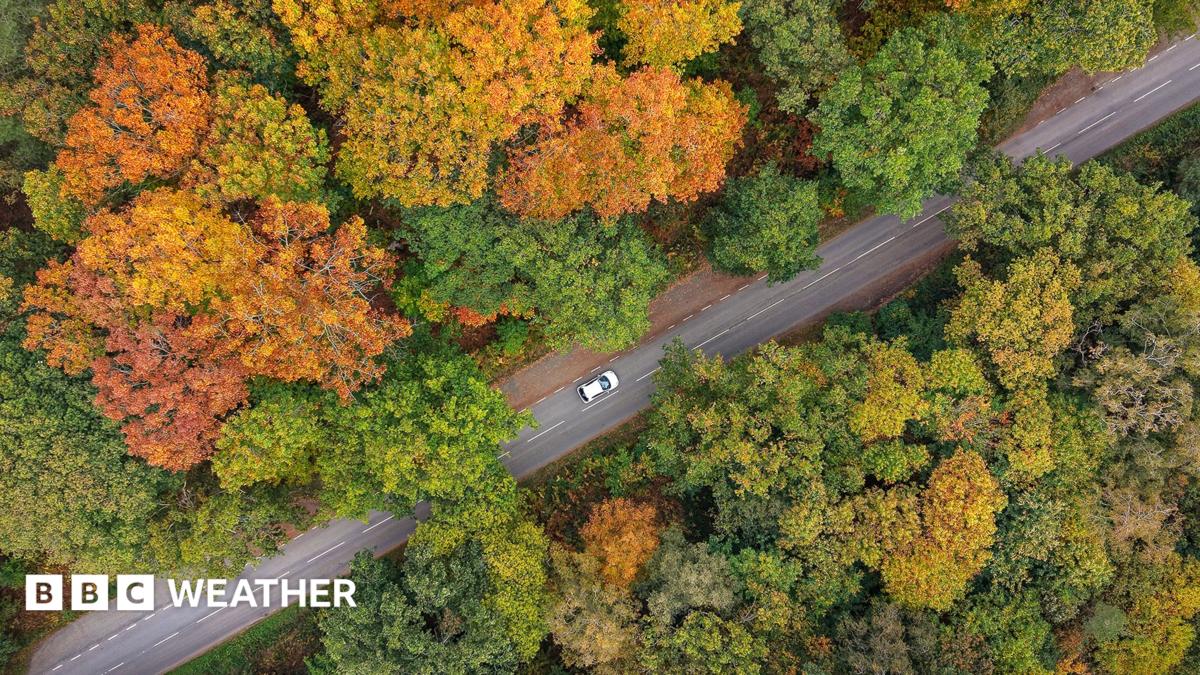
The UK’s record-breaking summer brought prolonged periods of heat and dry weather, leaving parts of the country severely affected by drought. This extreme weather has forced trees into an early survival mode. Rather than waiting for seasonal triggers, many trees, particularly in southern England, have already shed their leaves prematurely as a physiological response to heat and drought stress aimed at conserving water.
Why Autumn Leaves Are Changing at Different Rates Across National Forests
Forestry England reports that autumn colors are developing at different rates across the country’s woodlands. Tracking via the organization’s Autumn Leaf Watch revealed early splashes of yellow, orange, and red by late September in destinations such as the New Forest, Delamere Forest, Wyre Forest, and the Forest of Dean.
Silver birch, rowan, and horse chestnut were among the species already changing color, while many oak and beech trees remained predominantly green. Certain western and central forests showed stronger early signs of color, though foresters caution that an early start does not necessarily guarantee the most vibrant displays later in the season.
Visitors traveling through the nation’s forests can witness completely different stages of autumn even between forests that are relatively close together, as Chris Sorensen, Forest Management Advisor at Forestry England, explained to BBC Weather.
What to Expect from October Foliage and Weather Conditions
Recent precipitation has altered the trajectory for specific areas, offering a reprieve for surviving canopy cover. Experts say a complete loss of autumn color is unlikely.

Ideal foliage conditions require a delicate balance of weather patterns rather than continuous extreme elements as autumn progresses.