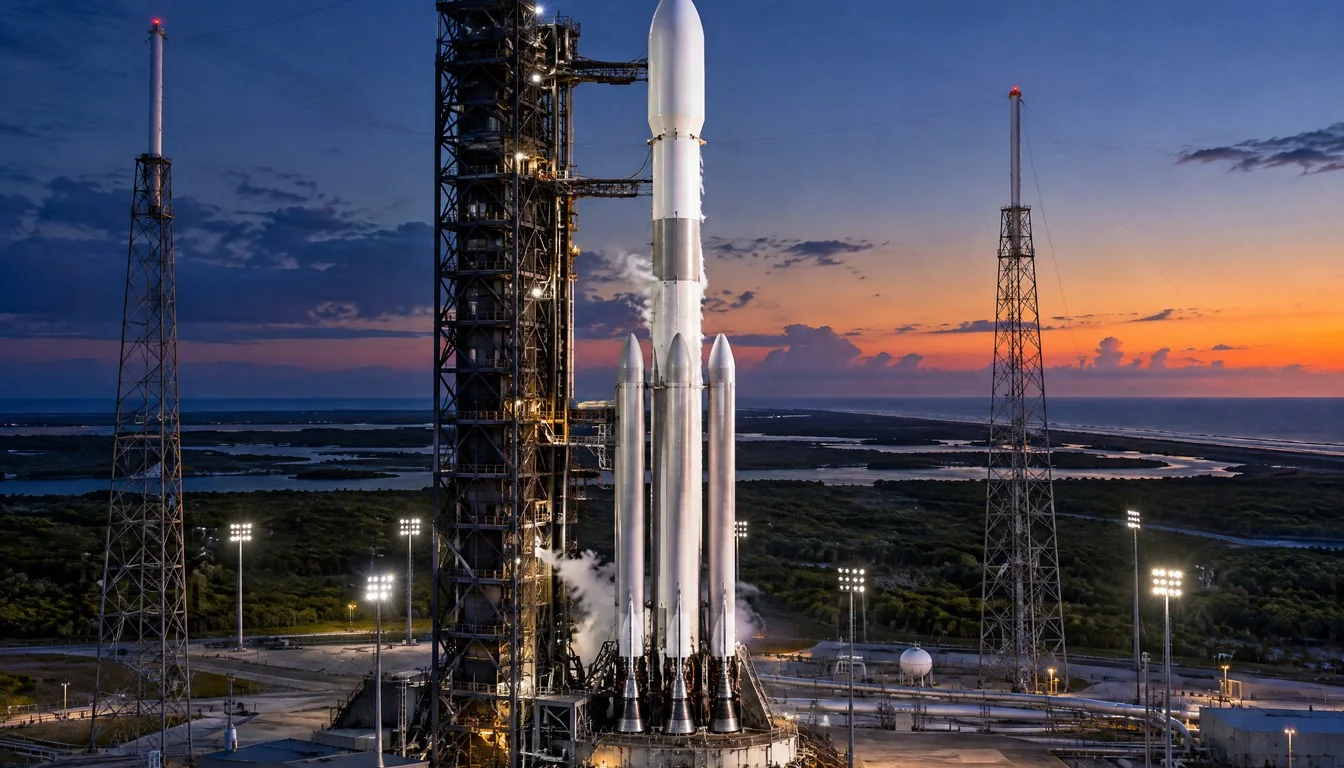
United Launch Alliance plans to return its Vulcan rocket to flight on November 13, 2026, launching 40 satellites for the Amazon Leo broadband constellation. The mission follows a nine-month grounding triggered by solid rocket booster nozzle failures, and the launch remains pending approval from the U.S. Space Force’s Eastern Range.
The upcoming mission, designated LV-01 (Leo Vulcan 1), marks a critical recovery effort for ULA. Its flagship rocket has suffered nozzle failures on two of its first four missions, most recently during the February 12, 2026, USSF-87 flight. While the rocket managed to complete those missions despite the failures, the Space Force lost confidence in the vehicle and barred it from national security flights.
How did ULA fix the solid rocket booster anomaly?
Engineers from ULA and booster manufacturer Northrop Grumman investigated the February booster incident to identify the cause of the nozzle burn-throughs. The USSF-87 mission, which carried a training and demonstration satellite alongside two satellites for the Geosynchronous Space Situational Awareness Program, suffered a nozzle failure less than 30 seconds into flight. While the company has not publicly named a final cause for the most recent failure, it previously linked a 2024 case to a manufacturing defect in an insulator designed to protect the nozzle’s metal structure from hot exhaust gases.
The integrated team has made great strides in improving our understanding of the solid rocket booster (SRB) anomaly … and have identified several potential contributors which have been mitigated through design and process improvements to the nozzle.
United Launch Alliance, via Air & Space Forces Magazine
The November 13 flight will utilize this improved nozzle design
However, ULA admits it is not entirely certain why the nozzles were burning through and will continue additional testing and analysis in parallel with the mission to gain validating flight data. ULA stated, By flying the improved design, ULA gains valuable flight data that validates these improvements and is the most beneficial path in support of all our customers.
Why is the Amazon Leo mission the first flight back?
Choosing a commercial payload for the return-to-flight mission alters the risk profile. A commercial operator like Amazon has different risk tolerances than a national security payload owner and a financial incentive to see the rocket return to service. This mission is the first of 38 Vulcan flights Amazon has booked to deploy the bulk of its network, which currently has nearly 400 satellites on orbit. Amazon had previously flown nine missions with ULA using Atlas V rockets, though those smaller vehicles could only send up 29 satellites at a time.
Amazon’s rollout has faced other setbacks, including a May launch pad explosion that destroyed the first New Glenn rocket slated to carry Leo satellites, though no satellites were attached during that test fire. Amazon hoped to utilize Vulcan earlier because it can launch more Leo satellites than any other rocket except Blue Origin’s New Glenn.
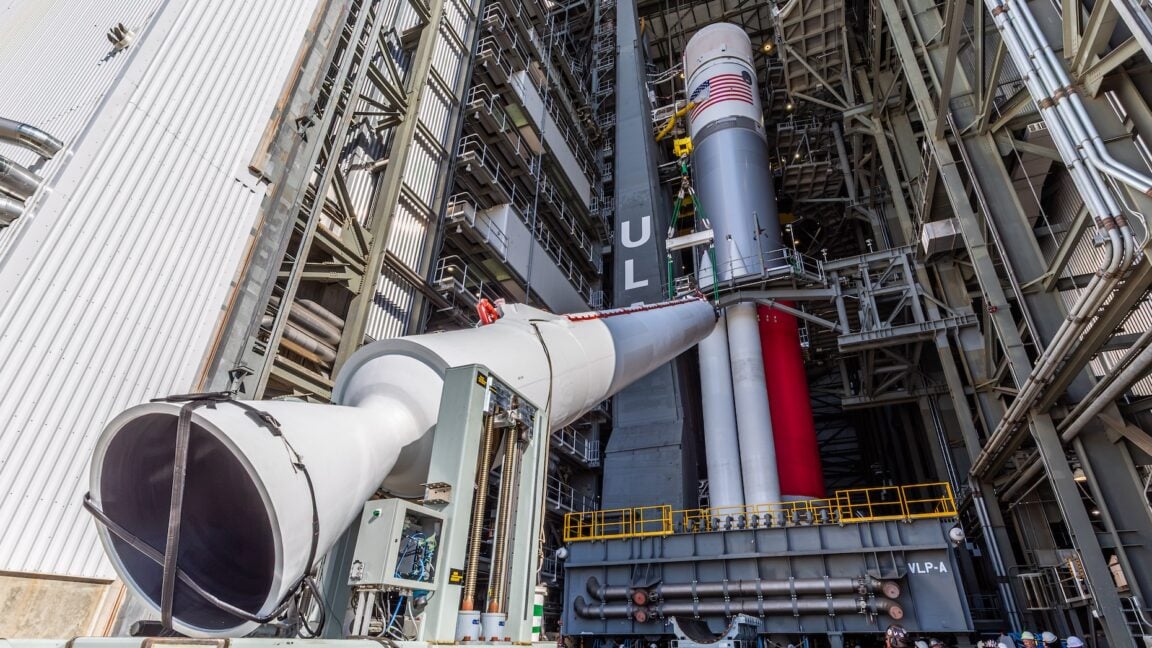
- Maximum Power: It is the first planned launch using the most powerful configuration with six strap-on solid rocket boosters.
- LEO Optimization: The rocket will use a shortened Centaur V upper stage specifically optimized for low-Earth orbit missions. Satellites will be deployed from an adapter on the Centaur upper stage over approximately half an hour.
- New Infrastructure: The vehicle was integrated in ULA’s new Vertical Integration Facility-A (VIF-A) at Cape Canaveral Space Force Station. Amazon has already assembled a second vehicle for the Vulcan Leo 2 mission in ULA’s original Vertical Integration Facility.
The total height of this specific Vulcan configuration is 67.4 meters. The rocket will also feature an extended payload fairing to accommodate the 40 Amazon Leo satellites.

What happens to the delayed Space Force missions?
The grounding has caused significant delays for the Pentagon, which relies on Vulcan for roughly half of its major launches through the early 2030s. The Space Force had certified Vulcan for national security launches in 2025 and flew two missions before the February booster incident led to the grounding. To mitigate these gaps, the Space Force has shifted four missions originally slated for Vulcan over to SpaceX’s Falcon 9 and Falcon Heavy rockets. Other reports indicate up to six missions were transferred to SpaceX to speed up execution.
Brig. Gen. Eric Zarybnisky, the Space Force’s portfolio acquisition executive for space access, noted that while some trades are possible, certain payloads cannot be swapped due to hard technical challenges. To maintain contracts, the Space Force will shift a future SpaceX mission back to ULA at a later date. ULA has also received six future launches that were initially assigned to SpaceX.
Leo Vulcan 1 (LV-01) payload on the move. LV-01 is the first of 38 Leo missions on @ulalaunch’s heavy-lift Vulcan rocket, and last week, teams successfully transported the 40-satellite payload—encapsulated inside a 70-foot-tall fairing—to the new Amazon Vertical Integration… pic.twitter.com/5zXbiAmkdO
— https://x.com/AmazonLeo/status/2114844602016383482
What are the remaining uncertainties for Vulcan?
While the November 13 date is set, it remains pending range approval
from the Eastern Range. The Space Force will closely scrutinize the data from this and at least one other planned Amazon Leo mission before allowing Vulcan to resume carrying national security payloads. This return to flight also marks the return of the Blue Origin BE-4 engine following a May anomaly involving a main oxygen valve that required Blue Origin to retrofit engines in ULA’s inventory.
ULA also faces pressure on its bottom line. Instead of its planned ramp-up to 24 launches per year from Florida, the company has only managed five launches this year: one Vulcan flight and four Atlas V missions. With the last Delta IV Heavy having flown in 2024 and only six Atlas V rockets remaining—all reserved for Boeing’s Starliner—the success of Vulcan is essential for ULA’s operational capacity.

Vulcan Return-to-Flight Quick Facts
| Detail | Specification/Status |
|---|---|
| Target Launch Date | November 13, 2026 |
| Payload | 40 Amazon Leo Satellites |
| Configuration | VC6L (6 Solid Rocket Boosters) |
| Launch Site | SLC-41, Cape Canaveral Space Force Station |
| Previous Flight | February 12, 2026 (USSF-87) |