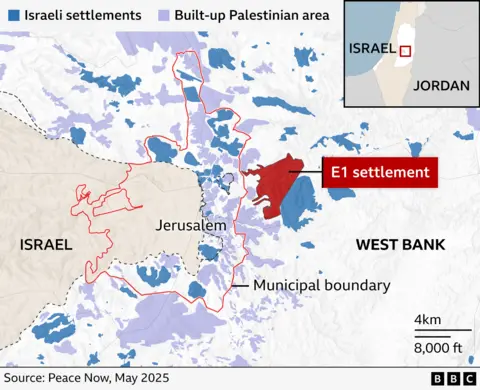
U.S. senators introduced legislation targeting Israeli settlement development in the West Bank’s E1 area. The bill proposes sanctions on entities facilitating construction that critics warn could sever the West Bank and imperil a two-state solution.
A group of Democratic U.S. senators introduced legislation aimed at Israeli settlement expansion in the E1 region of the West Bank. The proposed measure would target companies, individuals, and foreign persons who facilitate settlement construction or assist in transferring Israeli civilians into the area.
Legislative Push Against E1 Development
Senators Chris Coons, Elizabeth Warren, Ron Wyden, and Ruben Gallego. Lawmakers backing the measure point to Israeli actions over the past year, noting that Israel approved construction for more than 3,000 housing units in the E1 zone and subsequently issued tenders allowing companies to bid on the projects. Supporters argue that completing these units would divide the West Bank in two, gravely threatening the viability of a future Palestinian state.
If enacted, the legislation empowers the Secretary of the Treasury to impose sanctions on any foreign person found responsible for or complicit in building settlements or related infrastructure in E1, including through tender submissions or by organizing the transfer of civilians into the zone.
Positions from Capitol Hill
“The E1 settlement project is a move towards de facto annexation of the West Bank, and those who choose to facilitate settlement construction should understand that they risk losing access to the U.S. financial system.”
Senator Warren, via Senate
Senator Coons emphasized that bipartisan presidential warnings regarding E1 construction have spanned decades, while Senator Wyden characterized the policy as crossing a clear red line. Senator Gallego noted that proposed construction would cut off East Jerusalem from the rest of the West Bank.
The legislation draws a substantial list of co-sponsors, including Senators Michael Bennet, Tammy Duckworth, Martin Heinrich, Tim Kaine, Mark Kelly, Andy Kim, Jeff Merkley, Chris Murphy, Patty Murray, Jack Reed, Brian Schatz, Adam Schiff, Elissa Slotkin, Chris Van Hollen, and Peter Welch.
Statements from Israeli Officials
The legislative move arrives against the backdrop of explicit statements from senior Israeli officials regarding the future of a Palestinian state.
“We said a Palestinian state will not be established – and indeed, a Palestinian state will not be established.”
Benjamin Netanyahu, Prime Minister
“The Palestinian state is being erased from the table not by slogans but by deeds. Every settlement, every neighborhood, every housing unit is another nail in the coffin of this dangerous idea.”
Bezalel Smotrich, Finance Minister
Broader Political Dynamics in Washington
The debate over the E1 bill reflects broader policy shifts among moderate Democrats in the three years since the October 7 attacks. Senator Coons, a long-standing supporter of Israel and a potential future chair of the Senate Foreign Relations Committee, has indicated an openness to a thorough reexamination of bilateral ties and potential sanctions on leadership, matching evolving party dynamics as Congress approaches key decisions after the midterm elections.


