Glioblastoma Cells Follow Predictable Paths as Researchers Map Brain Cancer Rules
Researchers at institutions in Germany and the United Kingdom have decoded the hidden regulatory rules governing how glioblastoma tumour cells shift between distinct cellular states, challenging the long-standing assumption that cancer progression is purely random. Glioblastoma, the deadliest and most common malignant brain tumour in adults, kills over 100,000 people each year worldwide. Because individual tumour cells differ dramatically from one another—some resembling nerve cells, others looking like stem cells, and some trapped in an aggressive, injury-like condition—the cancer easily evades anti-cancer treatments. A therapy eliminating one cell state frequently leaves other states untouched.
Two companion studies published in the journal Nature by teams at the European Molecular Biology Laboratory (EMBL), the German Cancer Research Center (DKFZ), and the Wellcome Sanger Institute now show that this state-shifting follows predictable, repeatable paths. To build the largest glioblastoma molecular atlas to date, a team led by Omer Bayraktar, Group Leader at the Wellcome Sanger Institute and a professor at the UCL Cancer Institute, examined DNA, epigenetic marks, and RNA in tumours from 12 patients. Epigenetic marks—the molecular annotations that regulate gene expression—were mapped alongside genetic sequences and RNA readouts to capture what each individual cell was doing. The work was funded by a Wellcome Leap grant.
To analyze this complex dataset, Bayraktar’s group collaborated with Oliver Stegle’s team at EMBL Heidelberg and DKFZ. Using advanced computational methods, the researchers discovered that contrary to the prevalent view that state-shifting is unpredictable, glioblastoma cells follow stereotypical, predictable paths between cell states. Different cell states occupy distinct spatial niches inside the tumour, a pattern found in every single glioblastoma tumour from every patient studied. That spatial finding relied on integrating single-cell data with spatial transcriptomics, a technique recording where molecular activity occurs within intact tissue. When the team grew patient-derived tumour cells as three-dimensional organoids, similar cell state trajectories emerged, strengthening the case that these pathways are a genuine feature of the disease.
Moritz Mall Team Discovers Gene Networks Govern Cellular Plasticity
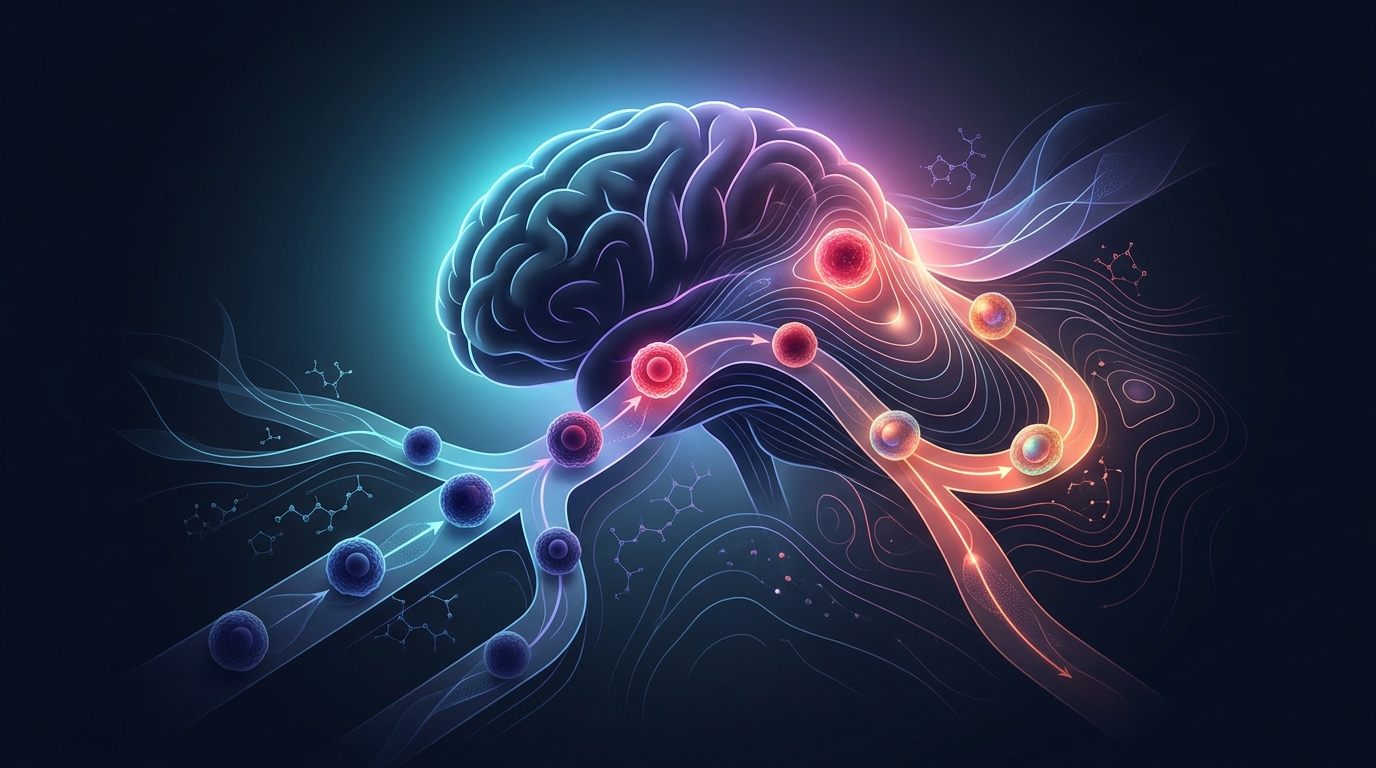
While the first study established predictable trajectories, a second study led by Moritz Mall’s team at DKFZ investigated how those transitions are regulated. The researchers examined gene regulation signatures in over one million patient-derived glioblastoma cells. Gene regulatory networks—the rules and molecular regulators determining which genes are expressed in which cells and when—turned out to govern the process. The team identified a structured regulatory program controlling cellular plasticity that was both predictable and hierarchical, meaning certain regulators sit upstream and shape the behavior of others downstream.
The team identified specific safeguard regulators that arrest cells in low-plasticity states, preventing them from transitioning to other dangerous states. “One of our premises has always been that when we understand these rules, we can not only observe what the cells are doing, but we can also change what they are doing,” Moritz Mall explained. “We could perhaps reprogram them, and maybe push them into a state that is less malignant, less dangerous.”
The researchers tested this hypothesis in patient-derived brain tumour cells. Overexpressing MYT1L, one such safeguard regulator identified by the study, reduced cellular plasticity and tumour malignancy. When transplanted into mice, these modified tumours resulted in better survival than control tumours. Stegle’s team developed scDORI, a deep learning method that infers gene regulatory networks at single-cell resolution. By comparing how regulators and target genes change together across more than a million cells, scDORI pinpoints which regulators steer cells toward specific states. “Our approach predicts the regulators for all of the major tumour cell states, and we tested those predictions experimentally,” explained Mall.
Researchers Apply Framework to Other Cancers and Brain Disorders
The researchers are now applying this framework to other cancers and brain disorders. While clinical applications remain some way off, the findings help scientists understand tumour cells at a deep molecular level and spot common patterns across cases. As detailed in the research, this approach opens a path toward steering tumour cells into specific states by manipulating a handful of regulators.