Officials report that a medical professional in Florida has completed the initial telerobotic procedure linking two American medical facilities, extracting a cancerous prostate from a patient located 35 miles away.
Dr. Vipul Patel, founder and medical director of the Global Robotics Institute at AdventHealth Celebration, operated the robotic system from a facility in suburban Orlando. His patient, a 66-year-old man named Mark, lay under the knife at an AdventHealth facility in Minneola, Florida. Study co-principal investigator and surgeon Marcio Moschovas provided onsite support in the operating room at Minneola while the operation unfolded.
AdventHealth told ABC News that Mark was recovering well following the procedure. The milestone operation was conducted as part of a clinical research study operating under a Food and Drug Administration-approved investigational device exemption. Such authorization permits the system to be studied clinically, though it does not constitute official FDA approval or clearance.
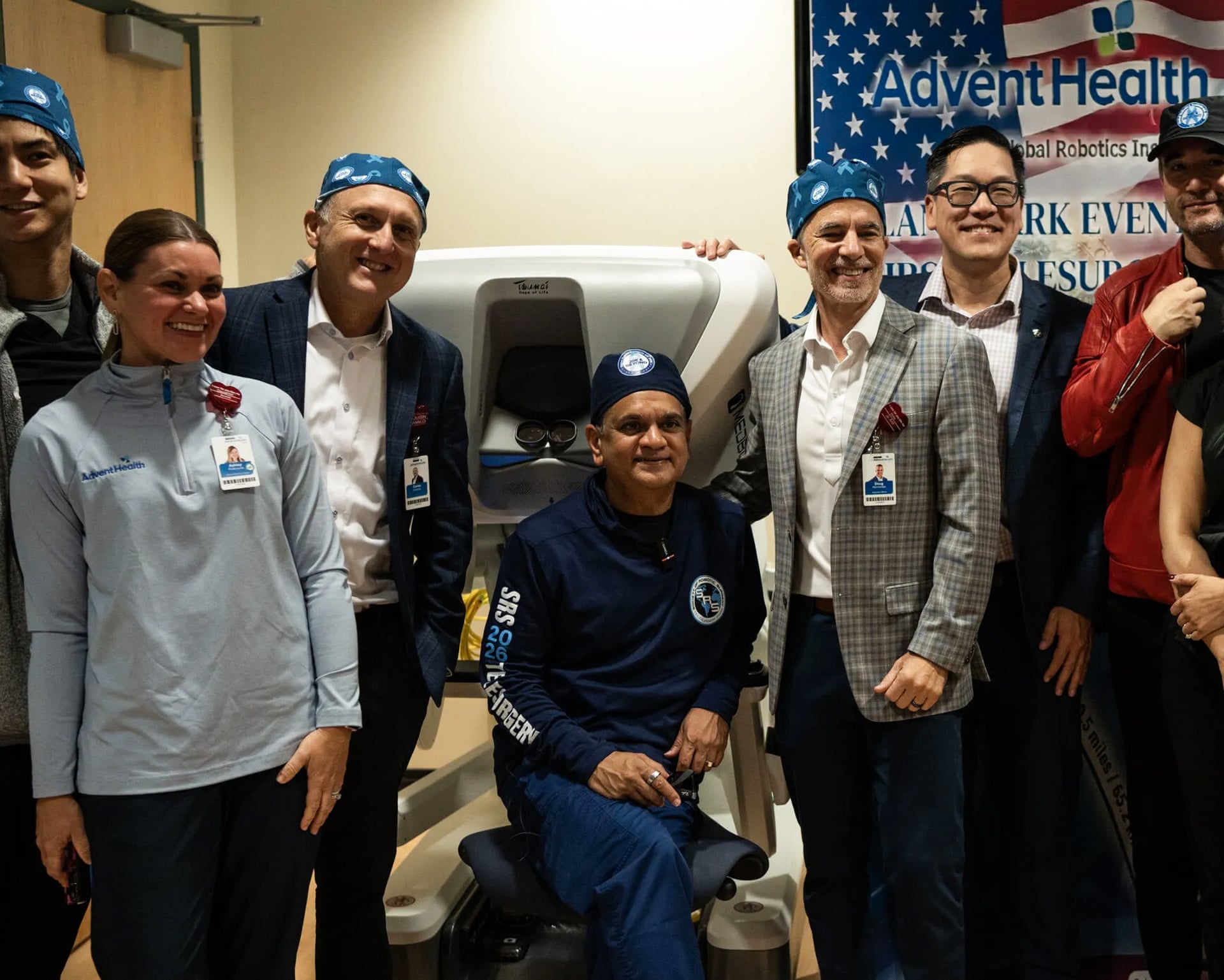
Study Evaluates Telesurgery to Reduce Geographic Barriers
The system used in Florida relies on remote-control technology intended to bridge physical gaps in specialized medicine. For generations, patients requiring complex surgical care have faced hurdles dictated entirely by zip codes and regional hospital capabilities.
“For generations, access to highly specialized care has often depended on where a patient lives,” Dr. Vipul Patel said in a statement shared by AdventHealth. “This study allows us to evaluate whether telesurgery could one day help reduce geographic barriers to specialized treatment.”
Before bringing the technology to domestic facilities, researchers tested the system internationally. AdventHealth notes that nearly one dozen investigational telesurgeries were previously conducted between Orlando and Luanda, Angola, spanning a distance of more than 7,000 miles.
Prior to this country’s breakthrough, a comparable widely publicized procedure earlier in the year involved a London-based surgeon operating a 3D-camera-fitted, four-armed robot to excise a patient’s prostate located roughly 1,500 miles away in Gibraltar. That London-Gibraltar procedure recorded a lag of just 0.06 seconds between the surgeon’s physical movements and the robotic response.
Assessing Risks and Technical Hurdles
Despite the successful outcome in Florida, medical practitioners caution that telerobotic surgery is not yet ready for mass clinical adoption. Standard robotic prostatectomies carry inherent risks, including bleeding, infection, incontinence, erectile dysfunction, and the potential need to convert to open surgery.
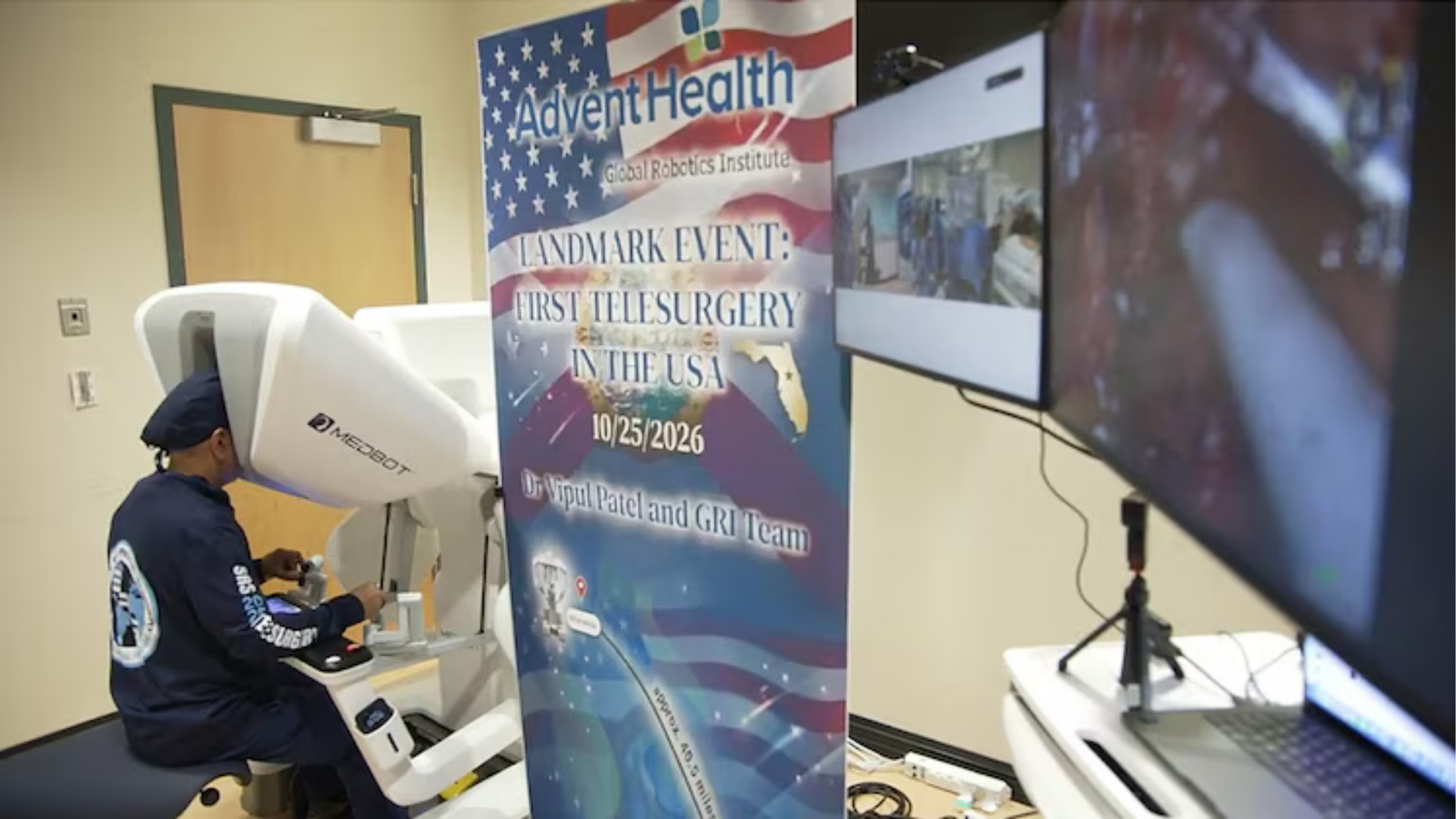
Telesurgery introduces an entirely separate layer of complications. Researchers are still evaluating equipment reliability, connectivity failures, and cybersecurity threats. Because of these variables, an on-site surgical team must remain present in the operating room to take over immediately if connection or hardware issues arise.
AdventHealth emphasized that Sunday’s procedure did not establish the technology’s general clinical performance. Important questions regarding long-term safety, effectiveness, and technical consistency remain under active investigation as the clinical research study continues.