Plasma Samples From 1,800 Patients Unlock 1,500 Circulating Proteins
Plasma samples drawn from more than 1,800 patients now form the bedrock of a high-resolution bioinformatic resource designed to decode the complex proteomic signatures of 15 different cancer types. Featured in reports from News-Medical and Olink, the tool offers a path toward more precise, minimally invasive cancer diagnostics.
Mapping the Cancer Proteome
The core of this research tool is the “Disease Atlas: Cancer” interactive data story. Developed using technology from Olink, which is part of Thermo Fisher Scientific, the dataset stems from the work of Professor Mathias Uhlén and SciLifeLab in Uppsala, Sweden.
By measuring approximately 1,500 proteins, researchers have created a comprehensive look at how circulating biomarkers change across diverse malignancies. The primary goal is catching cancer before it reaches a symptomatic stage. Because circulating proteins reflect the real-time biological state of a patient, they serve as biomarkers. Identifying multi-protein signatures helps scientists differentiate between cancer types with greater accuracy, revealing disease-related shifts long before a clinical diagnosis is confirmed.
Analytical Features for Precision Research
Hosted on the Olink® Insight platform, the data transforms raw proteomics into interpretable biological stories. Researchers interact with sophisticated algorithms designed to highlight diagnostic potential. According to project specifications, the platform includes:
- Lasso Logistic Regression: Used to isolate the top 10 proteins most closely associated with specific malignancies, identifying both up-regulated and differentially expressed proteins.
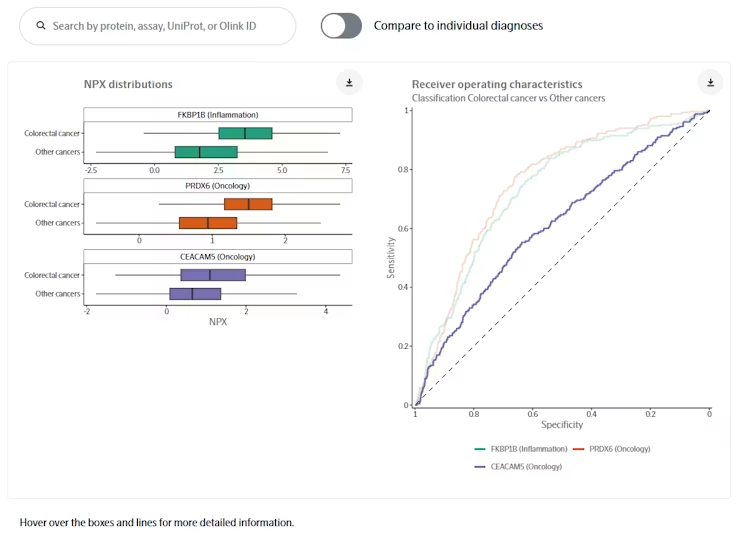
- Diagnostic Modeling: Scientists can generate receiver operating characteristic (ROC) curves to evaluate how well a specific protein marker distinguishes one cancer type from another.
- Pathway Analysis: The inclusion of volcano plots and Reactome pathways allows for a deeper dive into the biological mechanisms driving protein expression changes.
Pharmaceutical companies and academic research teams are changing how they use proteomic data. Instead of relying on static spreadsheets, researchers frame specific inquiries and compare internal discoveries against this premium pan-cancer dataset. The platform is currently designated for research use only and is not intended for clinical diagnostic procedures.
Biomarkers Carry Implications for the Oncology Sector
The development of these biomarkers carries implications for the oncology sector.
Disease Atlas Indicates Shift Toward Data-Driven Oncology
With the ability to explore up to 5,400 proteins on a single platform, the bottleneck is no longer data availability, but interpretation. The “Disease Atlas: Cancer” serves as an indicator of how researchers are moving toward a data-driven, proteomic-focused approach to oncology.