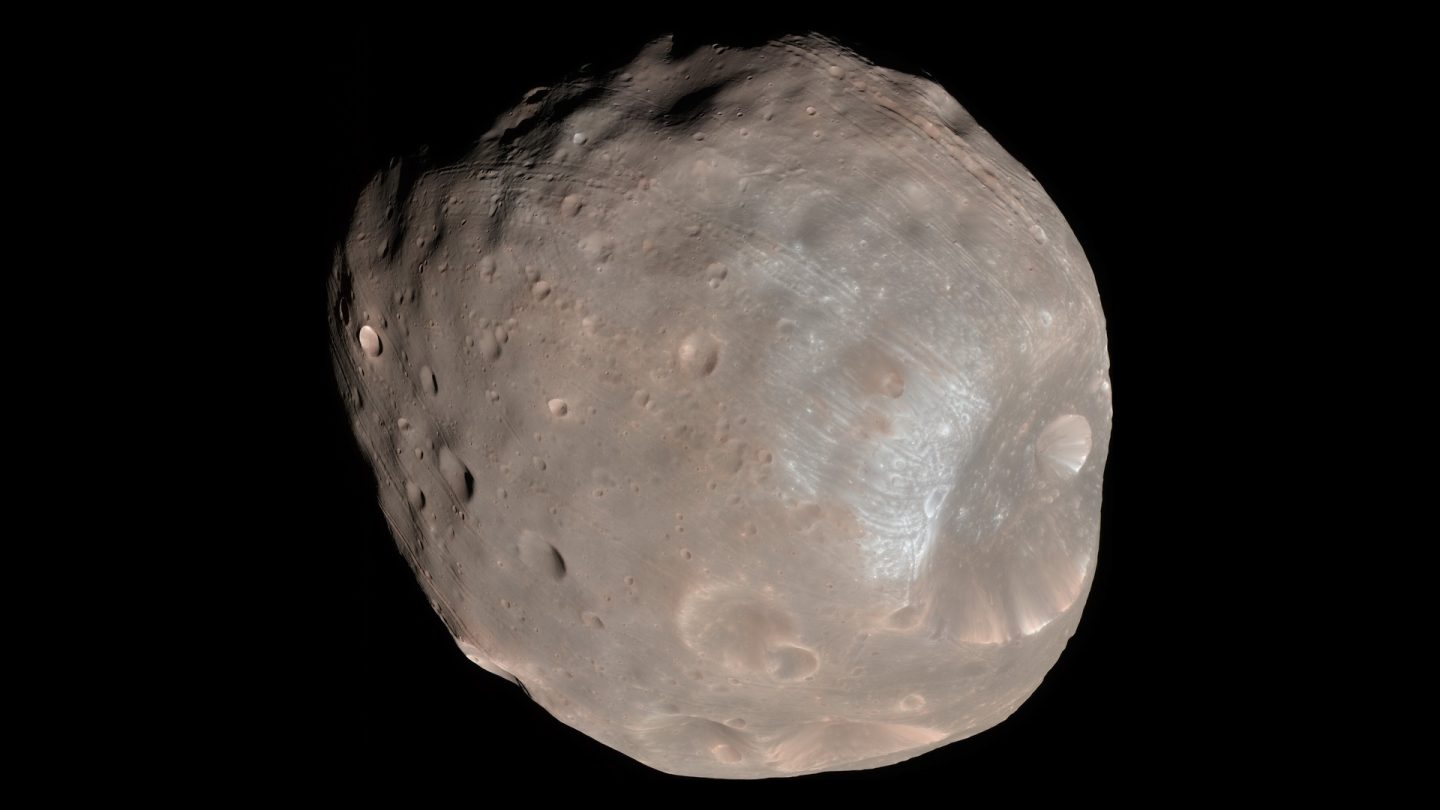
Japan will launch the Martian Moons eXploration mission on October 20, 2026, to land on the Martian moon Phobos, collect at least 10 grams of material, and return those samples to Earth by 2031.
Japan is preparing to test the limits of interplanetary exploration with a mission designed to touch down on a potato-shaped moon of Mars, scoop up raw material, and bring it back to home laboratories. Led by the Japan Aerospace Exploration Agency, the Martian Moons eXploration initiative targets Phobos, a small body orbiting closer to its parent planet than almost any other known moon in the solar system.
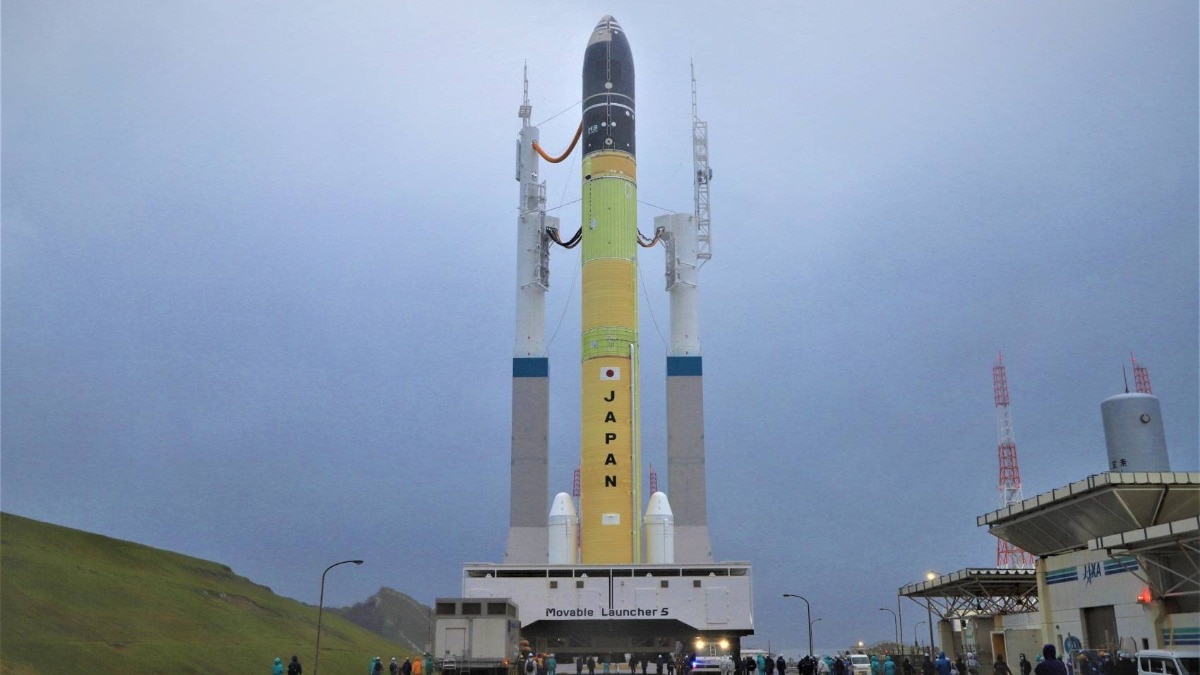
The endeavor relies on a heavy-lift rocket making a flight of its own. Scheduled for liftoff from the Tanegashima Space Centre in southern Japan, the spacecraft will ride aboard the country’s flagship H3 rocket. The voyage to the Martian system will take roughly a year, with orbital arrival expected in August 2027.
Japan Launches H3 Rocket with International Technology
The success of the entire mission hinges on a single launch vehicle. Japan’s next-generation H3 rocket, developed jointly by JAXA and Mitsubishi Heavy Industries, is designed to replace older boosters and make space access more affordable. The rocket program faced severe setbacks, including a failed flight in March 2023 and an eighth-flight anomaly that triggered a formal investigation, making this high-stakes deployment a test for the nation’s space ambitions.
International partners are supplying vital hardware for the journey. NASA is contributing the MEGANE instrument to analyze elemental composition on Phobos, alongside a pneumatic sampler designed to collect surface material using a jet of nitrogen gas. The American space agency will also provide communications support and curate about 15% of the returned samples.
Idefix Rover Scouts Low Gravity Terrain on Phobos
Landing on Phobos presents unique engineering hurdles because the moon’s gravity is less than a thousandth of Earth’s. Before the main nine-metre spacecraft risks a touchdown, it will deploy a 25-kilogram scout rover named Idefix, built by the French space agency CNES and the German aerospace center DLR. Dropped from a height of 40 to 100 meters, the rover will right itself and roll across the low-gravity terrain for roughly 100 days, where it will weigh only about 15 grams.
A corer on a robotic arm will bite two centimeters deep to reach unaltered material, while the NASA-supplied backup gas jet blasts surface grains into a container. The spacecraft is designed to gather at least 10 grams of material before departing the Martian system in 2030.
Unlocking the Origins of Mars and Planetary Water
Scientists remain divided over whether Phobos and its smaller sibling Deimos are captured asteroids or chunks of debris blasted into orbit by an ancient collision with Mars. By analyzing returned physical samples rather than relying solely on remote sensing, researchers hope to resolve that debate. The laboratory tests will search for volatile elements, amino acids, and organic compounds that could reveal how water and the building blocks of life reached terrestrial planets.
Kawakatsu Yasuhiro said that by bringing home samples from Phobos, we hope to explore how the martian moons were formed, how the Mars sphere evolved, and how the water and organic materials found on the terrestrial planets originated, according to Martincid.
If the sample analysis confirms that Phobos contains soil ejected from Mars by ancient impacts, the mission could also provide an indirect window into the ancient history of the Red Planet itself. After leaving Mars, the spacecraft will swing past Deimos for observations before sending its return capsule toward a parachute landing in Australia in 2031.
Will the H3 rocket successfully launch on October 20, 2026, and will the samples confirm whether Phobos is a captured asteroid or a piece of Mars?