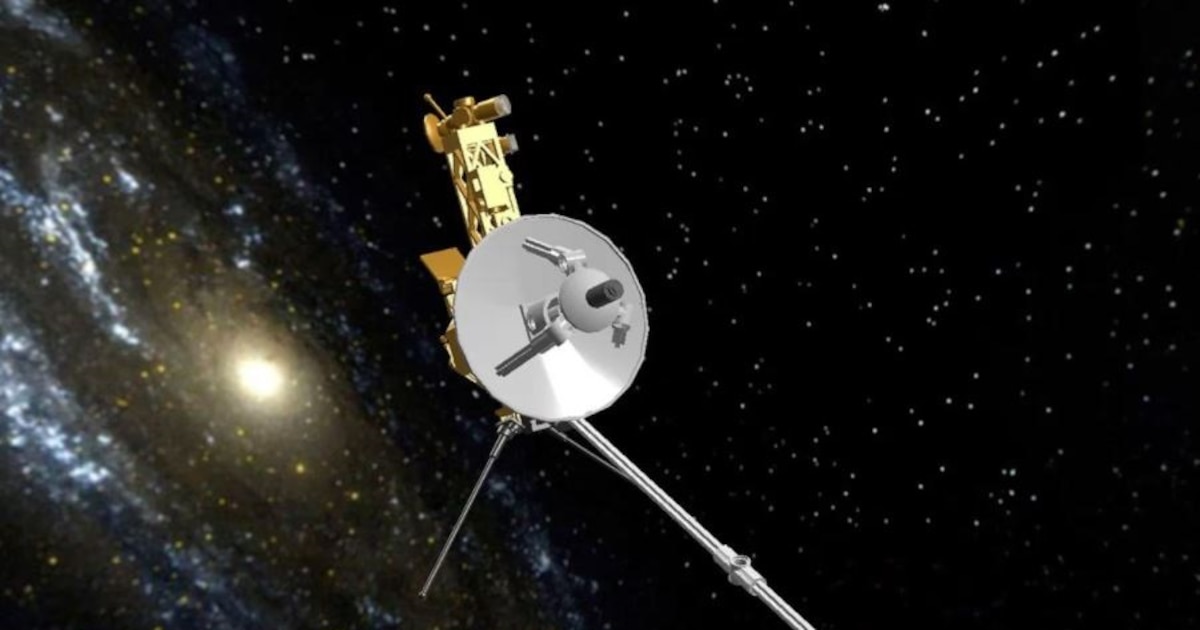
NASA reestablished contact with the Voyager 1 probe after a two-day communication drop, just as the historic spacecraft approaches a distance of 25,900 million kilometers from Earth.
Communication Interruption and Recovery at Deep Space Range
The Deep Space Network lost contact with Voyager 1 between October 18 and October 19, when the spacecraft stopped responding to routine checks. Ground teams at the Jet Propulsion Laboratory observed that a group of thrusters had shut down and backup systems entered into operation.
The signal returned on October 20 before engineers needed to transmit a manual fix from Earth. The spacecraft was advancing at about 61,155 kilometers per hour when the cut occurred.
Reaching the One-Light-Day Milestone in November 2026
On November 18, Voyager 1 will be approximately 25,902 million kilometers from Earth. This distance corresponds to one light-day, representing the path that light travels through a vacuum in 24 hours at roughly 300,000 kilometers per second. During a full 24-hour period, light covers close to 25,900 million kilometers.
Operating at this extreme range fundamentally alters mission logistics. A command sent from Earth takes nearly 24 hours to reach the probe, and an immediate reply requires another full day to make the return journey, totaling nearly 48 hours for a basic exchange without room for quick intervention.
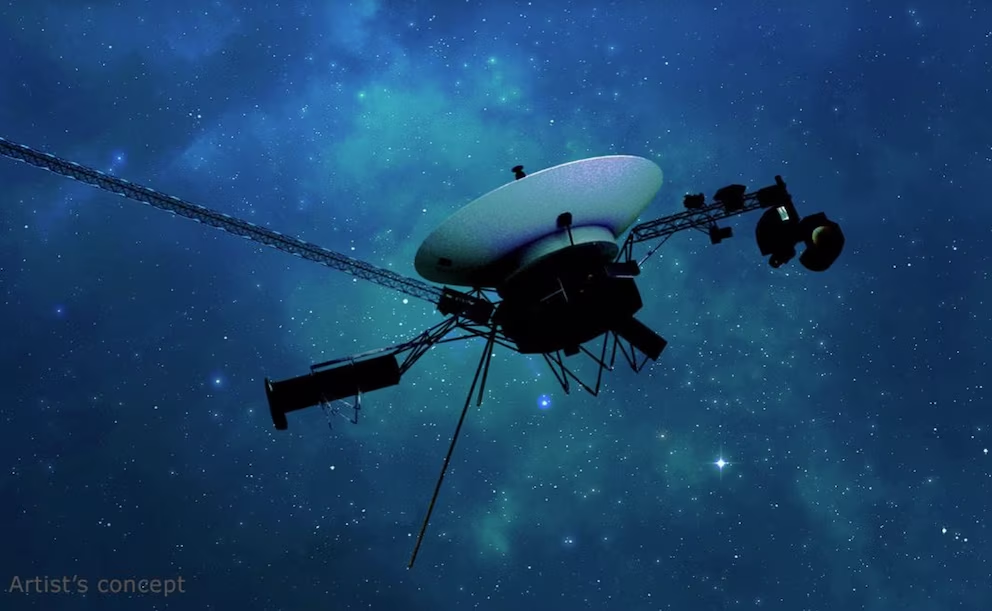
If you want to say ‘hello’ to Voyager, you send your message, go home, and wait two days before finally getting a response
Suzanne Dodd
Power Management and Interstellar Exploration
In August 2012, it crossed the heliopause to become the first human-made object to enter interstellar space. Back in 1998, it surpassed the distance reached by Pioneer 10 to take first place.
To keep remaining scientific instruments functioning as radioisotope thermoelectric generators steadily lose power—shedding about four watts annually—engineers have had to make decisions on each instrument.