NASA’s Neil Gehrels Swift Observatory continues to operate in low Earth orbit after a commercial rescue mission failed to raise its altitude. The robotic spacecraft LINK re-entered Earth’s atmosphere on September 25, 2026, ending a thirty-million-dollar salvage effort that ran into severe technical difficulties in space.
Technical Failures Derail Katalyst Space Technologies Salvage Mission
Launched on July 3, 2026, from Kwajalein Atoll, the three-armed robotic vehicle LINK was billed as America’s first commercial space robot. Built by Katalyst Space Technologies under a $30 million NASA contract awarded in September 2025, the spacecraft aimed to grapple the aging Neil Gehrels Swift Observatory and boost it into a higher, safer orbit. Currently sitting about 200 miles (325 kilometers) above the planet is the 3,200-pound (1,452-kilogram) observatory.
The effort faced an aggressive timeline from the start, thrown together in under a year. Link was supposed to capture Swift and raise its orbit. From the beginning, this was a high-risk, high-reward mission,
said Shawn Domagal-Goldman, Astrophysics Division director at NASA Headquarters in Washington.

Shortly after reaching orbit, LINK experienced electronics issues on board that rendered inactive two of its three reaction wheels, which orient the spacecraft. Failures in reaction wheels and communications issues left too little fuel. Although flight controllers managed to restore control using thrusters and the remaining reaction wheel, the recovery maneuvers consumed the propellant required to safely capture Swift.
Close Approach Tests Robot Arms Before Atmospheric Re-entry
Because of propulsion challenges encountered by Link itself in orbit, the rescue effort had already been called off in August following initial troubleshooting, though the firm sought the experience for upcoming spacecraft-servicing operations.
Prior to abandoning the rescue over the summer, operators maneuvered Link close to Swift to check out its mechanical appendages. Katalyst Space Technologies reported that the three-armed robotic salvager of Link had to pull back due to dwindling propellant reserves. On Tuesday, the Link vehicle built by Katalyst approached within 7 to 9 miles (12km to 15km) of Swift, using its onboard sensors to capture multiple photographs of the doomed telescope's condition and supply NASA with operational data.
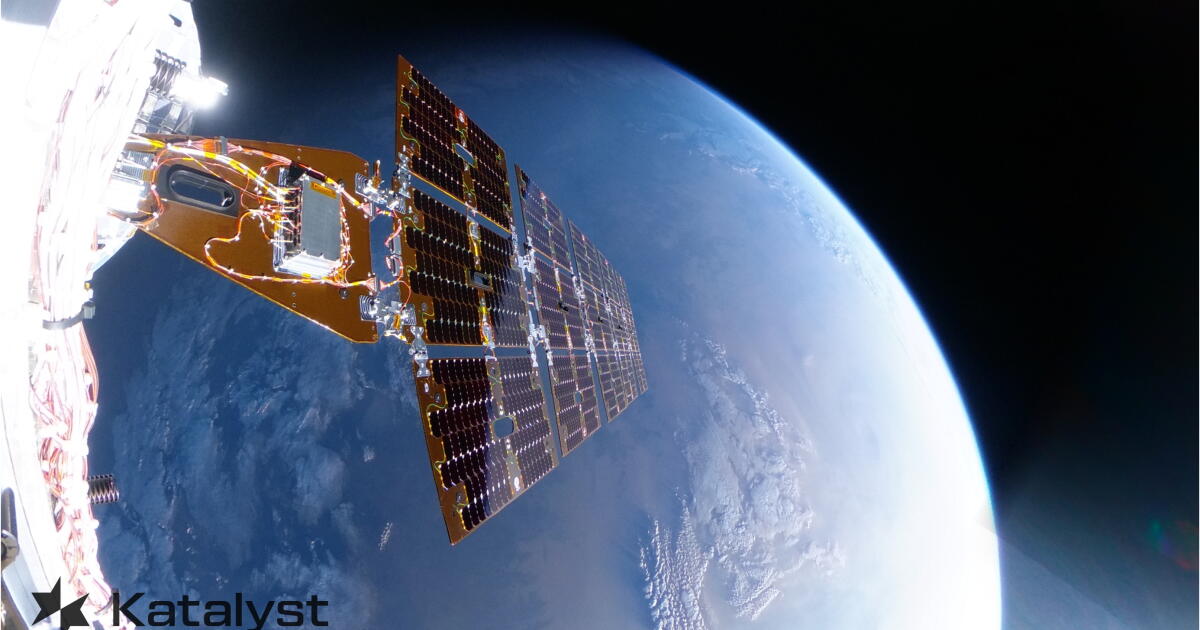
Link went into an uncontrolled spin that temporarily disrupted communication before Katalyst Space Technologies announced the demise of its three-armed spacecraft named Link. The thirty-million-dollar, NASA-backed recovery project for the Swift Observatory concluded when the hardware burned up during its atmospheric descent late Friday night into Saturday. Katalyst Space Technologies announced that its LINK spacecraft reentered on September 25.
“We got so close, but so far,”
Ghonhee Lee, Katalyst Chief Executive
Swift Observes the Cosmos on Borrowed Time
With the rescue attempt abandoned, NASA’s Swift Space Telescope will continue gathering data. Swift will now study gamma-ray bursts and other cosmic events before its expected reentry.

Science operations for the Neil Gehrels Swift Observatory will soon conclude following the unsuccessful summer attempt by an ambitious rescue mission to elevate its altitude. Originally built to investigate gamma-ray bursts—the most energetic blasts in the universe—the telescope has additionally been employed by researchers to track other cosmic transients, comets, and asteroids. Swift is expected to follow in early November as its orbit steadily sinks. Engineers estimate that once Swift drifts below 185 miles (300 kilometers) in early to mid-October, it will rapidly dip from its once-stable orbit and fall to Earth just shy of the 22nd anniversary of its launch.
Agency Officials Emphasize Lessons Learned for Future Space Servicing
NASA leadership defended the high-risk endeavor, pointing to the value of advancing commercial servicing capabilities. Without intervention, Swift was going to re-enter the atmosphere by year’s end.
And while we’ll be sad to see Swift’s mission come to a close, we knew this boost effort would be valuable to the agency on multiple levels — advancing U.S. spacecraft servicing technology, challenging us to meet unprecedented mission timelines, and testing how we operate satellites to extend their time in low Earth orbit. We’re very proud of how quickly this team got so far, and…
Shawn Domagal-Goldman, Astrophysics Division director at NASA Headquarters in Washington
Domagal-Goldman noted that the initiative offered crucial training for upcoming satellite-recovery projects and compelled teams to operate under unprecedented time constraints. Swift’s orbit is still decaying and it will be followed by the telescope’s own demise in several weeks’ time.