Targeting Sialic Acid to Overcome Immunotherapy Resistance in Bowel Cancer
“The project is about finding the genes that suppress the immune system. There are many proteins involved in producing a sialic acid, if we can target the specific proteins of interest we can remove the sialic acid invisibility cloak so that the immunity cells can do their job.”
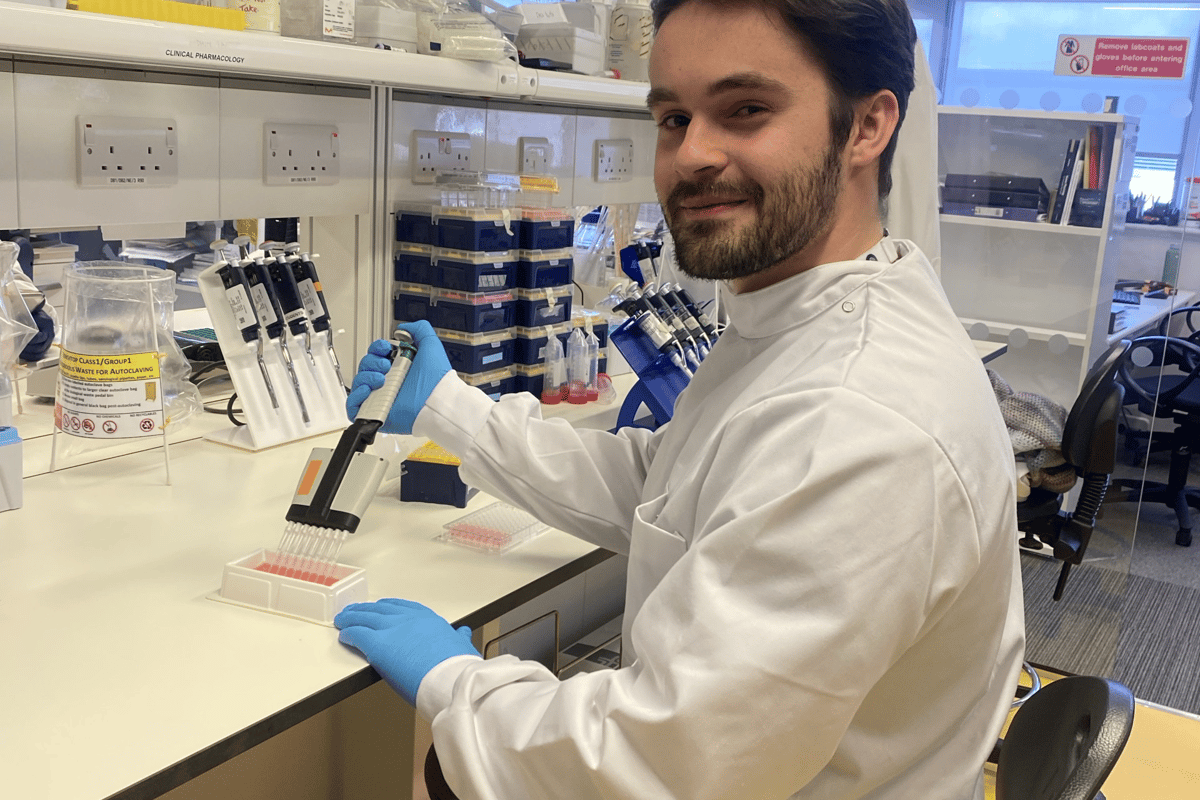
That is how University of Galway PhD researcher Nial O’Reilly describes his laboratory work investigating why colorectal cancer frequently withstands immunotherapy treatments. O’Reilly is two years into a four-year doctorate funded by a €140,000 grant from Breakthrough Cancer Research, a charity that directs resources toward cancers with poor outcomes.
While immunotherapy has transformed treatments for malignancies such as lung cancer and melanoma, its clinical benefits for most bowel cancer patients remain limited. O’Reilly’s research addresses this gap by examining how colorectal cancer cells utilize sugar molecules known as sialic acids. These molecules act as a biological camouflage, binding to immune cells and effectively switching them off to evade detection.
Collaboration at the Lambe Institute
Operating out of the Lambe Institute for Translational Research, O’Reilly collaborates alongside fellow PhD students who share overlapping research foci in colorectal malignancies. The team convenes weekly to evaluate hurdles, exchange ideas, and work alongside senior lab members holding doctoral degrees.
His project received approval from Dr Aideen Ryan, Professor in Tumour Immunology at the University of Galway and O’Reilly’s project supervisor. Ryan’s research group previously identified a specific type of cell within tumours capable of suppressing immune responses. According to Ryan, understanding how these cellular populations influence immunity marks a vital step toward formulating complementary treatments to pair with existing immunotherapies.
Orla Dolan, CEO of Breakthrough Cancer Research, noted that the organization targets malignancies where treatment options are limited and survival rates remain low. While pre-clinical results thus far show promise, translating these findings into clinical applications remains a distant objective.
Rising Colorectal Cancer Rates Among Younger Adults
The stakes surrounding bowel cancer research remain high globally and locally. Colorectal cancer stands as the second leading cause of cancer death worldwide. In Ireland alone, approximately 2,562 individuals are diagnosed with colon, rectal, or colorectal cancer each year.
Data highlights a concerning rise in younger cohorts. Rates of colorectal cancer among individuals under the age of 50 nearly doubled over the 25-year span leading up to 2019, with roughly one in ten patients diagnosed before turning 50. The Marie Keating Foundation’s support group for people with late stage cancer has recorded a notable surge in people under 50 with a late stage colorectal cancer diagnosis signing up.
Organizations like the Cancer Society advise individuals experiencing symptoms to consult a general practitioner, noting that early detection through initiatives like BowelScreen—which distributes free home test kits to residents aged 59 to 70 every two years—significantly improves survival probabilities.