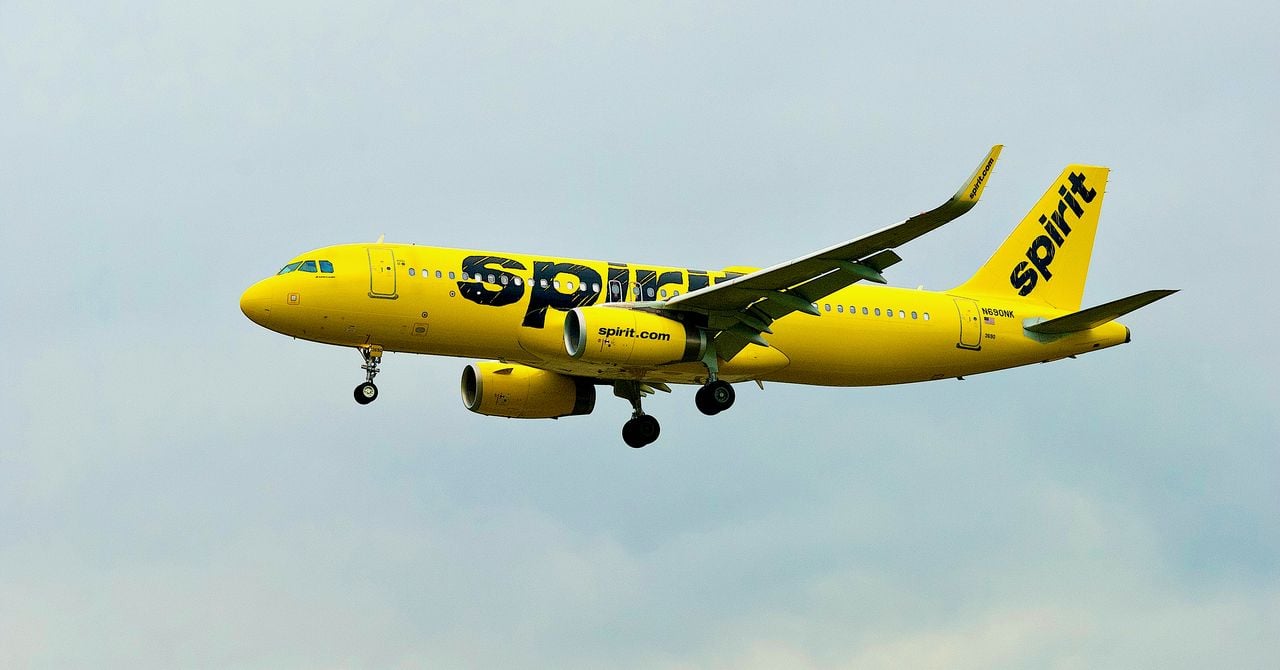
Google has reached a deal with aviation unions to strengthen privacy protections in its $10 million acquisition of internal business data from the defunct Spirit Airlines.
The agreement, disclosed on November 10, 2026, resolves objections from the Association of Flight Attendants-CWA and other labor groups that had stalled the sale in bankruptcy court. The unions, which initially challenged the transaction in August, confirmed they would withdraw their objections following the new safeguards.
A bankruptcy judge is expected to consider final approval of the sale as early as next week. The hearing is scheduled for Nov. 17 before U.S. Bankruptcy Judge Sean Lane in White Plains, N.Y.
Excluded Employee Data Categories
Under the revised terms, 20 specific categories of sensitive information will be removed from the dataset before it is transferred to Google. The excluded material includes medical and disability records, drug and alcohol testing results, disciplinary files, and payroll information.
The agreement also blocks the sale of biometrics, audio and visual recordings of flight attendants, and various aviation safety documents, such as fatigue reports and data from flight operations quality assurance programs. Other protected items include identification documents, FAA certificate numbers, and records from safety programs like the Aviation Safety Action Program, Line Operations Safety Audit data, and Flight Operations Quality Assurance information.

The union coalition, which includes the Air Line Pilots Association, the International Association of Machinists and Aerospace Workers, the Professional Airline Flight Control Association, Transport Workers Union of America Local 570, the Allied Pilots Association, and the Southwest Airlines Pilots Association, successfully pushed for a more rigorous de-identification process for the remaining data. This process will follow the ISO 27559 international standard for privacy-enhancing data handling, rather than the U.S.-based standard originally proposed.
The de-identification will be performed by Tonic AI, a third-party company that will scrub the data of personal information tied to employees or customers. An independent verification agent, selected in consultation with the unions, will review the results to ensure that once the data is de-identified, it cannot be relinked to specific people.
Google agrees to additional privacy protections in Spirit Airlines data sale https://t.co/2TuHF0q3tf
Sara Nelson Celebrates Historic Win for Worker Privacy Protections
Sara Nelson, international president of the Association of Flight Attendants-CWA, described the agreement as “an historic win for worker privacy protections.” She emphasized that the fight was necessary to prevent the commodification of employee information in the age of artificial intelligence.
Without our union, there would have been no one to speak for workers in this fire sale of their private information. We fought and we won brand new protections.
Sara Nelson, international president of the Association of Flight Attendants-CWA
Nelson also said that worker data privacy has emerged as a new issue regarding workers’ rights. “Now we will take this issue to all of our employers to secure contractual protections, and demand lawmakers protect workers everywhere through federal and state law,” Nelson added.
Congressional Scrutiny of the Spirit Sale
Politicians pressured the sale before the unions reached their settlement. A group of 121 members of Congress, headed by Representative Steven Horsford, a Nevada Democrat, and Senator Elizabeth Warren, a Massachusetts Democrat, sent a letter last month expressing concern regarding the breadth of the records involved. The lawmakers questioned the scale of employee information, citing approximately 100 million emails and 500 million Microsoft Teams messages.

In his reaction to the agreement, Representative Horsford said that the collective action of workers forced the company to address privacy risks. “Sensitive records are excluded,” Horsford said. “The data will be held to a higher standard and independently verified. And Google cannot re-identify it.”
Google, which won the auction for the data in August after Spirit ceased operations in May, has maintained that its interest is in business intelligence rather than personal records. The company previously stated it was “not looking to buy any personal information from Spirit,” and that any remaining information would be “completely excluded or will be de-identified by an independent third party before Google receives any data.”
The Scope of the Dataset
The dataset at the center of the transaction is massive. Google intends to use the information to train its Gemini AI model. The acquisition involves roughly 1.9 billion internal emails across 91,000 accounts, 664 million Microsoft Teams items, and approximately 91 million SharePoint and OneDrive files.
The sale also encompasses a complete codebase, 667,563 IT tickets, 20.6 million SharePoint files, and 17.1 million OneDrive files. The data also encompasses nearly 100 million passenger names, nearly 13 million active email addresses, five million crew pairings, and various commercial data such as Spirit’s booking curve, airfare data, and vacation package data.
The sale is part of the liquidation process for Spirit Airlines, which stopped operations in May following financial difficulties. While a court-appointed ombudsman concluded in a report that Spirit and Google had taken steps to provide privacy protections to consumers, the union’s involvement ensured that employee-specific protections were addressed separately. Google is permitted to cancel the sale if the de-identification process reduces the assets by more than 8 percent.
Earlier coverage: Google Resolves Privacy Objections in Spirit Airlines Data Sale