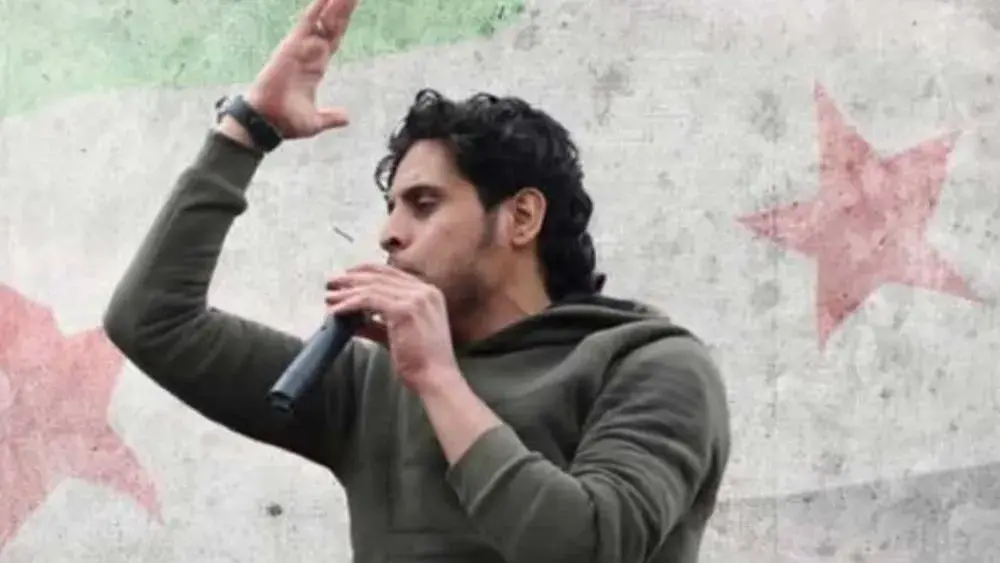
A basketball match in Damascus between Al-Wahda and Al-Karamah ignited national controversy on October 20, 2026, after chants concerning former football player Abdel Basset al-Sarout sparked a bitter dispute between fans, swift denials from club leaderships, and a formal government investigation.
What began as a tense league fixture in the Syrian Basketball League quickly spilled from the stands of Al-Fayhaa Sports Arena in Damascus into a political and social firestorm. The match, which ended with a 61-58 victory for Al-Wahda on Tuesday, October 20, 2026, quickly became overshadowed by a hostile exchange in the stands involving veteran forward Omar Al Somah and the enduring legacy of Abdel Basset al-Sarout. Sport in Syria has faced challenges in reorganizing its institutions since the fall of Bashar al-Assad’s regime in December 2024.
Al-Fayhaa Arena Chants Target Al Somah and Spark Clashes
The flashpoint occurred when Omar Al Somah, the veteran striker who recently returned to Syrian football and signed with Al-Wahda in September on a contract running through the summer of 2028 after leaving Al-Hazem in Saudi Arabia, entered the arena to support his club. Traveling supporters from Homs-based Al-Karamah immediately rounded on him, shouting hostile remarks and demanding his departure over his past political stances during the long civil conflict.

Sections of Al-Wahda’s fanbase fired back by invoking Abdel Basset al-Sarout, a former national youth team goalkeeper and prominent protest figure in Homs who was killed in June 2019 from wounds sustained during fighting in northern Hama. What words echoed through the stands quickly became the central dispute of the week.
Contlicting Claims Over Chants Divide Al-Karamah and Al-Wahda
Audio recordings posted online triggered diametrically opposed interpretations. Al-Karamah management issued a sharp condemnation, arguing that a faction of Al-Wahda supporters had hurled insults at a revered national figure.
The intentional insults and curses directed by a minority of Al-Wahda fans against Abdel Basset al-Sarout are completely unacceptable.
Al-Wahda officials flatly rejected the accusation of desecration, maintaining that their supporters were actually offering prayers for the deceased rather than cursing him. Analysts reviewing the footage noted that an initial acoustic blur in the crowded hall made the opening syllable sound ambiguous, though separate video clips captured smaller fringe groups shouting clear abuse, prompting widespread calls for individual accountability rather than collective condemnation.
Syrian Authorities Investigate Arena Security and Video Footage
The fallout forced immediate intervention from state and sports authorities. The Syrian Ministry of Sports and Youth joined forces with the Syrian Basketball Federation to establish a wide-ranging investigative committee tasked with reviewing all video footage and security logs from the arena.

Senior officials stepped forward to emphasize the gravity of the incident. Minister of Culture Mohamed Yassin Saleh described al-Sarout as an enduring icon of the uprising whose memory remains protected. Meanwhile, Minister of Justice Mazhar Alwais issued a direct warning regarding legal consequences, noting in a social media statement that any attack on his symbolism is a moral crime.
We will not allow any transgression against the symbols of our freedom, and everyone proven to be involved will not escape accountability and punishment according to the law.
Mazhar Alwais, Minister of Justice
Protests in Homs and Public Reaction Across Social Media
The dispute quickly escaped the sports pages. In Homs, residents gathered near the clock tower square to stage protests, chanting in defense of al-Sarout and demanding accountability for those who insulted his memory. Online platforms amplified the friction, with users adopting the trending Arabic hashtag translated as Al-Sarout is a red line.
While administrative bodies and parliamentary committees continue reviewing evidence to isolate the instigators, the incident highlights the fragile state of public spaces as domestic sports attempt to manage deep political sensitivities remaining from years of conflict.