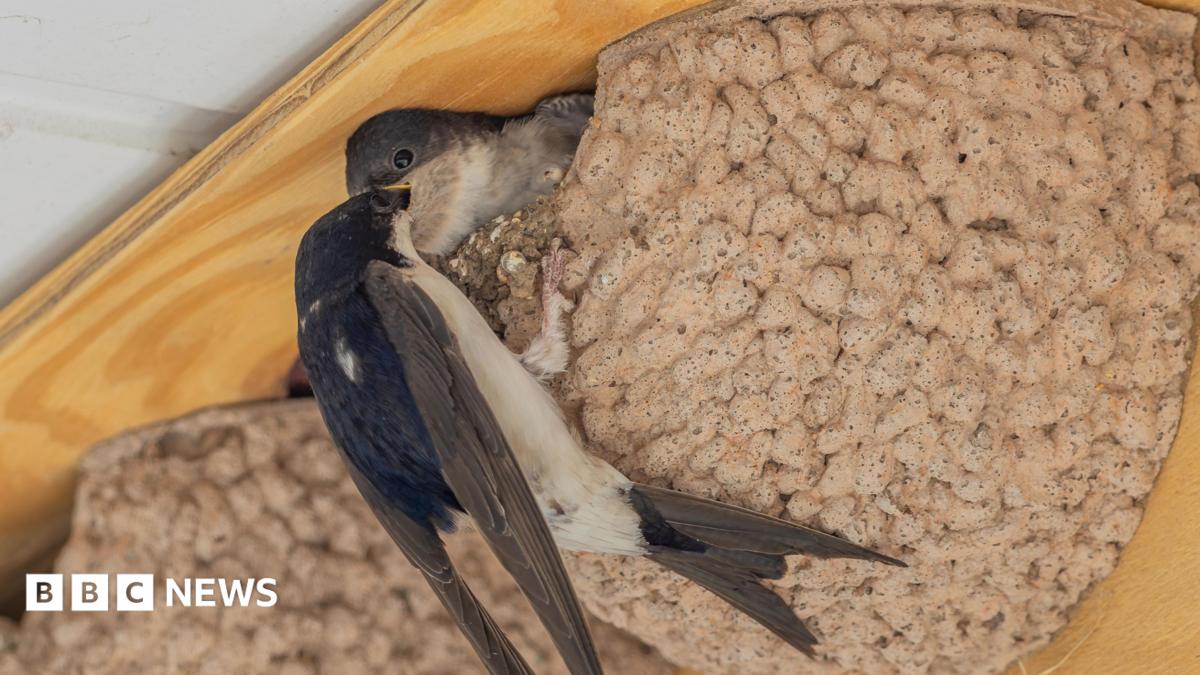
Up to 900 artificial nest cups are set to be installed across Hampshire in a conservation expansion designed to help house martins.
The birds typically build distinctive cup-shaped nests beneath the roofs of buildings. This task requires them to carry approximately 1,000 pellets of soft mud to complete a single structure.
Hotter, drier weather conditions reduce the available quantities of insects.
Such weather, as observed during the summer of 2026, results in less wet mud being available for the birds to construct their homes. Modern homes with uPVC soffits make it more difficult for birds to attach nests to buildings.
During an initial pilot stage across northern and eastern Hampshire, 249 artificial nest cups were installed on buildings near known nesting sites. Following this successful pilot, the Hampshire House Martins Project is now offering hundreds more of these structures.
The response to the first pilot stage of this project showed how strongly people across Hampshire want to help house martins. This next phase turns what we have learnt into action by offering hundreds more safe, ready-made nests. It gives homeowners, schools and businesses a simple, practical way to support the recovery of this threatened bird.
Keith Betton, chair of Hampshire Ornithological Society
These cups are designed to save the birds the time and energy they would otherwise spend gathering mud. Project coordinator Nigel Matthews encouraged residents, schools, and businesses to apply for the free artificial nests to give these remarkable birds a safe place to raise their young.
To qualify for a free cup installation, properties must meet specific criteria regarding location and structure:
- Properties must be situated within 1km (0.6 miles) of a previously recorded house martin nest.
- Host buildings must feature suitable overhanging eaves at the second-story level.
- The installation point must be between four and seven metres from the ground.
More than 500 nest sites were recorded throughout Hampshire in 2025 as the project continues to monitor the recovery of the species. The birds, which often form colonies with several nests in close proximity, return each April and May to spend the summer in the UK.