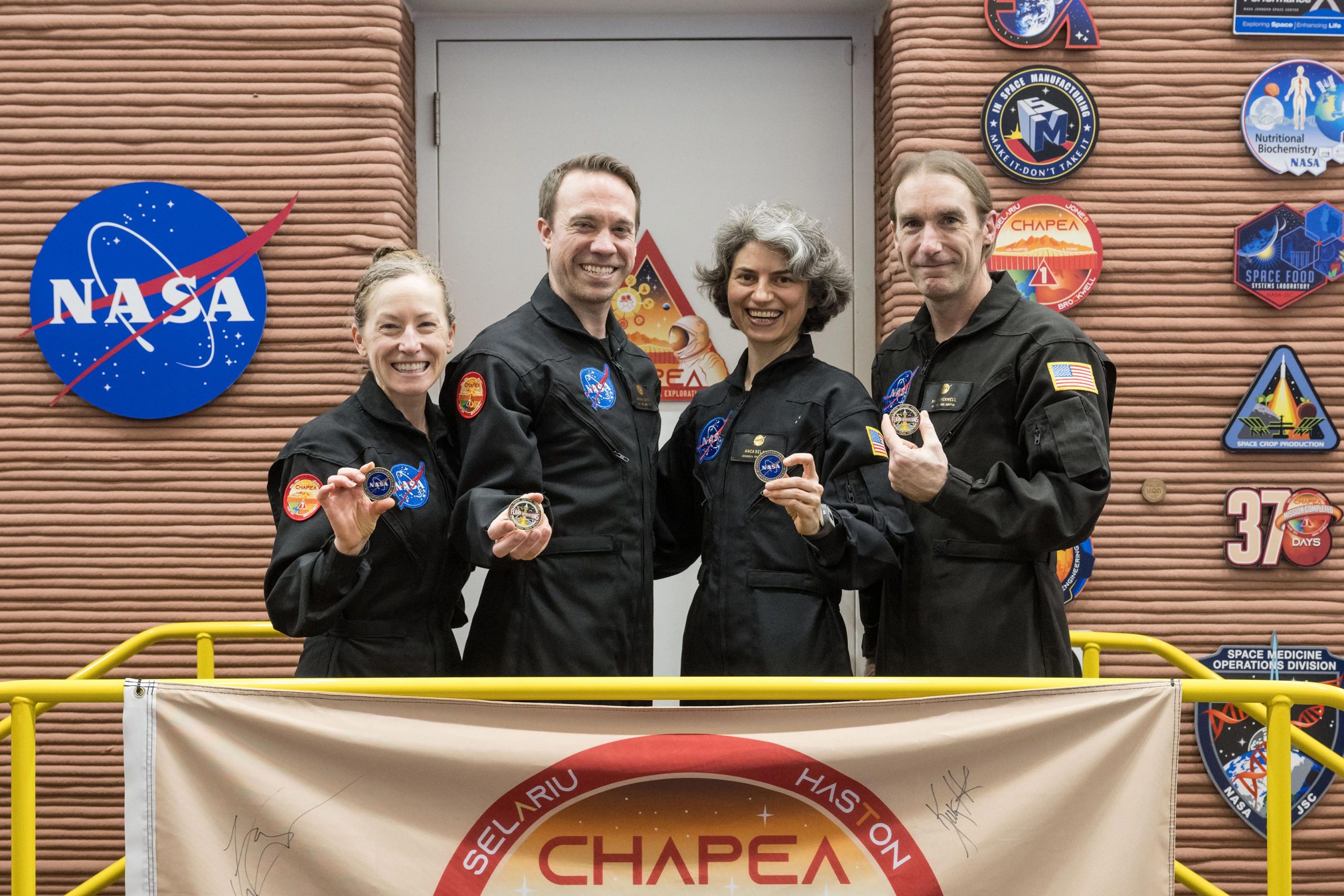
The CHAPEA 2 team concluded their year-long stay at NASA’s Johnson Space Center in Houston, having entered the facility on October 19, 2025.
Inside the Houston Habitat
The mission required the volunteers to operate without natural light, outside communication, or real-time contact with friends and family. Instead, the crew managed maintenance tasks, robotic operations, and crop cultivation while simulating Martian walks.
The reality of what they did here required immense physiological and psychological strength, teamwork and human determination.
Preparing for the Red Planet
The CHAPEA 2 mission serves as a research platform to help NASA prepare for future human exploration beyond Earth. By analyzing the crew’s health and performance, the agency intends to gather data on the environmental challenges astronauts will face on the Moon and, eventually, Mars.
Welcome home! 🌎 After 378 days of isolation while living and working like astronauts on simulated Mars mission, the four-member CHAPEA crew exited the habitat on Oct. 31. Their journey brings NASA a step closer to understanding how crews adapt to long-duration stays. The crew… pic.twitter.com/XNb6BJVHss
Their work goes beyond completing a mission. It is about preparing for the challenges of human exploration beyond Earth, gathering the knowledge necessary to protect the health and performance of the crew, and paving the way for future missions to the Moon and, one day, to Mars.
The Broader Timeline of Exploration
This mission builds upon the first CHAPEA project, which concluded in 2024. As the CHAPEA 2 crew lived in isolation, NASA continued its broader exploration efforts, including the Artemis II mission which sent humans to orbit the Moon. The agency is currently developing technology to support human travel to Mars by the 2030s, alongside plans to establish a permanent human presence on the lunar surface.
>
More on Mars
Watch live: After a yearlong stay inside a simulated Mars habitat, our four-member CHAPEA crew is set to “return” to Earth. Tune in to watch the end of their mission! https://t.co/SMI1RbJ17E
After 378 days sealed inside a simulated Mars habitat in Houston, NASA's CHAPEA Mission 2 crew of four steps out today. Their data will help plan future deep space missions. Source: NASA#NASA #Mars Could you live a year like this? 👇 pic.twitter.com/kO87XzPWv1