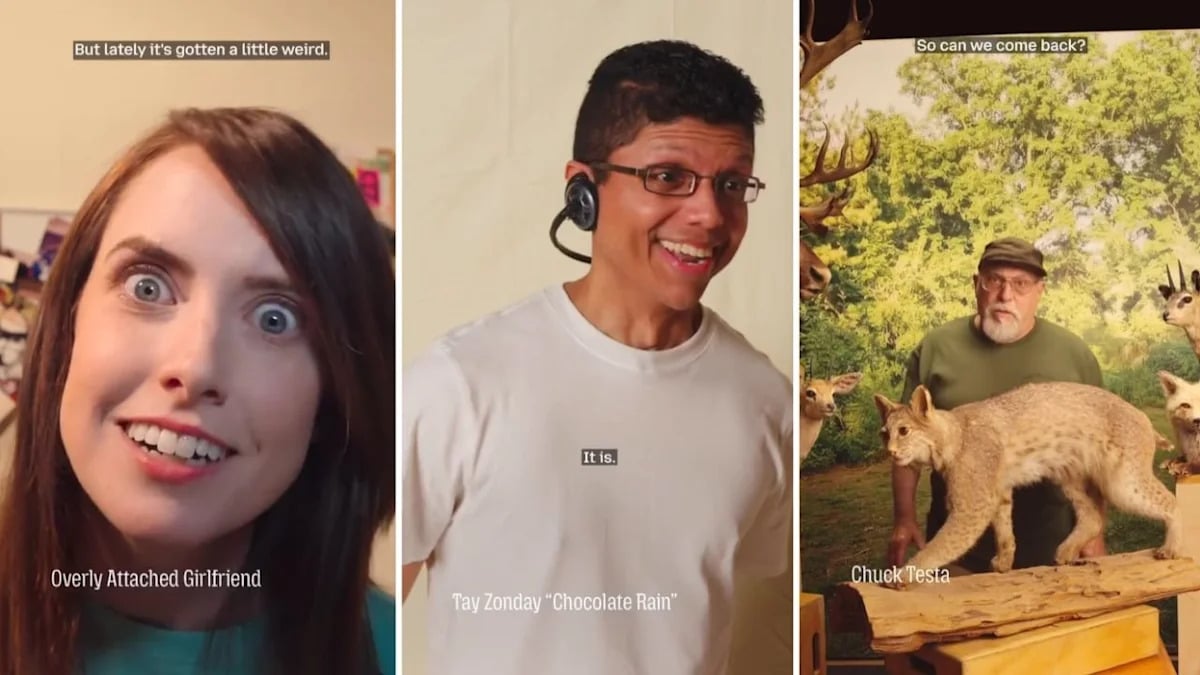
Mozilla has launched a multi-market campaign titled Come Back to Firefox, reuniting iconic early internet meme personalities in commercials that target modern web browser tracking and invasive artificial intelligence features while promoting the independent platform’s privacy tools.
The nostalgic advertising initiative rolled out with two 30-second commercials airing on NBC on October 25, 2026, before expanding to Germany, France, and the United Kingdom. Billed by Mozilla as its most ambitious campaign to date, the campaign brings together a recognizable ensemble of viral internet pioneers from the late 2000s and early 2010s. The roster includes Gary Brolsma, known as the Numa Numa Guy; Tay Zonday, whose deep-voiced rendition of “Chocolate Rain” became an early YouTube phenomenon; and Laina Morris, recognized as Overly Attached Girlfriend. Other internet icons featured in the video include Matt of Where the Hell Is Matt?
, Liam Kyle Sullivan and his character Kelly, the Annoying Orange, Bad Luck Brian, Success Kid, the Apparently Kid, Chuck Testa, and the creator of the Evolution of Dance.
Meme Personalities Confront Modern Web Frustrations
Rather than relying solely on retro callbacks, the campaign uses the familiar internet personalities to voice contemporary complaints about digital life. In the commercial spot, the Numa Numa Guy opens by asking, What happened to the internet?
before other figures weigh in on modern browsing annoyances. Overly Attached Girlfriend represents concerns about personal information gathering, while the Annoying Orange takes aim at automated software assistants, remarking on how software now has built-in AI, always asking, asking, asking
and stating, That’s annoying!
Mozilla Chief Marketing Officer John Solomon explained that the creative direction stemmed from a desire to recapture an era when online exploration felt decentralized and personal. I kept going back to Firefox’s heyday, when the internet was really fun, weird, and interesting,
Solomon said in a statement provided to Mashable. These are people who helped make it strange, creative, surprising, and fun. None of them were trying to go viral. They were normal, everyday people who were using the internet. That’s the way the internet should be and why we feel it’s a great moment for Firefox. Always independent and unlike big tech, not trying to extract more from everyday people.
We Believers and Production Teams Recreate Early Web Aesthetics
The campaign was developed by the independent advertising agency We Believers, with production handled by nobodys and direction by the Sunny Sixteen collective. Gustavo Lauria, founder and chief creative officer at We Believers, noted that the objective was to craft a concept deeply tied to the browser’s heritage as an alternative browser. We wanted to create an idea that truly belongs to Firefox — a challenger browser that helped shape the internet’s golden years and stayed independent as Big Tech took over,
Lauria stated.
Following the initial release, individual cast members such as Laina Morris shared behind-the-scenes footage from the shoot, further accelerating the campaign’s spread across platforms like Instagram and YouTube, where the main advertisement pulled in millions of views within its first day.

Privacy Tools and AI Controls Positioned Against Big Tech Competitors
Beneath the nostalgic tone lies a direct pitch for Firefox’s current product suite. Mozilla is positioning the browser as a privacy-first alternative to dominant platforms like Google Chrome. During its peak years in the late 2000s and early 2010s, Firefox held up to 32 percent of the global browser market share, but its usage has since dipped to an estimated 2.8 percent.
To win back users who migrated to competing services, the campaign highlights specific built-in utilities designed to counter modern tracking and unwanted automation. These include a free built-in virtual private network (VPN) to safeguard browsing privacy, mobile ad-blocking capabilities, and customized controls allowing users to toggle or limit AI-related features within the browser.
Financial Realities Accompany the Independent Positioning
While the brand messaging emphasizes total independence from corporate tech giants, Mozilla’s broader financial structure remains tied to search partnerships. Testimony from Mozilla Chief Financial Officer Eric Muhlheim indicated that payments from Google for default search placement account for roughly 85% of the organization’s revenue. Legal and regulatory remedies surrounding default-search arrangements continue to shape the operating environment for independent browsers as Mozilla pushes its new privacy offerings to the market.
More on Come Back
Mozilla launched the Come Back to Firefox campaign, leveraging nostalgic internet memes to promote user privacy and challenge Chrome market dominance.#Firefox #Mozilla #ComeBackToFirefox #BrowserPrivacy #TechNewshttps://t.co/xPwLaCdrQA
Mozilla launches nostalgic ‘Come Back to Firefox’ campaign featuring viral 2000s icons [A thread] 🔽 pic.twitter.com/tiCXzsLjKr
Mozilla Launches “Come Back to Firefox” Campaign dlvr.it/TW3SSC pic.twitter.com/yJQ5FD4b1C