Biotechnological methods that breed animals with traits of extinct creatures cannot truly reverse extinction, according to researchers who argue that lineage-genome conflation misrepresents what genetic engineering achieves.
Colossal Biosciences and the Dire Wolf Genetic Edits
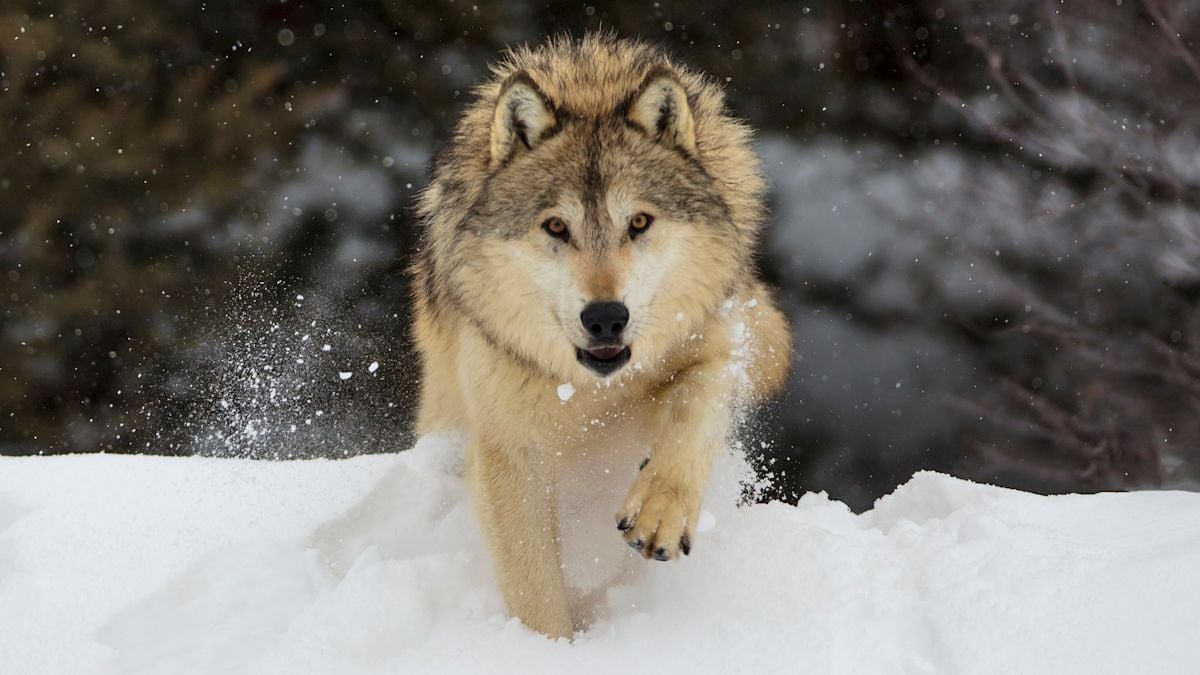
In 2025, the biotech company Colossal Biosciences drew widespread attention for what was termed the de-extinction of the dire wolf. Rather than reviving an extinct population, scientists made genetic edits to grey wolf cells. The resulting animals possessed larger bodies, bigger teeth, and paler coats of fur, but the process relied on living species as a genetic template.
Marine biologist Andrew Davinack and biochemist Charlotte Daniels from Wheaton College Massachusetts challenged the de-extinction claim in a paper published in Biology Letters. The researchers introduced the term lineage-genome conflation to describe the error of equating a modified genome with the return of a lost organism.
Recent advances in ancient DNA sequencing, comparative genomics and genome editing have renewed interest in de-extinction, often framed as the technological reversal of species loss. Here, we argue that de-extinction cannot recover extinct species because extinction represents the termination of an evolutionary lineage, not merely the disappearance of genetic information.
Andrew Davinack and Charlotte Daniels, Biology Letters
Species Represent More than Reconstructed DNA Sequences
The argument rests on the premise that an organism is shaped by more than its sequence of DNA. A species represents a continuous population-level history defined by ecological interactions, demographic shifts, and natural selection over millennia.
Dire wolves were living in a very different world more than 10,000 years ago.
Species are historically continuous population-level lineages shaped by gene flow, mutation, drift, selection, demographic history and ecological interaction. A reconstructed genome, even if highly accurate, represents at most a partial snapshot of an individual organism.
Andrew Davinack and Charlotte Daniels, Biology Letters
Terminology and Precision in Biotechnology
While the researchers acknowledge that genetic engineering yields valuable ecological proxies and phenotypic reconstructions, they urge media outlets and private companies to adopt stricter linguistic standards. Using misleading descriptors obscures the actual scientific progress being made.
Greater precision in terminology therefore has practical consequences. Lineage restoration, genetic recovery, phenotypic reconstruction, ecological substitution and restoration of historical communities are distinct objectives and require different criteria of success.
Andrew Davinack and Charlotte Daniels, Biology Letters
True de-extinction, the authors note, relies on preserved cells or embryos. Scientists utilized cell preservation techniques with the Pyrenean ibex back in 2003. Although the animal didn’t survive, there’s a stronger claim to de-extinction.
Ultimately, what emerged in 2025 were modified grey wolves rather than resurrected dire wolves.
Genomic reconstruction may recreate selected traits or produce ecological proxies, but it cannot recover extinct species as historically continuous evolutionary lineages.
Andrew Davinack and Charlotte Daniels, Biology Letters
Instead, the process serves more as a means of engineering modern organisms that mirror specific ancestral characteristics rather than restoring the original creatures.