Physicists have constructed a theoretical model of gravity in which time runs strictly forward, designed to block the physics paradoxes that would arise from backward time travel.
Stephen Hawking proposed his chronology protection conjecture in 1992 to explore whether backward time travel was even possible, suspecting that quantum effects would prevent closed timelike curves from forming. While Hawking relied on calculations to support that idea, researchers have lacked definitive proof that the universe actively enforces it.
Shortly before his retirement, Stephen Hawking held a party for time travelers with the usual trappings, except he did not send out the invitations until a day after the event, and no one attended—an experiment he felt ruled out time travel in this universe.
Moustafa Ismail and David Mattingly of the University of New Hampshire investigated whether gravity itself provides the necessary safeguard against time loops. General relativity is the best framework for gravity, but general relativity is not the only one, and its geometry and mathematical connection are tightly linked.
Under specific conditions within this model, time always moves forward along any path a traveler could take, making it impossible to loop back into the past. MAGIC establishes the conditions for chronology protection only locally; guaranteeing it everywhere requires an additional assumption about the overall structure of spacetime that the researchers have not shown follows from the model itself. The research has been published in Physical Review D.
My paper asks a narrower question: when does a spacetime permit such a loop, and when does the geometry itself forbid one?
Hongsheng Zhang, researcher at China’s Jinan University
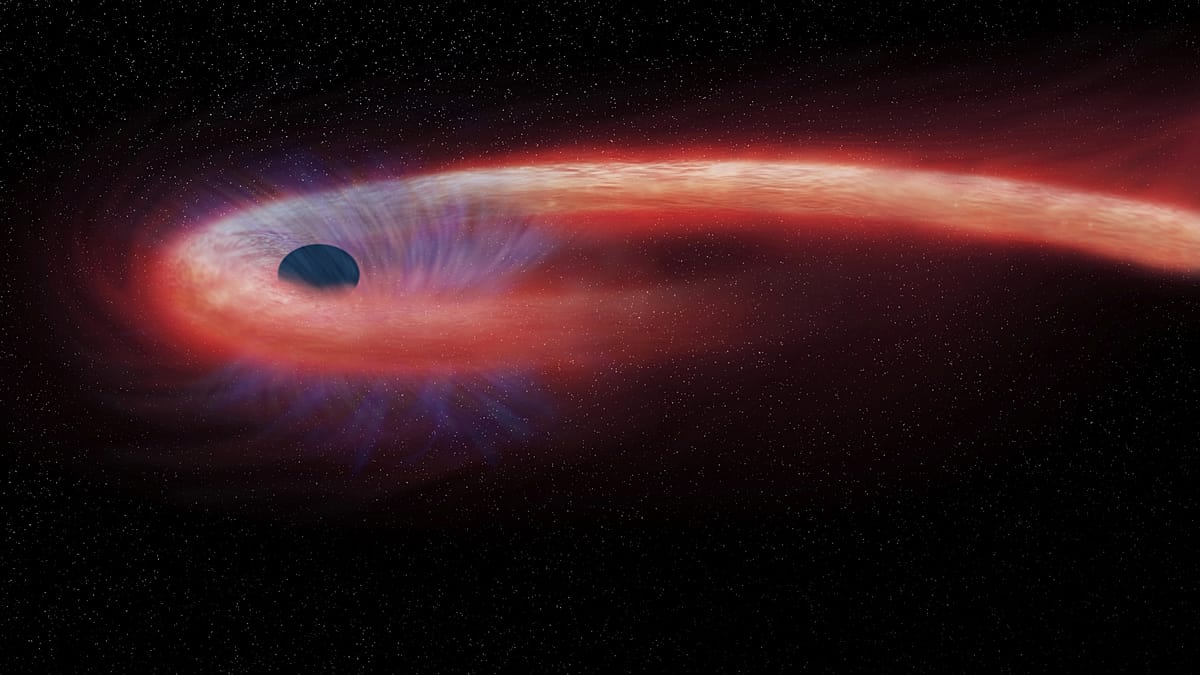
Physicist Brandon Carter showed in 1968 that such loops exist inside spinning black holes, where the drag is so strong near the core that moving forward in time is bent into a circle. “light can never point sideways to a traveller's direction in time,” Zhang says, noting that twist is everywhere in the universe and harmless.
“The loophole that could matter is topology, and that is exactly the one that looks least likely to arise without deliberate engineering,” Zhang told euronews Next. Zhang also said that people expect a result about time travel to need heavy machinery, energy conditions, quantum effects, or a singularity, but his work shows it needs none of that and is simply bookkeeping about directions.
While journeys into the past remain mathematically barred or unstable, movement toward the future is established physics.
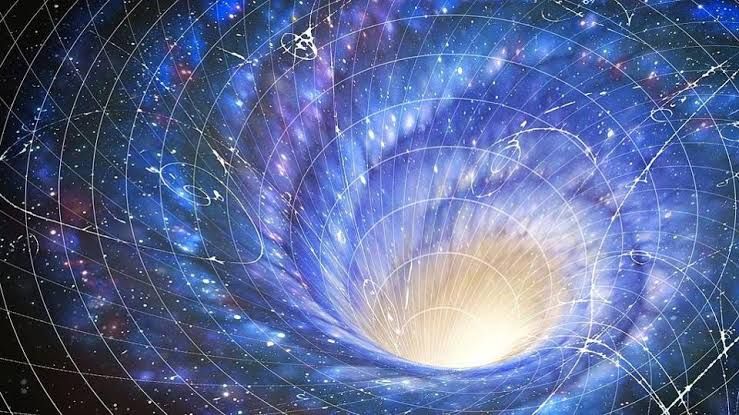
According to the European Space Agency, astronauts aboard the International Space Station are a few milliseconds—or about five thousandths of a second—younger when they return to Earth than they would have been had they spent the same period on the planet, a consequence of moving very fast or sitting in strong gravity that slows your clock relative to everyone else’s.
Researchers working on chronology protection acknowledge that their current models require further development. “What it does not do is tell us whether nature permits any of this. That remains open, and it is the question I would most like to see answered,” Zhang concludes, noting that while the work offers a thought-and-math experiment to explore abstruse principles, it does not tell us whether nature permits any of this, leaving the fundamental question open.
“If you want a time machine, you now know exactly what you must break,” Zhang adds.