
Allergies may stem from an energy failure in protective barrier cells rather than the immune system, according to a large-scale data analysis published on 29 October 2026 in the journal Allergy.
- Researchers analyzed data encompassing 3,776 patients across 116 case-control cohorts.
- The findings suggest mitochondrial dysfunction in epithelial cells triggers early alarm signals.
- The study proposes a potential biological origin for conditions including eczema and food allergies.
Medical teaching for six decades held that allergies start in the immune system and that protective barriers break down after. An international research team challenged that premise by examining a large collection of multi-omic allergy data.
For 60 years, we’ve taught that allergies start with the immune system and the barrier breaks as a consequence, but our work suggests it may be the other way around.
Professor Peter Smith, a clinical immunologist from Griffith’s School of Medicine and Dentistry
The study encompassed 3,776 patients, 116 case-control cohorts, and 2,164 cohorts. Researchers combined molecular information to uncover patterns in biological processes.
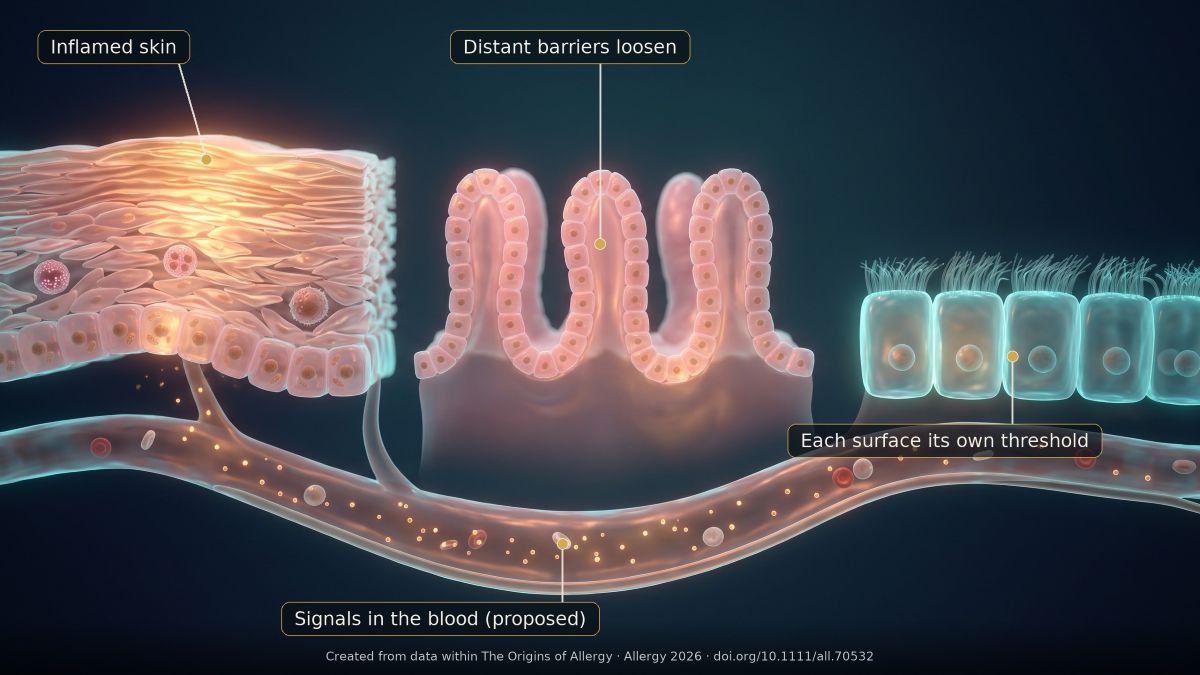
The investigation points to an energy crisis inside mitochondria. These tiny structures generate the energy necessary for cell function. Epithelial cells form protective barriers along the skin, gut, nose, lungs, and esophagus.
Allergy diseases, which now affect up to one in three children, may start one step earlier as a power failure in the mitochondria of the epithelial cells which form the body’s barrier surfaces.
Professor Peter Smith, Griffith University
Barrier cells cannot meet the energy and stress demands of the modern environment. They raise the alarm too easily. “The barrier cell can't meet the energy and stress demands of the modern environment so raises the alarm too easily, and the immune events we recognize as an allergy, follow,” Professor Peter Smith said,
The most compelling evidence emerged in eosinophilic esophagitis, an allergic inflammatory disease affecting the esophagus. Across all 13 independent patient cohorts, researchers found reduced activity in mitophagy. This is the cellular recycling process that removes damaged mitochondria.
In patients with eczema, abnormalities in skin barriers and antioxidant defenses appeared even in uninflamed tissue. The mitochondrial signature was absent in established asthma and nasal polyps. It appeared only partially in hay fever.
Modern environmental exposures may converge on this same cellular vulnerability. Contributors identified by the team include processed diets, air pollution, microplastics, detergents, declining dietary fiber, and early antibiotic exposure.
Associate Professor Nic West said that the hypothesis accounts for why allergic diseases frequently relapse after treatment stops. Existing drugs act downstream and do not resolve the root barrier damage.
The research also explains why allergies can relapse, once inflammation is established it damages the barrier further. Today’s drugs act downstream, so the disease often returns when treatment stops as they do not reach the root cause.
Associate Professor Nic West, Griffith University
The team said their work presents a hypothesis to be tested. The next research phase will measure these cells directly in infants before any allergy develops.
The international research effort involved scientific contributions from institutions including Mount Sinai, Leuven, Cork, Southampton, Zurich, Miami, Singapore, and Aberdeen, alongside work from researchers such as Akdis and Gil Yosipovitch.