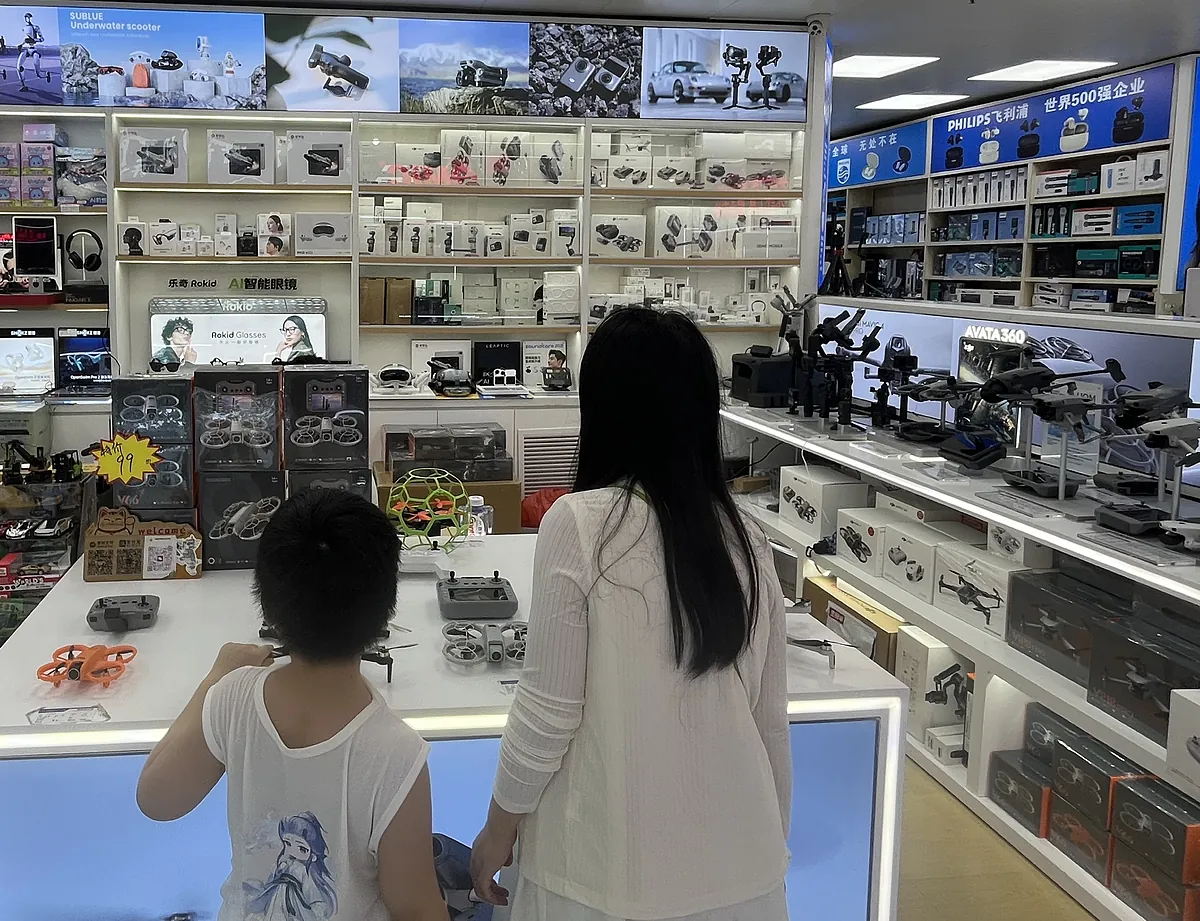
Soldiers on both sides of the frontline in Ukraine rely on the same Chinese manufacturing hub for drone parts.
At Huaqiangbei, the massive electronics market in Shenzhen, vendors display components such as flight controllers, high-resolution cameras, and power cells as consumer goods intended for agriculture, industry, or entertainment. Businesses from both Russia and Ukraine have spent years sourcing identical hardware from these same suppliers to assemble frontline aircraft, as an industry intermediary explained.
Oleksandr Yakovenko of TAF Industries said that Chinese suppliers orchestrated visits to keep opposing buyers from crossing paths in the factories. Suppliers occasionally asked visiting executives to wait or directed them through back doors while representatives from the opposing nation cleared the premises.
China retains a grip on this manufacturing ecosystem through its industrial capacity and control of critical raw materials like germanium, which is essential for infrared optics. Moving away from Chinese parts carries steep penalties for procurement teams.
Andrii Taganskyi of Odd Systems said the operational peril of that reliance is clear. Beijing might halt exports of these parts.
We are left blind.
Andrii Taganskyi, according to El Conurbano
Kyiv worked to diminish its direct reliance on imports from Beijing. Customs data cited by AP indicates that China accounted for nearly 90 percent of Ukraine’s imported drone components in early 2024, but that direct share fell to 28 percent across the first eight months of 2026.
Much of that hardware now arrives through European intermediaries in Poland and the Czech Republic, which buy the parts in China before reselling them to buyers in Ukraine. Russian procurement continues drawing directly from Chinese manufacturers through complex distribution networks.
Investigators discovered a planned shipment of 500 communication modems from Shenzhen Xingkai Technology destined for Alabuga, the industrial complex in the Republic of Tatarstan where Moscow produces military aircraft. Markets in Shenzhen also supply fiber-optic spools that let operators pilot drones via physical cables, bypassing radio signals vulnerable to electronic jamming.
In the Nanshan district, DJI operates the headquarters that helped establish the city as a hub for commercial aircraft. The firm suspended sales in both countries and prohibited military uses shortly after the invasion began in April 2022, but local store employees said that intermediaries continue diverting commercial models to the front lines.
Beijing introduced license requirements for exports of specific motors, radio modules, and speed controllers. These restrictions affect hardware used in Shahed loitering munitions manufactured inside Russia for attacks on Ukrainian infrastructure.
Presidential sanction coordinator Vladyslav Vlasiuk said that the new rules omit key components like anti-jamming antennas and specialized navigation units.
As a global technology hub often called China’s Silicon Valley, Shenzhen ranks among the world’s premier centers for industry, international trade, and finance, with a nominal GDP surpassing several major global economies. Its massive industrial capacity supports numerous small manufacturers alongside large corporations like Huawei, Tencent, DJI, and Oppo, and underpins its position as the largest automobile manufacturing city in China.
Beijing maintains a position of neutrality, but defense analysts said the controls may apply unevenly. Robert Tollast of the UK defense institute RUSI said that regulations could restrict Ukrainian procurement while leaving supply lines to Russian buyers largely intact, following the invasion that began in April 2022.