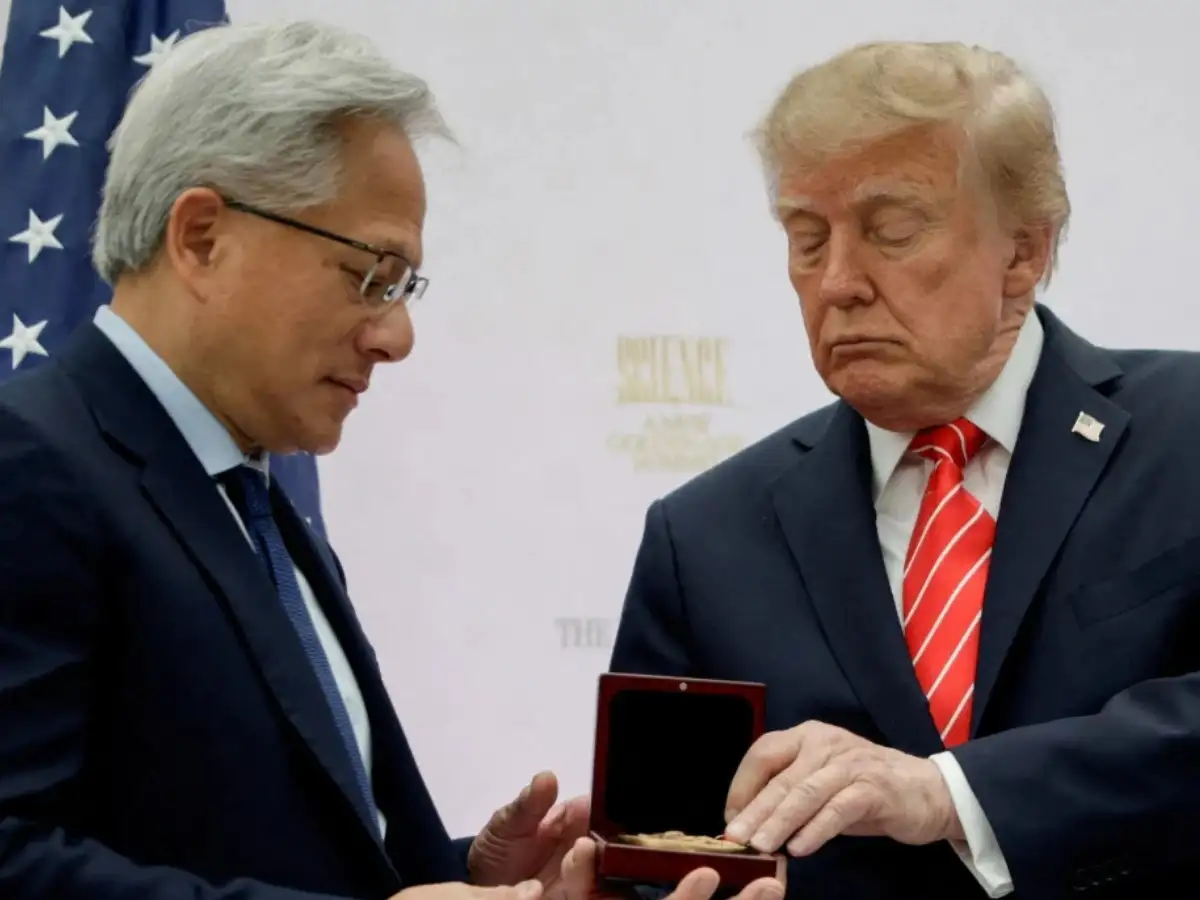
President Donald Trump bought as much as $265,000 in Nvidia shares and sold up to $15,000 of the stock in September, according to a financial disclosure signed by the president on November 1 and made public by the US Office of Government Ethics.
The transactions added to a sprawling portfolio that included between $12.5 million and $58 million in Nvidia stock at the end of last year, positioning the president directly in the financial wake of executive policies that shape the chipmaker’s business. Those holdings grew from between $615,000 and $1.3 million a year earlier.
Stock Trades Amid Export Policy Shifts
The September purchases arrived as the administration weighed rules governing exports of advanced AI semiconductors. Nvidia is the world’s leading manufacturer of advanced artificial intelligence chips, which Washington has sought to keep away from Chinese military and technological development.
Trading records show a heavy volume of activity in the president’s accounts. Between January 2025 and August 2026, Trump’s investment accounts executed at least 103 Nvidia trades worth a combined $27 million to $97.5 million. The wide ranges reflect disclosure rules that require filers to report transactions in broad dollar brackets rather than exact amounts.
The White House has consistently maintained that these transactions do not present conflicts of interest. In a statement provided to the press, White House spokesperson Davis Ingle said that third-party financial institutions independently manage the president’s portfolio and replicate “recognized indexes, such as the Schwab 1000.”

“There are no conflicts of interest,” Ingle said.
Jensen Huang’s Exit and Reinstatement
The stock activity paralleled deep turmoil at the top of the chipmaker. Jensen Huang stepped down as Nvidia’s chief executive after reports surfaced regarding an extramarital relationship with a woman accused of spying for Beijing, along with reported affairs with two employees.
Trump publicly defended the executive, describing him during an interview as “a tremendous talent” who was “going through hell.”
Two weeks after his resignation, Huang returned to the helm of the company following personal intervention from the president. Trump took direct credit for the reversal during an appearance on CNBC.
BLOOMBERG: The decision to reinstate Huang was made Sunday afternoon TRUMP ON SUNDAY NIGHT: "I hope the Board of Nvidia rehires Jensen Huang" How many people made money off having the inside info that Huang's return was a done deal before it was publicly known? And was Trump… pic.twitter.com/DjeLh2ULKG
“I spoke to them, let me put it that way,” Trump said, “And I convinced them . . . I made the deal.”
The board’s decision to reinstate Huang sparked a market rally that sent Nvidia’s stock soaring more than 30% in a single day. According to an analysis by the Financial Times, that rebound yielded a financial windfall of between $1.3 million and $15 million for the president based on his estimated share count at the end of September.
National Security and Export Enforcement
The close financial and personal ties between the administration and Nvidia’s leadership have drawn sharp scrutiny from lawmakers concerned about national security.
Subsequent rules issued by the Commerce Department aimed to close loopholes that allowed Chinese firms to access advanced computing power through data centers in Southeast Asia.

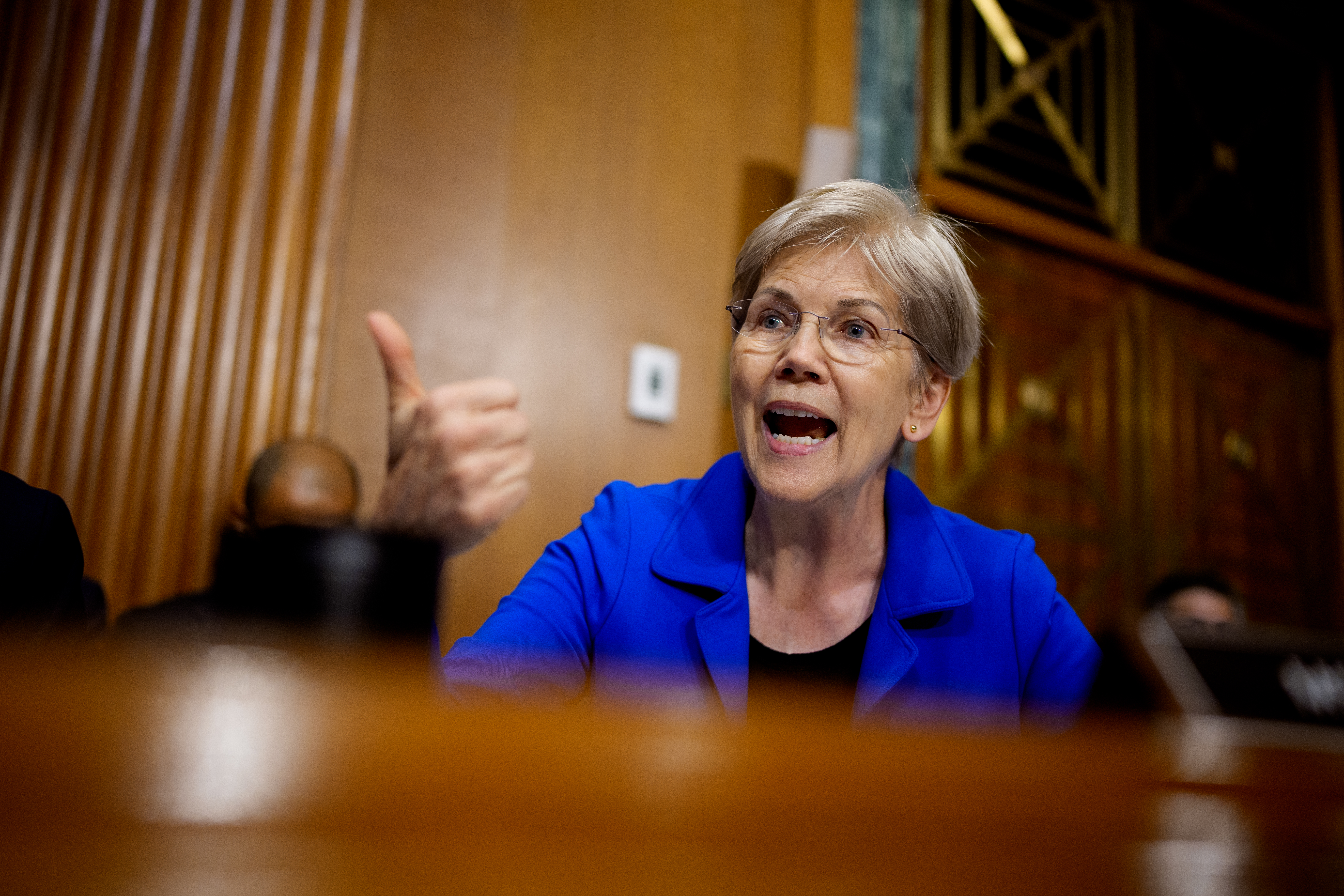
Senator Elizabeth Warren criticized the trading activity in June, highlighting a purchase of up to $1 million in Nvidia stock made just weeks before the administration loosened export controls to let the company sell specific chips to China.
“raising the company’s stock and ultimately benefiting President Trump,” Warren said in a June 3 release regarding the policy shifts.
Treasury Secretary Scott Bessent defended the administration’s actions during a congressional hearing, while Commerce Department officials maintained that cabinet members adhered to all required ethical rules and recused themselves from prior private business holdings.

Financial Stakes and Market Rebound
President Donald Trump potentially gained up to $15 million in a single day after intervening to secure Jensen Huang’s return as chief executive of Nvidia, according to an analysis of financial disclosures by the Financial Times. The chipmaker’s stock surged more than 30% following the board’s decision to bring Huang back two weeks after his resignation amid a scandal involving multiple affairs, including one with a suspected Chinese spy.
Political analyst David Rothkopf stated on The Daily Beast Podcast that Trump held between $13 million and $62 million in Nvidia stock as of late August, arguing that the president’s own financial interests created a troubling conflict of interest.
Rothkopf said that Trump feared the scandal’s fallout could trigger a global market meltdown and severely harm the global economy. An analysis by The Washington Post similarly placed the president’s Nvidia holdings between $13 million and $62 million at the close of August, well above the $615,000 to $1.3 million reported at the end of 2024.
Ethics Defense and Intelligence Briefings
Treasury Secretary Scott Bessent defended the trading activity during a congressional hearing, testifying that President Trump was not sitting in the Oval Office engaging in a high-frequency trading strategy and pointing out that an outside manager handled the portfolio.
President Trump supported calls for Jensen Huang’s reinstatement as Nvidia’s CEO and downplayed national security concerns about the ousted executive’s relationship with a woman suspected of being a Chinese spy https://t.co/nhbAAoW8hp pic.twitter.com/wJy8egdMJF
Trump Organization spokesperson Kimberly Benza maintained that independent financial managers handle the portfolio and that investments are organized to avoid even the appearance of a conflict of interest, while the Office of Government Ethics received an annual disclosure listing Nvidia stock valued up to $5 million in one investment account.
The New York Times reported that Trump had been briefed in 2025 on Huang’s relationship with the woman and on intelligence indicating she was passing information to the Chinese government, but chose not to act on the information. Trump later called Huang a Great Patriot and National Treasure in a social media post, while telling reporters he was amazed by the allegations against one of his closest allies in Silicon Valley.
Broader Portfolio Growth and Regulatory Oversight
Financial disclosures filed by the administration show that the president traded hundreds of assets in September alongside his activity in the chip sector.
Political analyst David Rothkopf stated on The Daily Beast Podcast that the intertwining of executive policymaking and individual stock ownership presents a systemic challenge.
Commerce Secretary Howard Lutnick pushed back against regulations that would hinder the chipmaker from selling products to Southeast Asia as a matter of national security, according to reporting from The New York Times. Commerce Department officials said that Lutnick followed ethical rules throughout his tenure, having recused himself from Cantor Fitzgerald when he joined the cabinet.
The U.S. Office of Government Ethics, an independent executive-branch agency, establishes the standards of conduct for the executive branch and issues rules interpreting criminal conflict-of-interest restrictions under the Ethics in Government Act. It also creates the framework for the public and confidential financial disclosure systems that require the president to report holdings such as the Nvidia shares disclosed in the November 1 filing.
OGE ensures individual agency ethics programs function properly by setting requirements, supporting them, and reviewing them, but it does not itself enforce conflict-of-interest statutes against the president.
White House Communications Director Steven Cheung defended the administration’s involvement in protecting the executive, declaring to Semafor that the president was totally involved in the decision and noting that the administration must protect its geniuses.