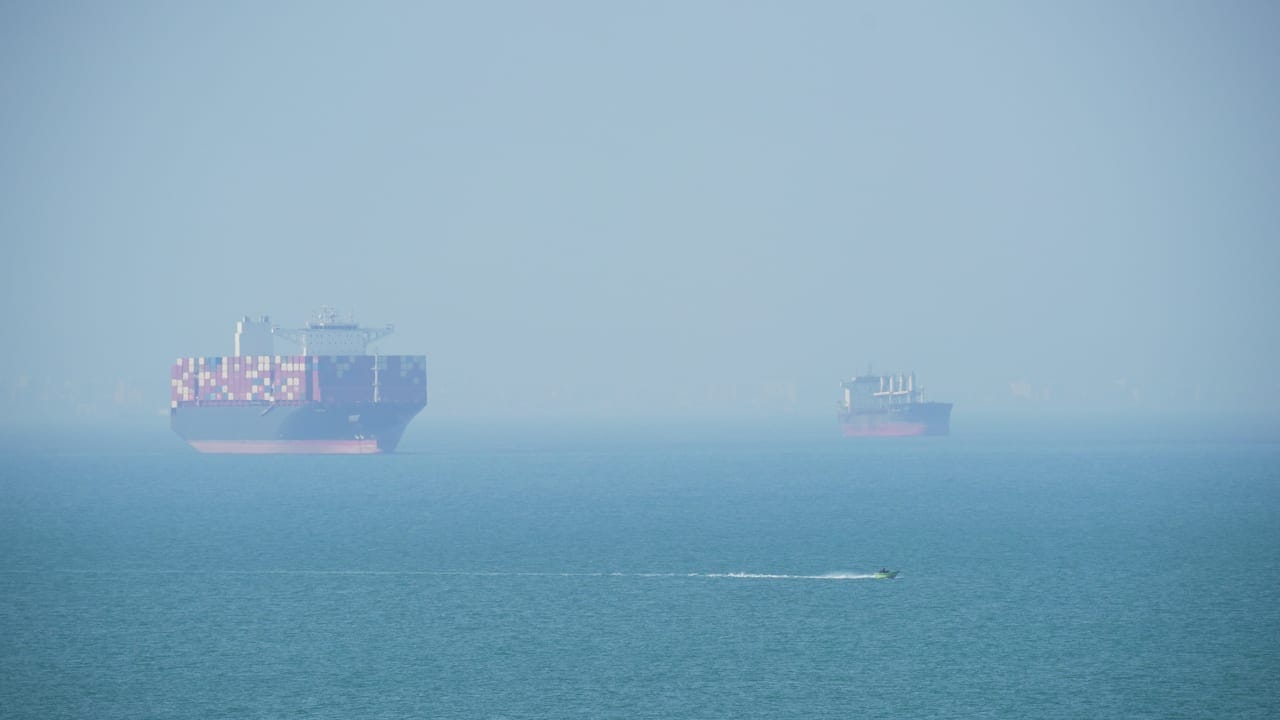
Iran has positioned more than 14 oil tankers at Kharg Island in a convoy poised to attempt to break the US naval blockade of its oil exports, satellite imagery and ship-tracking data show.
Kharg Island Staging Ground
Approximately 85% to 90% of Iran’s crude oil exports typically depart from Kharg Island, where these tankers are currently gathering. Iranian banners have been hoisted on these ships, crews have been appointed to them, and Tehran intends to dispatch them toward the Sea of Oman outlet in the upcoming days as a convoy.
President Trump told Fox News he's inclined to resume strikes against Iran after the new year. The President responded to reports of Iran planning to test the U. S. naval blockade. "I hope they do, they'll all be at the bottom of the sea like the rest of the navy." pic.twitter.com/wziCX97eRL
Behind the proposed operation is an acute financial squeeze. Iran’s revenue from crude oil and condensate exports is projected to hit zero by mid-December. The United States first blockaded Iranian ports on April 13 after talks in Islamabad collapsed, and after a brief June pause, reimposed the blockade on July 14.
Kpler has identified about 20 tankers near Kharg Island, while satellite imagery and shipping data showed ship-to-ship crude transfers taking place near the island with automatic identification systems switched off to conceal the oil’s origin. The United Against Nuclear Iran organization monitored approximately 200,000 barrels of crude oil transferred from the tanker OLYM to the HAO FAN south of Kharg Island.

Prior to the outbreak of the conflict, Chinese buyers acquired the majority of Iran’s crude oil exports, which stood at roughly 1.5 million to 2 million barrels daily. The terminal at Kharg Island can store around 30 million barrels and features waters deep enough to berth supertankers.
Washington Threatens Sinking
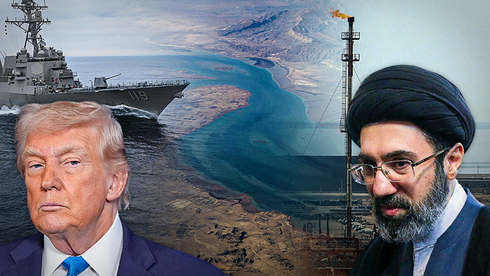
President Donald Trump responded to the reported convoy by daring Tehran to challenge the blockade and threatening severe military action against any participating vessels.
I hope they do, they’ll all be at the bottom of the sea like the rest of the navy.
President Donald Trump, via Fox News
Deputy Foreign Minister Kazem Gharibabadi described the economic blockade as an act of war and said that the country would take all necessary measures to break it.
We will take any action necessary to break the economic blockade.
Kazem Gharibabadi, Deputy Foreign Minister
Characterizing the U.S. naval blockade as military aggression during a press briefing, Iran's Foreign Ministry spokesperson Esmaeil Baghaei asserted that the nation will use all available instruments to oppose it. Iranian Parliament Speaker Mohammad Baqer Qalibaf announced that there are ways to break the U.S. naval blockade through military methods and that steps would be taken in this direction soon.
Mohsen Rezaei, head of Iran’s Supreme National Security Council and former commander of the Iranian Revolutionary Guard Corps, declared that he received instructions to bring the “neither war nor peace” situation to an end. Ebrahim Azizi, chairman of the Iranian parliament’s national security committee, said that Iranian forces were at their highest state of readiness and declared in English on X that Iran cannot be blockaded.
Iran Threatens Gulf Oil Facilities over Convoy
Iranian media proposals, including a column published by the Fars News Agency, suggest that if American forces attack the convoy, Tehran would retaliate by striking regional energy infrastructure, specifically oil facilities in the United Arab Emirates, Saudi Arabia, Qatar, Kuwait, Oman, and Bahrain.
Meanwhile, the US Central Command (CENTCOM) warned that vessels receiving cargo through ship-to-ship transfers from blocked ships may be stopped, inspected, diverted or seized.
Iranian Leaders Vow to Break US Blockade
Parliamentary Speaker Mohammad Baqer Qalibaf announced that military methods exist to break the U.S. naval blockade and that action would be taken soon.

National Security Committee Chairman Ebrahim Azizi confirmed that Iranian military units maintain their highest level of combat readiness.
Blockade Enforcement and Market Impact
United States Central Command leaders said that naval forces possess the necessary warships, aircraft, and tactical procedures to intercept multiple vessels simultaneously in the open waters of the Indian Ocean. Officials expressed high confidence that all or most participating ships would be successfully interdicted if an attempt is made.
International Crisis Group senior Iran analyst Hamidreza Azizi told CNN that financial markets increasingly assume a return to full-scale war is unlikely and that global petroleum supplies will steadily recover.
Tehran Keeps Diplomatic Channels Open with Mediators
Deputy Foreign Minister Gharibabadi said that Tehran remains in contact with mediators, including Qatar, to examine whether diplomacy can be given another chance, adding that a two-day proposal previously presented by Foreign Minister Abbas Araghchi to the Sultan of Oman remains on the table.
“Reopening the Strait of Hormuz is not difficult, and it is enough for the US to accept reasonable conditions in accordance with Iran's international law,” Foreign Minister Abbas Araghchi said.
United Against Nuclear Iran (UANI) is a bipartisan, non-profit advocacy organization based in the United States that works to prevent Iran from developing nuclear weapons and pressures companies to halt business with Tehran. To monitor and expose sanctions evasion and clandestine oil movements, the organization launched its Maritime Intelligence Network and Rogue Vessel Analysis (MINERVA) system in June 2013.
The MINERVA unit utilizes satellite transmissions, navigational data, and computer algorithms to track vessels, build behavior profiles, and expose questionable activities—such as ship-to-ship crude transfers with automated identification systems switched off—even when transponders are temporarily deactivated.
Maritime security data documented numerous events in the region since late February, involving vessel damage, near misses, and casualties. Brent crude traded near $88.61 a barrel, while West Texas Intermediate futures fell to $82.92 a barrel amid focus on Middle East energy flows.