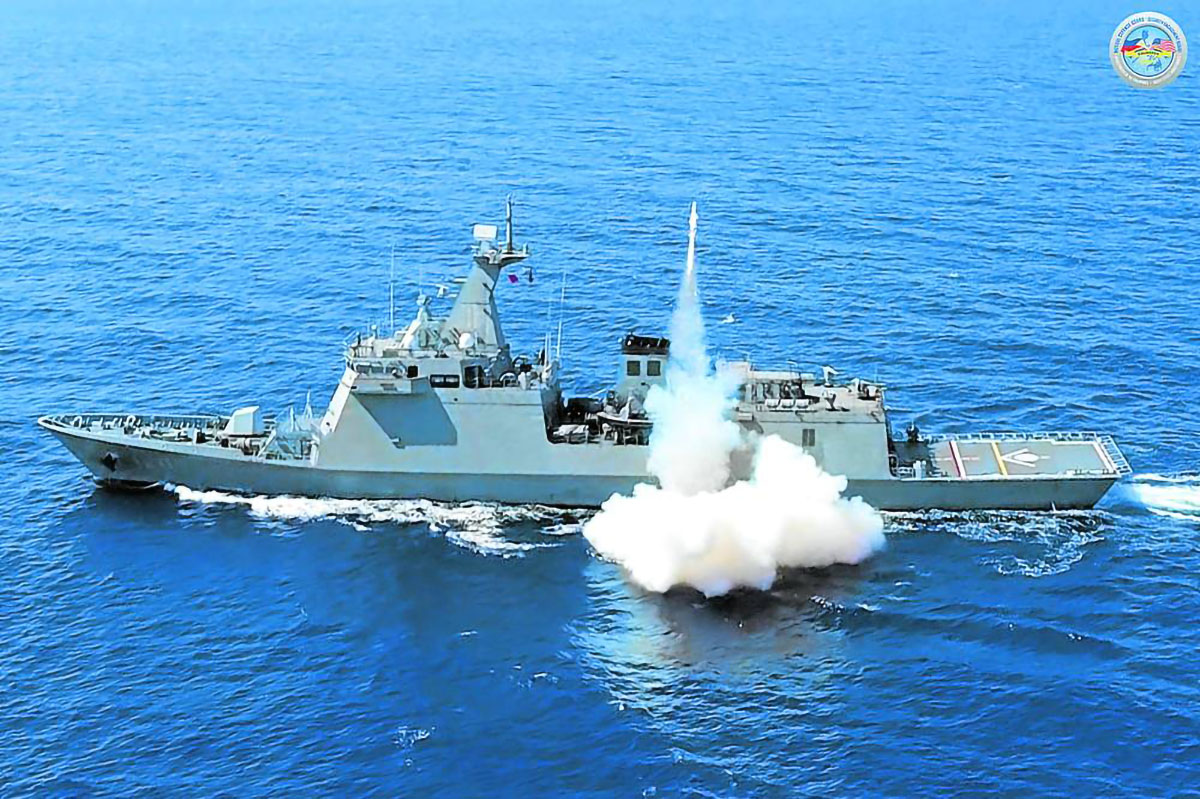
The Armed Forces of the Philippines conducted live-fire exercises in Northern Luzon this week, testing coastal defense and maritime strike capabilities as part of the annual AJEX DAGIT-PA 10-2026 drills.
The exercises run from November 17 to 27 and focus on territorial defense and the protection of strategic sea lines, according to the AFP’s official opening announcement. Training involves integrated operations across land, air, and naval domains to strengthen the military’s ability to respond to external threats.
AFP Seizes Fuga Island Airfield in Live-Fire Drill
Military units executed “Maritime Key Terrain Security Operations-North (MKTSO-N) in Fuga Island in Cagayan on Nov. 21,” according to the Armed Forces of the Philippines. This phase included seizing airfields and launching amphibious assaults to secure strategic islands against hostile forces.
To support these live-fire activities, the Philippine Coast Guard established temporary no-sail zones. Vessel movement was restricted off Fuga Island on November 21 and near Barangay Dodan on November 24 to prevent accidents during the use of live ammunition.
BrahMos Missile Deployed for First Time in DAGIT-PA
The current exercises emphasize “kinetic requirements, basically for territorial defense,” said Gen. Antonio Nafarrete, AFP Chief of Staff, during the opening ceremony at Camp Aguinaldo. Nafarrete cited the presence of foreign naval vessels along international sea lines as a primary driver for developing stronger deterrent capabilities.
This year’s drills mark the first field deployment of the BrahMos shore-based anti-ship missile system during the DAGIT-PA exercise series, reported USNI News. The military integrated these land-based weapons with naval and aerial assets to simulate maritime strikes, specifically targeting the security of the Luzon Strait.

No-Sail Zones Enforced for Live-Fire Drills
The Philippine Coast Guard declared temporary no-sail zones off Aparri to accommodate the Counter-Landing Live Fire Exercise, a field activity within AJEX DAGIT-PA 10-26. The restricted area off Barangay Dodan covers approximately 7,212 hectares of sea, according to the PCG.
During the live-fire activity, all vessels and watercraft were prohibited from entering the designated coordinates, Coast Guard Station Cagayan said in a statement. Overseeing the exercise in Aparri, the 5th Infantry Division — which covers Cagayan Valley and parts of the Cordillera Administrative Region — said safety protocols were in place to keep communities informed and to work closely with local authorities and residents before and during military exercises.
Joint Maritime Strike Tests Luzon Strait Security
The Joint Maritime Strike North exercise conducted on Nov. 18 west of Palauig Point in Zambales brought together Philippine Navy frigates equipped with AW159 helicopters, offshore patrol vessels, fast attack interdiction craft, and a landing ship alongside Air Force FA-50 light combat aircraft and A-29B Super Tucano aircraft.
AFP Tests Integrated Air and Missile Defense Capabilities in Northern Luzon The Armed Forces of the Philippines (AFP) conducted an Integrated Air and Missile Defense (IAMD) exercise on November 19, 2026 at Camp Cape Bojeador in Burgos Ilocos Norte as part of the Defense of… pic.twitter.com/NfNpm4Vh5S
Air Defense and Counter-Landing Drills in Ilocos Norte
The Philippine Air Force deployed the SPYDER surface-to-air missile system during an Integrated Air and Missile Defense Exercise at Camp Cape Bojeador in Burgos, Ilocos Norte, on Nov. 19, part of the Defense of the North phase of AJEX DAGIT-PA 10-2026.
The exercise tested the ability to detect, track, and intercept simulated airborne threats through coordinated operations involving air and surface assets, and sought to validate operational procedures and enhance interoperability among participating units.

At the 4th Marine Brigade headquarters in Burgos, the AFP conducted counter-landing live-fire drills using 105 mm and 155 mm howitzer artillery weapons on Nov. 23, demonstrating capabilities to defend coastal areas against potential hostile landings.
These exercises evaluated participating units’ capacity to coordinate operations and react as a unified force, assembling infantry, artillery, special forces, logistics, civil-military operations teams, and reservists, Maj. Al Anthony Pueblas, chief of Balikatan’s Combined Joint Information Bureau, said in an interview after the exercises.
The Armed Forces of the Philippines shifted its primary focus from internal insurgency to external territorial defense in the 2020s, a strategic evolution reflected in the annual AJEX DAGIT-PA exercise series that tests integrated coastal defense and maritime strike capabilities.
SPYDER System Intercepts Airborne Threats in Ilocos Norte
Beyond maritime strikes, the AFP tested its integrated air defense capabilities. At Camp Cape Bojeador in Ilocos Norte, forces utilized the SPYDER surface-to-air missile system to detect and intercept simulated airborne threats. The drills also included counter-landing exercises where infantry, artillery, and armored units repelled simulated enemy amphibious invasions.