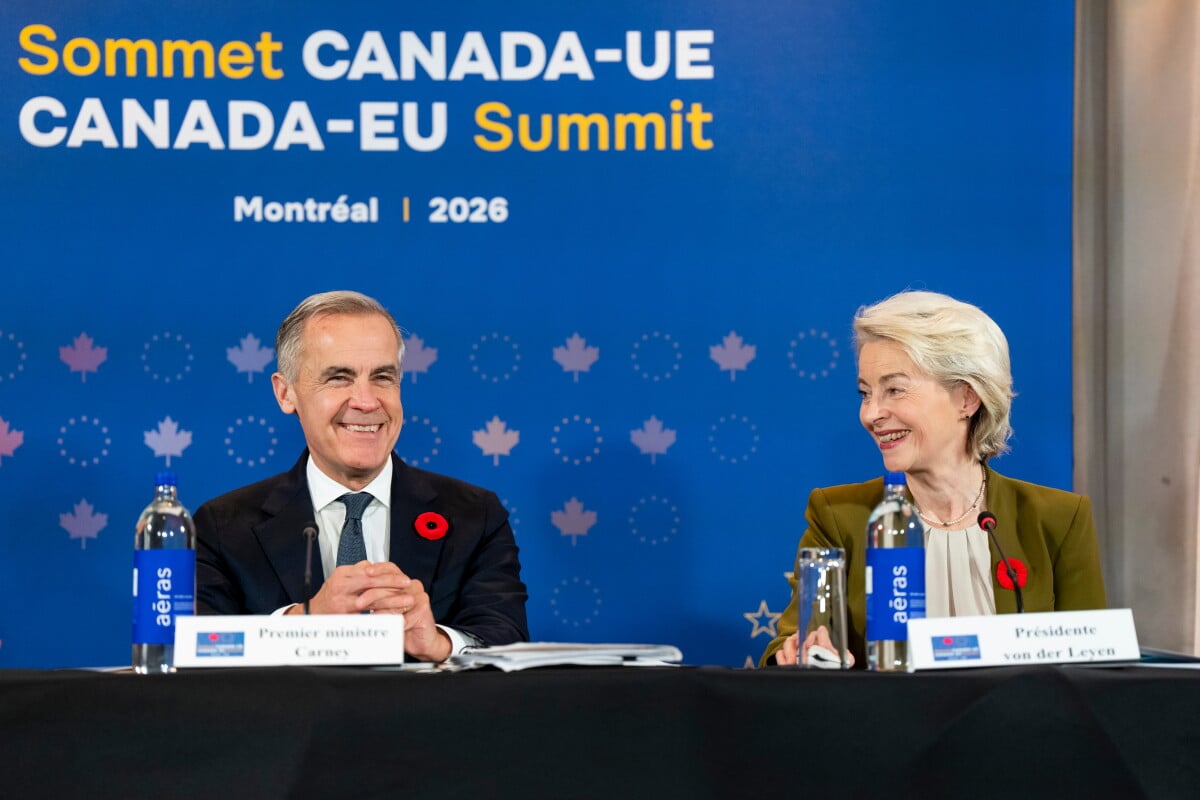
Prime Minister Mark Carney and European Union leaders met in Montreal on Oct. 29, 2026, to forge a strategic alliance aimed at protecting sovereignty against economic coercion. While the two sides seek an associate member
status for Canada, EU member states have blocked that specific terminology in current draft declarations.
The summit arrives as Canada manages a trade war with the U.S. Mark Carney described Canada as the most European of non-European countries
and argued that in a climate of growing global rivalries, the ability to act together is essential for maintaining independence.
The Battle Over “Associate Membership”
A central point of friction at the summit is the label of the new partnership. European Commission President Ursula von der Leyen first proposed making Canada an associate member
in September 2026, a status that does not currently exist within the bloc.
Remove barriers, promote skills and youth mobility, foster more cooperation to support growth: this is what competitiveness means on both sides of the Atlantic.And it was at the heart of our discussions today at the Canada-EU Business Forum, with Prime Minister @MarkJCarney,… pic.twitter.com/EijX9LgVPS
However, several EU member states, including Germany, pushed to remove the term from the summit’s draft declaration. Diplomats noted that the term might conflict with the terminology already used for Ukraine’s potential accession.
Canada cannot become a full-fledged member of the EU because of geography, but we both want to bring our relationship to the highest level possible.
Ursula von der Leyen, President of the European Commission
The revised language in the draft joint statement now calls for an “ever closer association” short of full membership. While von der Leyen has continued to use the “associate member” phrasing publicly, Carney has downplayed the dispute, stating that the specific nomenclature doesn’t matter
as much as the substance of the agreement.
On 29-30 October, HR/VP @kajakallas will attend the EU-Canada Summit in Montreal. The HR/VP will meet Canadian Foreign Minister, @AnitaAnandMP for bilateral talks and a fireside chat. In the evening, the HR/VP will participate in the Ceremony for the signature of the… pic.twitter.com/J0luGp5Yi0
Defense and Critical Mineral Integration
Beyond the labels, the alliance focuses on tangible security and resource ties to cushion supply chains against geopolitical disruption. A key component is the Security Action for Europe (SAFE) defense-financing program. Canada has secured preferential access to this program, allowing Canadian-origin components to make up to 80% of the procurement value for equipment bought with SAFE loans.
The two sides are also deepening cooperation on critical raw materials. To support this, the European Investment Bank is expected to reach an agreement to back Canadian projects related to critical minerals.

- Satellite Services: Canada and the European Union plan to deepen cooperation on satellite services.
- Digital Trade: Officials are working toward a digital trade agreement to cement rules for e-signatures, e-contracts, and secure cross-border data flows.
- AI Sovereignty: Carney emphasized that Canada and Europe must not rely on
outside tech interests
to control the development of artificial intelligence.
Trump’s Reactions and Internal Opposition
The drive toward Europe is partly a response to the unpredictability of the U.S. under Donald Trump. Trump has dismissed the idea of Canadian associate membership in the EU as ridiculous and has threatened consequences if the arrangement harmed US interests, warning that he could impose high tariffs or halt trade with Europe in several sectors.
Climate Friction and Energy Exports
While the alliance seeks unity on security, it faces a divide over climate policy. According to Climate Action Tracker, planned Canadian policies may only reduce emissions by 14 per cent, falling well short of the national target of 40–45 per cent.
Canada and the European Union share the same values, the same priorities, and complementary strengths. As such, we are building a truly unique alliance.At the 21st Canada–EU Summit in Montréal, I joined @kajakallas for a fireside discussion on what this moment demands of us. As… pic.twitter.com/oU8w2wRRnD
Environmental critics, including Esther Bollendorff of Climate Action Network (CAN) Europe, have labeled a proposed feasibility study on long-term LNG exports to Europe as a dangerous distraction
from renewables. This tension highlights a contradiction in the partnership: while Europe seeks energy security to reduce dependence on Russian fossil fuels, its climate goals clash with Canada’s continued prioritization of energy production.
The summit is intended to launch further formal negotiations, with the goal of associate membership
in 2027.
Last month, @kajakallas and I joined our European counterparts at Gymnich in Ireland to address some of the continent’s most pressing security challenges. Today at the Canada-EU Summit in Montréal, we picked up where we left off and looked ahead to the work still to be done.We… pic.twitter.com/TQWBVoFYoK