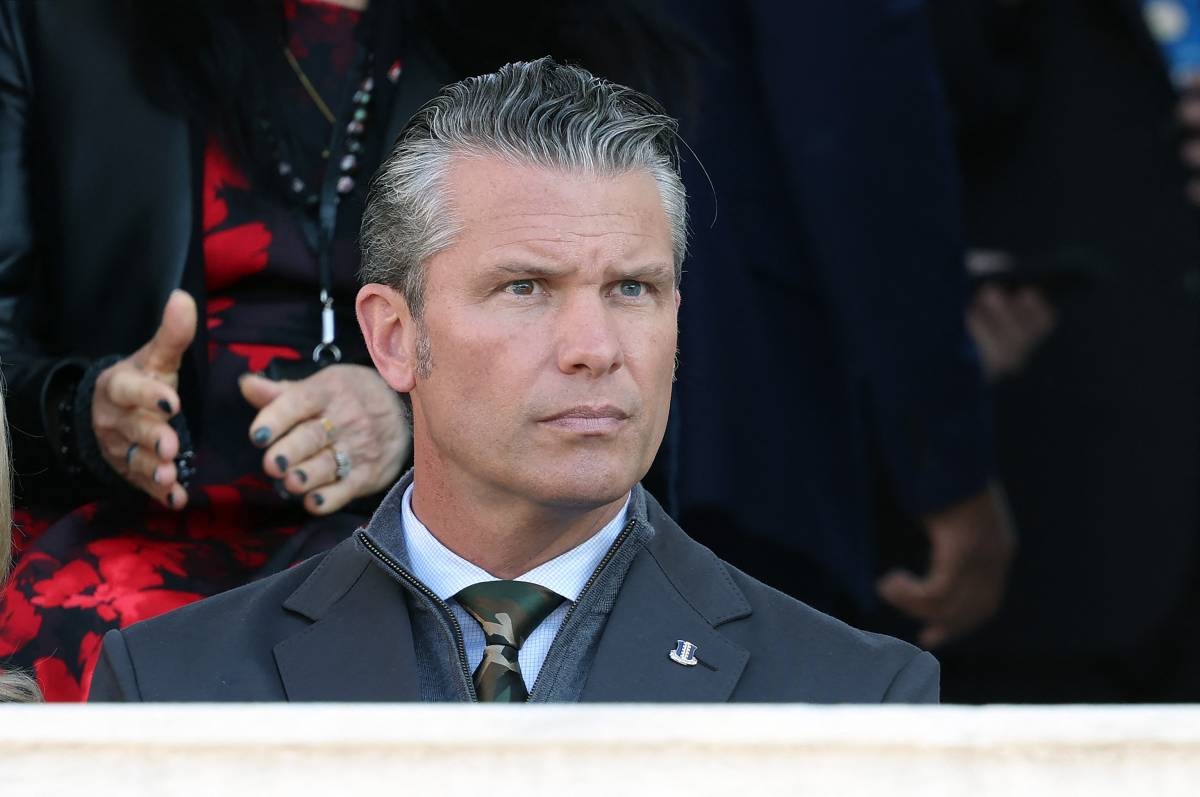
US Defense Secretary Pete Hegseth arrived in Bogotá on Wednesday for security talks, just hours after his unannounced stop in Caracas to sign a bilateral defense agreement with Venezuelan leaders.
Disputed Joint Operations Proposal and Congressional Hurdles in Colombia
The diplomatic visit unfolded amid conflicting reports over a proposed Title 10 security arrangement. According to The New York Times, right-wing Colombian President Abelardo De La Espriella informed U.S. officials that his administration supported cooperating with the Pentagon but lacked sufficient legislative support in Congress to authorize joint combat operations and airstrikes on Colombian soil.
President De La Espriella strongly rejected that characterization on social media. “The information published by The New York Times—according to which I rejected a cooperation plan with the United States to carry out joint operations against narco-terrorism—is false. I HAVE NOT REJECTED ANY PROPOSAL FROM PRESIDENT DONALD TRUMP’S ADMINISTRATION,” De La Espriella said in a tweet published by VOZ.
Colombian Foreign Minister Omar Bula confirmed following a closed-door meeting that the government would ask Congress to approve joint military operations with Washington. Bula added that President De La Espriella “has been very clear about his country’s sovereign position, and it is also very clear to the secretary of war after the conversation we had.”
Miller Soto, official spokesperson for the Presidency of the Republic, also refuted reports of a rejection. Writing on the social media platform X, Soto said that “What @nytimes is reporting is absolutely false. The Colombian government has not communicated anything of the sort to Washington.”
The Constitutional Court of Colombia determined back in 2010 that a 2009 defense pact granting U.S. personnel entry to Colombian military bases necessitated both a constitutional review and congressional backing. According to Brian Finucane—an ex-State Department attorney currently advising the US Program at the International Crisis Group—this scenario illustrates the legal and domestic political boundaries that foreign authorities encounter regarding American military activities within their borders.
Joint Anti-Drug Exercises Involve Hundreds of Troops
Despite the debate over direct combat authorizations, bilateral security ties continued through existing channels. Minister Mora emphasized the ongoing cooperation between the two nations by stating, “We’re going to look at other interesting issues regarding how the United States must continue supporting us in restoring security for Colombians,” as reported by ColombiaOne: News from Colombia and the World.

Both countries recently participated in joint anti-drug exercises involving more than 300 U.S. soldiers and 400 Colombian troops.
In each country, according to each country’s laws, but in working together, we are going to find, we are going to hunt, we are going to kill and defeat narcoterrorists.
Pete Hegseth, US Defense Secretary
During his stops, “each country wants to deny safe haven to those cartels while respecting the soverignty, the laws and the constitution and the congress of each individual country, but bonding and working together to take a fight to a common enemy in way that has never happened before,” US Defense Secretary Pete Hegseth said.
Colombia formally joined the Shield of the Americas initiative this past August, a U.S.-backed program designed to strengthen hemispheric collaboration against drug trafficking that Hegseth also praised.

Hegseth Signs Defense Agreement in Caracas
Hegseth’s Latin American itinerary included an unannounced detour to Venezuela, marking the highest-level U.S. visit since the January ouster of Nicolas Maduro. National security reporters expressed surprise after state television in Caracas broadcast Hegseth meeting with acting President Delcy Rodríguez to sign a cooperation agreement intended to deepen defense cooperation between the two countries.
Venezuela’s interim leader Delcy Rodriguez hailed what she described as a resumption of the technical-military relationship between both countries after years of rupture and U.S. sanctions. Hegseth announced a reinforced defense agreement to ensure that the Venezuelan people are not threatened by foreign actors, narco-terrorists, or criminals, stating that the two nations talked about the long history of their countries and the restoration of the defense alliance.
Before traveling to South America, Hegseth visited the U.S. military’s Southern Command headquarters in Miami, where he stated in a Pentagon video that the idea is to be kinetic and to kill designated terrorist organizations.
A Pentagon official noted regarding the trip that Colombia is a valued member of the Americas Counter Cartel Coalition and a longstanding defense partner of the United States. Analysts point out that when the Democratic majority is sworn into Congress in January, Trump’s policies and Latin American alliances will face serious scrutiny.