Iran’s envoy to the United Nations formally accused the United States on Tuesday of deploying artificial intelligence systems to coordinate military strikes, calling the weaponization of automated targeting a flagrant violation of international law.
Darzi Asks UN for AI Oversight
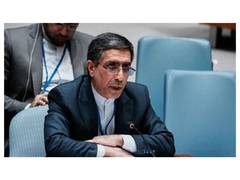
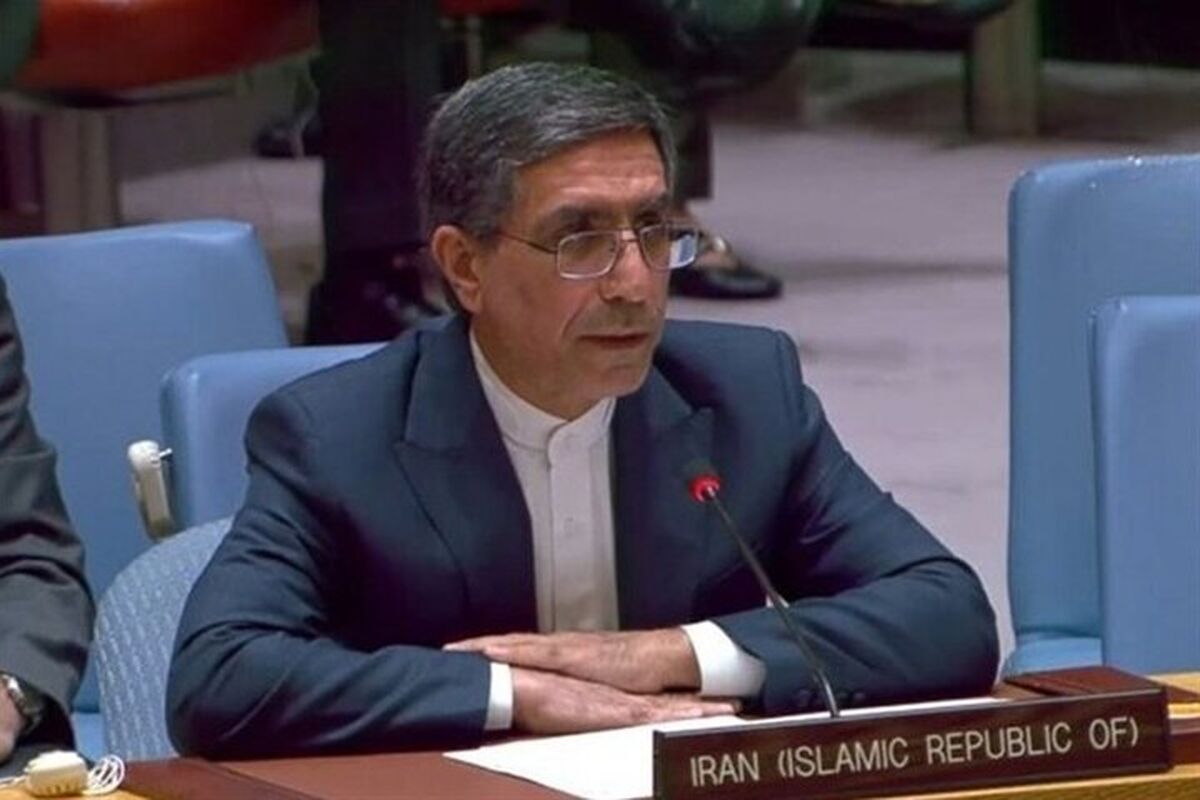
Addressing a United Nations Security Council meeting on Tuesday, Iranian Ambassador Gholamhossein Darzi asserted that Washington leveraged sophisticated algorithmic tools to select, rank, and strike targets during military operations. The diplomatic push asks the global body to establish oversight over military applications of artificial intelligence to prevent unchecked escalation.
Darzi told the Security Council that automated intelligence systems processed intelligence data to distribute thousands of munitions across distinct locations within brief operational windows. According to the Iranian mission, these digital systems bypassed traditional human oversight frameworks required under the Geneva Conventions. He cautioned that rapid technological evolution has altered the character of combat, heightening the dangers of escalation, human error, and civilian deaths.
Darzi said that technology must be harnessed for the benefit of humanity and restricted to peaceful uses, rather than being employed for aggression, hegemony, or the violation of national sovereignty.
He also called for the United Nations to establish a framework to regulate the military use of the technology, urging nations to address military AI through the UN because processes conducted outside the organization cannot provide a universally legitimate basis for international governance.

Neither advanced technology nor the involvement of private companies can shield the United States or the Israeli regime from accountability for flagrant violations of their obligations under international law.
Gholamhossein Darzi, Iranian Ambassador to the United Nations
Darzi Cites Palantir and Anthropic in Court Filings
The Iranian envoy pointed directly to specific technology platforms and legal documents to substantiate the claims. Darzi stated that published reports confirm the use of Palantir’s Maven smart system and Anthropic’s Claude during the February 28, 2026 campaign to analyze intelligence and provide strike coordinates. He pointed out that CENTCOM officially verified the deployment of high-tech AI systems in the offensive against Iran on March 11, 2026.
He further cited a sworn court filing submitted by the U.S. Defense Department to a court on June 15, 2026, acknowledging the use of AI during the military aggression, confirming that the Grok AI system, through the Pentagon’s Maven smart system, “enabled U.S. forces to employ more than 2,000 munitions against 2,000 separate targets within 96 hours.” Darzi contended that such admissions must be weighed alongside aggressive rhetoric from American authorities, specifically the U.S. war secretary’s declaration on March 13, 2026, that there would be “no mercy” for Iranians.
Minab School Strike Increases Iranian Casualties
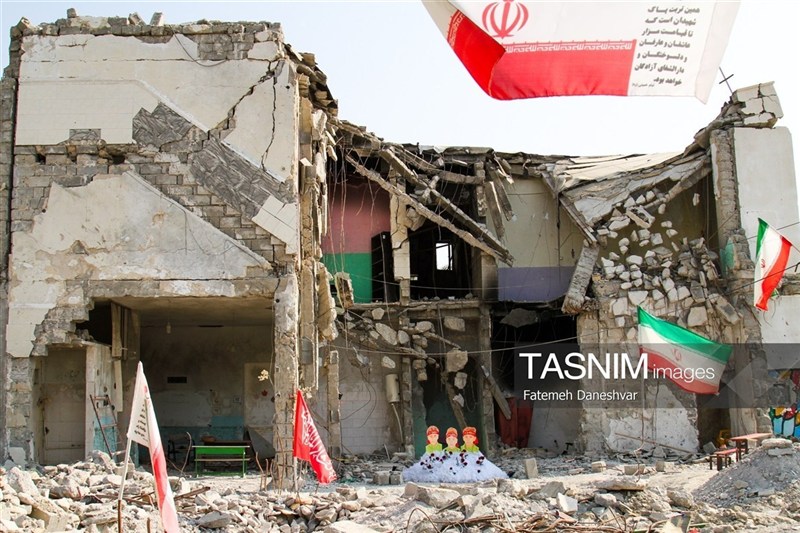
Tehran connected the AI targeting disclosures to the human cost of the ongoing military campaign, explicitly referencing the deadly strike on a girls’ school in Minab. Darzi said that the February 28 bombing killed at least 168 students and teachers, while placing total Iranian casualties at more than 5,000 dead—including 254 children and 251 women—alongside 34,000 injured.
He stressed that individuals accountable for heinous crimes against the Iranian populace, such as intentional strikes on civilians and civilian sites, must face justice and personal criminal liability.
He further said that the United States bears a legal mandate to provide complete restitution for all harm resulting from its wrongful international actions, including through compensation, and said that Iran maintains its prerogative to utilize all available legal channels to pursue justice.
Gholamhossein Darzi serves as the Iranian Ambassador and Deputy Permanent Representative to the United Nations. In his diplomatic capacity as of October 2026, he has actively represented Iran’s interests at the UN Security Council, where he has formally appealed for emergency meetings to address military threats against his country’s territory and critical infrastructure.
Beyond his role as Ambassador, Darzi functions as a key advocate for international oversight regarding the use of advanced military technology. Following reports of potential strikes involving high-capacity conventional weaponry, he has utilized his position at the United Nations to lobby for formal condemnations and regulatory frameworks, emphasizing the necessity of international law in maintaining regional stability and protecting national sovereignty against foreign aggression.
Those figures follow domestic statements from Iranian officials, including Vice President for Women and Family Affairs Zahra Behrouz-Azar, who reported that 623 children have died across the war. During a memorial service for the conflict’s victims, Behrouz-Azar mentioned that the fatalities included students at two Minab schools, describing the incidents as profoundly tragic and emphasizing that officials have a responsibility to address the hidden wounds and psychological scars left behind.
A regime armed to the teeth with WMDs is accusing Iran of pursuing chemical weapons. But as the entire world knows by now: with Israel, every accusation is a confession. pic.twitter.com/IMw4kGbn6c
The friction extends across the waterway as well, where the Iranian Army reported that its air defense systems intercepted and destroyed a Lucas suicide drone over the western sector of the Strait of Hormuz, alongside an MQ-9 drone in the eastern sector. These aerial interceptions follow earlier claims by Iran’s Islamic Revolutionary Guard Corps that it downed an American MQ-1 drone over Qeshm Island on November 14.
Tensions Rise Across Maritime Routes
In parallel with the diplomatic exchanges at the United Nations, broader regional tensions escalated across maritime and strategic trade routes in the Middle East. Iranian First Vice President Mohammad Reza Aref said that Tehran is not concerned about a U.S.-imposed naval blockade of Iranian ports, claiming an increase in exports and the clearance of goods via northern and other non-southern borders.
Meanwhile, the U.S. Treasury Department targeted more than two dozen Iranian exchange houses, front companies, and individuals allegedly facilitating Tehran’s international financial networks in an effort to dismantle its shadow banking infrastructure.
The broader conflict zone also saw Houthi forces in Yemen accept liability for a drone strike against the Ras Tanura refinery in Saudi Arabia, which is the nation’s primary oil processing hub, in addition to a reported strike on the financial district of Riyadh. Saudi air defenses managed to intercept several of the drones, though debris impacted the refinery’s storage and administrative areas, forcing a brief suspension of operations.
This prompted a swift Saudi response with airstrikes against Houthi positions in Hodeidah port. According to Iranian state media and regional reports, incidents in the Strait of Hormuz also involved the Islamic Revolutionary Guard Corps claiming a liquified natural gas carrier exploded after striking a sea mine while transiting an unauthorized route.
Tugboats Face Sanctions as Regional Strikes Rise
Meanwhile, the Iran’s Persian Gulf Strait Authority announced that twenty-six tugboats were added to the country’s non-compliance list for providing services to restricted vessels. In separate developments across the Arabian Peninsula, Saudi forces reported strikes on the port of Hodeida, while Houthi spokesman Yahya Saree confirmed that a drone attack on the Ras Tanura refinery successfully ignited fires.
Trump Seeks Diplomacy While Israel Considers Strikes
United States President Donald Trump stated during a Saturday interview with Fox News that he preferred a diplomatic resolution, emphasizing that any future pact must permanently block Tehran’s nuclear ambitions. In parallel discussions regarding military posture, Israeli Defense Minister Israel Katz floated the possibility of a preemptive strike against Tehran if authorities recognize that Iranians intend to attack Israel first.
Foreign Minister Abbas Araqchi criticized the United States and accused Israel of attempting to drag Washington into another war after Israeli officials alleged that Tehran is building chemical weapons. Responding to international financial pressures, the U.S. Treasury Department announced that interagency partners will further constrain Iran’s ability to finance terrorism, rebuild weapons factories, and replenish their military arsenals.
International Accountability and Legal Proceedings
The diplomatic confrontation at the UN Security Council featured sharp rebuttals and counter-accusations between delegations regarding international obligations and regional conduct. Darzi maintained that neither advanced technologies nor the participation of private companies can shield governments from responsibility under international law.
In separate legal matters occurring outside the immediate combat zone, a U.S. jury found the Chinese tech conglomerate Huawei Technologies guilty on Tuesday of conspiring to misappropriate trade secrets and operating in nations under U.S. sanctions, such as Iran; the firm was convicted on 10 out of 12 counts following Justice Department allegations concerning deceptive compliance documentation.