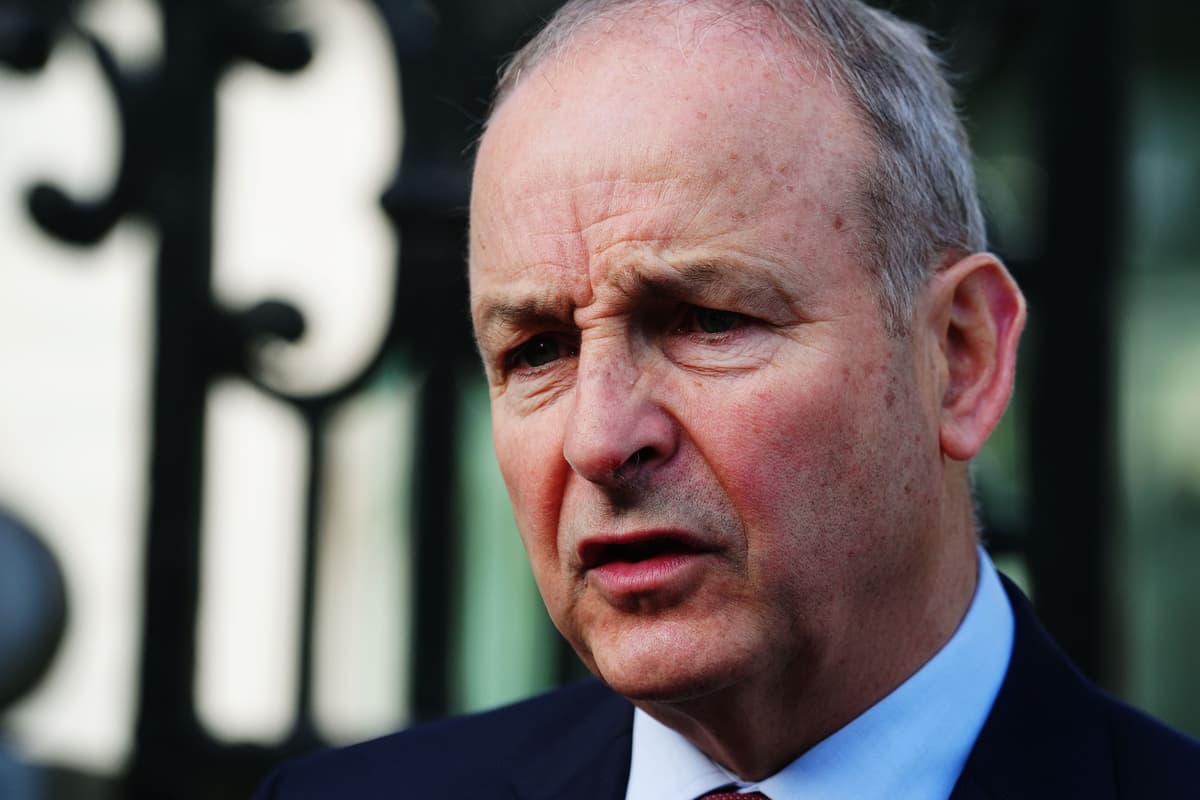
Taoiseach Micheál Martin is calling for a fundamental change in how Ireland discusses reunification, arguing that the debate has relied too heavily on assertions of "inevitability" rather than hard evidence. In a move to move beyond political rhetoric, Martin has proposed a new initiative to establish a rigorous, independent base of knowledge regarding the legal, economic, and social costs of a new constitutional framework.
The stakes here aren’t just academic; they are deeply practical. For the average citizen in the North or South, “unity” is often discussed as a political destination, but rarely as a budgetary or legal transition. By demanding a “dispassionate base of knowledge,” Martin is signaling that the financial costs and structural hurdles of merging two divergent systems—separated for over a century—must be the centerpiece of the conversation, not a footnote.
Evidence over inevitability
Speaking at a book launch, the Taoiseach criticized the tendency of nationalists to gather and agree that “everything will be fine,” a pattern he described as a repetition of old historical mistakes. He argued that claiming unification is inevitable implicitly sidelines the need for persuasion and genuine change as prerequisites for constitutional shifts.
Martin’s proposed approach focuses on three core pillars:
- Developing an independent, trustworthy information base on the practical implications of different constitutional frameworks.
- Separating the long-term unity debate from immediate North-South actions that must happen regardless of future votes.
- Implementing reforms within the Northern Ireland Assembly and Executive.
This push for “hard evidence” stands in stark contrast to the rhetoric coming from other quarters. Earlier this year, US President Donald Trump told reporters during a visit to Dublin that Irish reunification “may as well happen now,” framing it as an inevitable outcome. Martin contends that one-sided campaigns that avoid “genuinely tough questions” regarding financial costs actually undermine the case for unity.
A divided political roadmap
While the Taoiseach pushes for a data-driven pause, his political opponents and partners are moving on different timelines. Sinn Féin leader Mary Lou McDonald has pushed back against the government’s caution, describing the current administration as a barrier to unity and calling for immediate preparations for constitutional change. Sinn Féin has already tabled a Bill in Dáil Éireann calling for a Citizens’ Assembly and government planning for reunification, which they intend to bring back to the Dáil before the end of 2026.
Meanwhile, the coalition government is not entirely aligned in its method. Fine Gael leader and Tánaiste Simon Harris has announced that his party will launch its own “blueprint” for Irish unity in November, adding another layer of official planning to the mix.
“After a century of divergence, we have enormous gaps in our knowledge about the challenges of a new constitutional future – and we have to be far more open to acknowledging the changes required of us.” — Micheál Martin
The fragility of the peace
Persistent volatility on the ground makes this debate urgent. Martin pointed to the recent stand-off over the Drumcree parade as evidence of the "fragility of progress." While the Parades Commission ruled that the Orange Order could march down the Garvaghy Road, the parade from Drumcree Church into Portadown ultimately did not happen due to large-scale protests. This friction illustrates why Martin believes a “good faith opportunity” for those outside the nationalist tradition to participate in the debate is essential.
For unionist and protestant communities, the “inevitability” narrative can feel less like a promise and more like a threat. By shifting the focus to a transparent, evidence-based framework, the Taoiseach is attempting to lower the temperature and invite a cross-community dialogue that doesn’t assume the outcome from the start.
Current tensions echo shifts of the 1990s
This current tension echoes the major shifts of the 1990s. The Hume/Adams initiative of the late 1980s served as a catalyst for the 1994 IRA ceasefire and the eventual Good Friday Agreement. That era was defined by creating a democratic consensus before attempting structural change—a mirror to what Martin is now proposing through his “evidence base.”
Conditions have changed significantly since then. Nationalist-led administrations now hold First Minister positions in Scotland, Wales, and the north of Ireland. In the UK, the political environment is in flux, with Andy Burnham becoming the seventh British Prime Minister in ten years. The new British leadership now faces an unavoidable demand for independence in Scotland and Wales, alongside the momentum for Irish unity.
The immediate future of this debate will be defined by two key events: the release of Fine Gael’s unity blueprint in November and the return of Sinn Féin’s reunification Bill to the Dáil before the end of 2026.