Millions of workers walked off the job across Spain on Wednesday, marking the country’s first general strike in 14 years to demand government action on a deepening housing crisis.
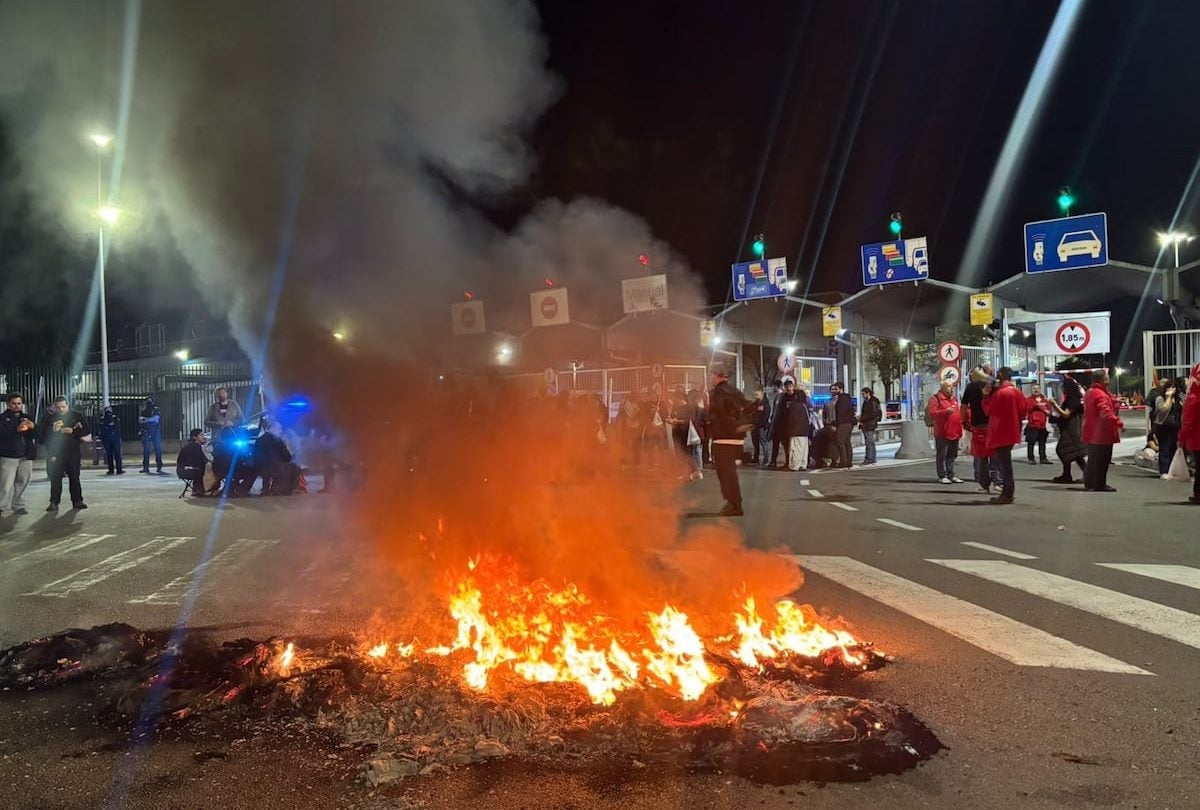
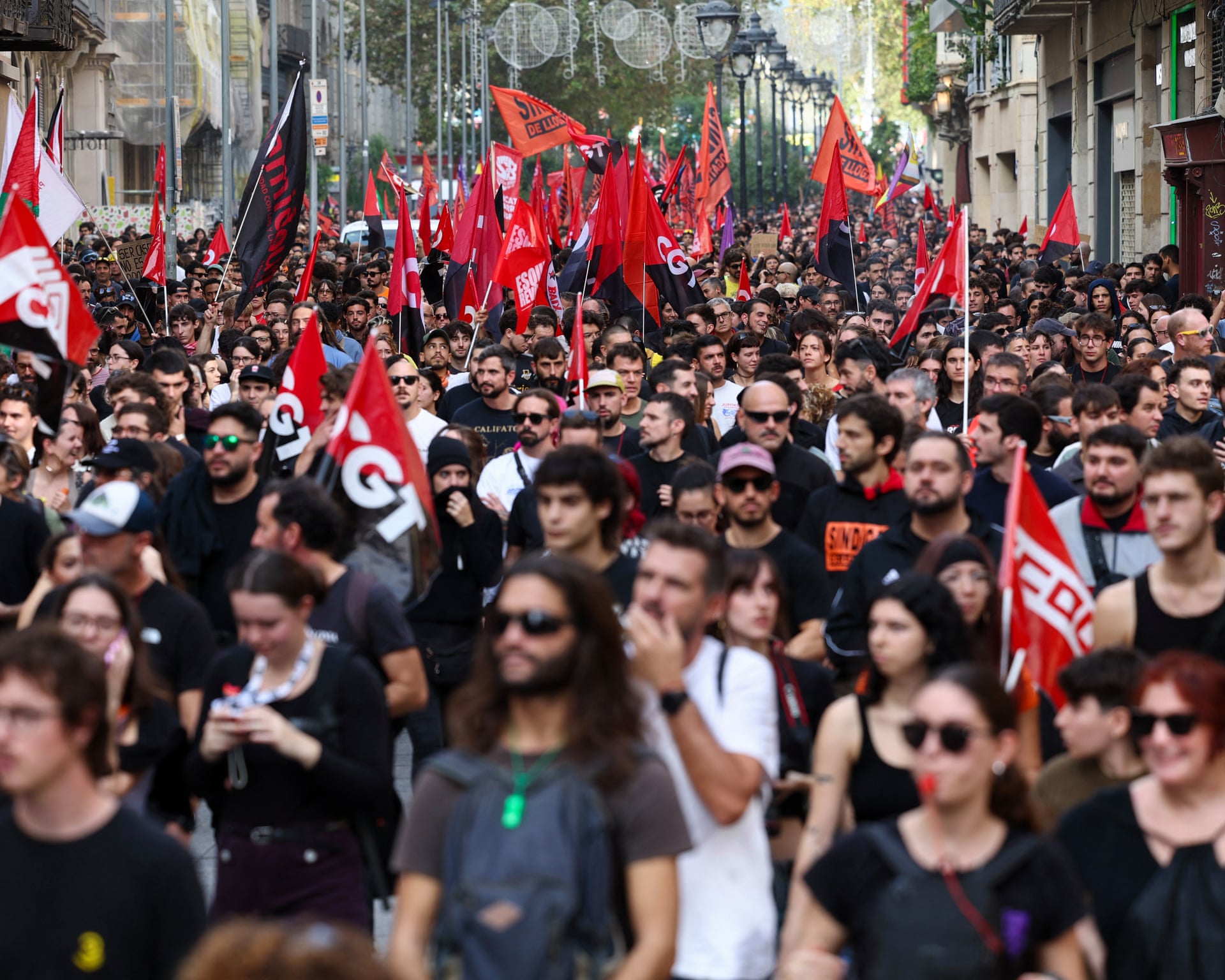
The 24-hour stoppage, which began at midnight, saw picket lines form in major cities and disruptions to public transport, factories, and airports. The strike was convened by Spain’s two largest unions, the Workers’ Commissions (CCOO) and the General Union of Workers (UGT), under the slogan: “Salaries. Housing. Prices.”
Union Claims of Strategic Stoppages
Major unions reported high participation in key industrial sectors, with work stoppages reaching 90% in the automotive and port sectors. According to UGT and CCOO, the meat industry saw 85% participation, while waste collection and energy sectors reported 82% and 75% respectively. The unions also said that the automotive sector saw total stoppages at major manufacturing plants including SEAT Barcelona and Volkswagen Navarra.
“The strike has exceeded the labor unions’ expectations,” said Unai Sordo, secretary-general of CCOO. “It has been a success in terms of turnout.”
However, business groups challenged these figures. Antonio Garamendi, president of the Spanish Confederation of Business Organizations (CEOE), criticized the walkout as an “official”, “atypical” and “preventive” call. He warned that the organizations would demand accountability if the situation “gets out of hand”. Garamendi said that small businesses remained open normally in the vast majority of Spanish municipalities, affirming that there was no incidence in 8,000 towns.
He further argued that discrepancies should be resolved through social dialogue rather than through street protests, stating, “Hey, the ballot boxes are what rule, and if I don’t like the ballot boxes I go to the street… I don’t think this is very democratic.”
Political Tensions Before November 29 Election
The strike occurs less than three weeks before a national election on November 29, called by Prime Minister Pedro Sánchez. The snap vote followed the decision by right-wing parties to block emergency legislation intended to address the housing crisis. The election campaign has also been impacted by a deadly train crash in early November, which killed 69 people and has allowed the opposition to focus on government incompetence and transport safety.
Polls suggest a shift toward a right-wing majority, with the Popular Party leading. A survey by El País and Cadena SER published on November 9 placed the Popular Party at 31.9%, Sánchez’s Partido Socialista Obrero Español (PSOE) at 29.9%, and Vox at 18%. Such a coalition would bring a far-right party into the national government for the first time since the end of Francisco Franco’s 1939-1975 dictatorship.
Both the Popular Party and Vox have dismissed the strike as politically motivated, accusing the unions of targeting the opposition. Analysts warn that if the protests result in violence, it could benefit opposition parties who have campaigned on promises to restore order.
Bartomeus suggested the goal is for opponents to claim the next morning, “This is chaos and we are coming to establish order.”
Property Prices and Home Shortages Fuel Public Frustration
The walkout follows months of public frustration over property prices. In Granada, the tenants’ union recently targeted short-term rental areas by vandalizing approximately 300 lockboxes, with the organization posting on social media: “No to capitalists, no to rent-seekers, no to their accomplices.”
The country faces a shortage of 750,000 homes. While the unions UGT and CCOO demand more government intervention in the housing market and new minimum wage agreements with business owners, some groups offer different perspectives.
Impact on Transport and Public Services
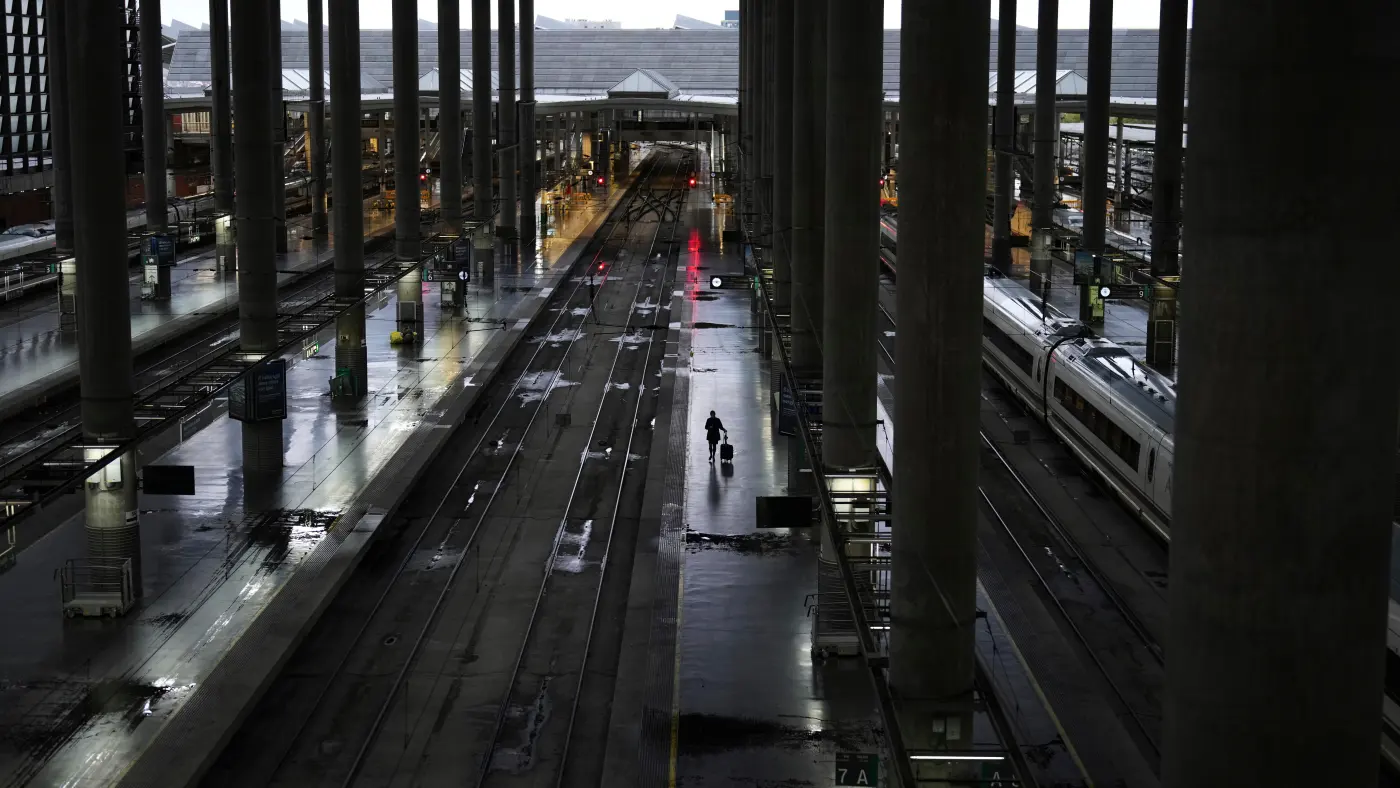
Travelers in Spain faced disruptions throughout the day as airport operator AENA reported that approximately 5% of flights were canceled. The strike has caused delays in the public transport system and slowed factories across the economy, with many schools and universities reportedly closed or operating at minimal capacity.
In Catalonia, the government said that minimum service levels were being met despite a complicated mobility situation involving roughly 50 road blockades. The Catalan Federation of Passenger Transport Companies (FECAV) said that minimum services were maintained with no major incidents outside of these blockades. In Malaga, protesters including political figures Toni Valero of Frente Amplio and Nico Sguiglia of Podemos blocked main gates to stop early-morning buses from departing.

While many protests appeared peaceful, minor incidents were reported. Strikers at the Mercamadrid wholesale market in Madrid reported that police used pepper spray on a crowd, leading at least 13 people to require medical attention. The U.S. Embassy in Spain issued an alert for U.S. citizens, noting that demonstrations, both planned and spontaneous, would occur throughout the country.
The embassy advised travelers to check flight and train plans and suggested that even peaceful gatherings can escalate quickly. For Americans needing assistance, the embassy provides 24/7 contact via +1-202-501-4444 from abroad or +1-888-407-4747 from the U.S. and Canada.